The Drug That Was Supposed to Change Angelman Syndrome Just Flopped
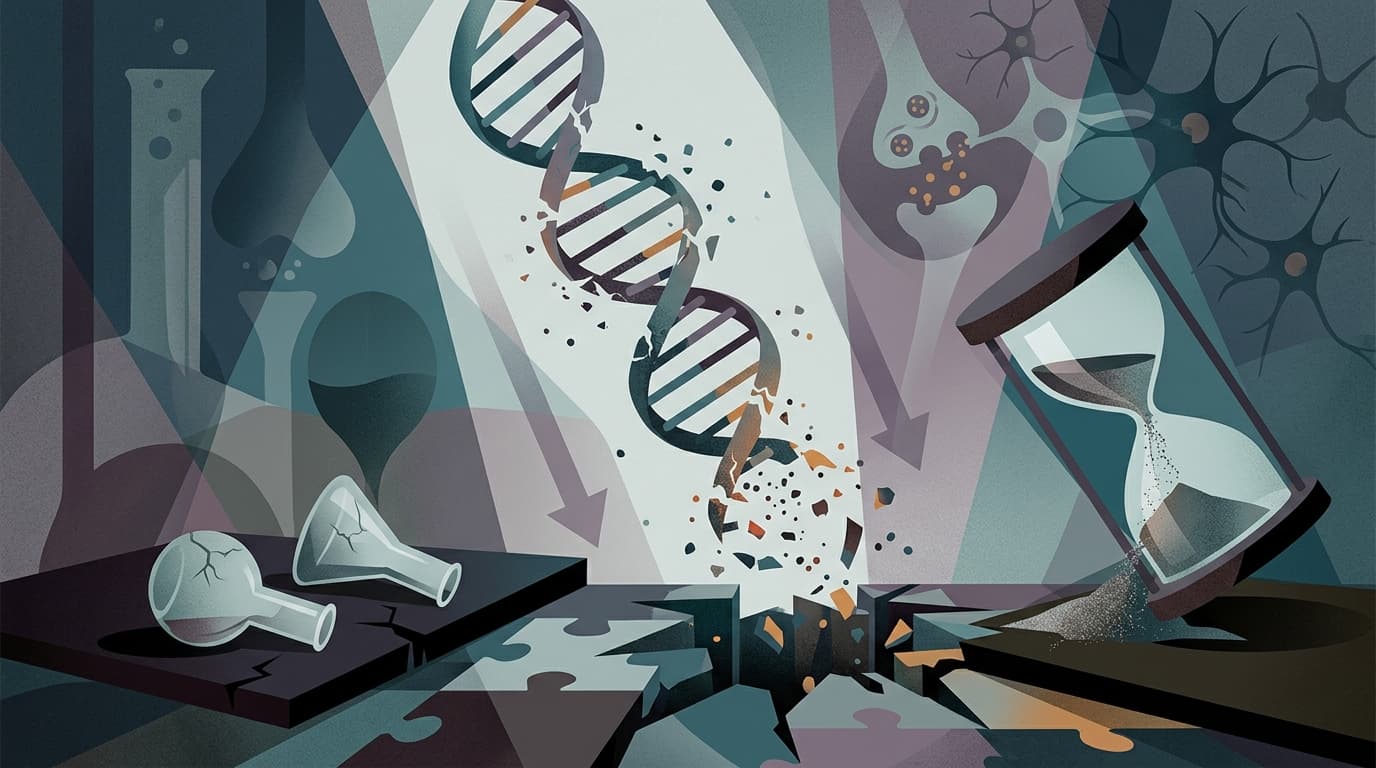
Ultragenyx's Angelman syndrome drug showed zero benefit over sham treatment in a 129-patient Phase 3 trial, sending shares down over 40%. For families who'd pinned their hopes on the most advanced therapy in development, the fallout is devastating.
Imagine waiting years for a treatment that could change your child's life. Not a cure, necessarily, but something that could help them communicate, move, sleep through the night. Now imagine watching that hope evaporate in a single press release.
That's what happened to the Angelman syndrome community on September 2, 2026.
A Decade of Hope, Gone in One Data Readout
Ultragenyx's experimental drug apazunersen (GTX-102) just failed its Phase 3 trial. Not in a "well, maybe if you squint at the data" kind of way. It failed cleanly. The drug showed no benefit over a sham treatment on the main measure of cognitive improvement, and it missed the key secondary endpoint too.
The stock reflected the devastation. Shares cratered roughly 40% to 46% in after-hours trading, wiping out what investors had treated as a cornerstone asset. CEO Emil Kakkis called the results "disappointing," which in pharma-speak translates to: we did not see this coming at all.
Angelman syndrome affects roughly 1 in 10,000 to 20,000 people. It's a rare neurodevelopmental disorder caused by a missing or broken gene called UBE3A. Kids with Angelman syndrome face severe challenges with movement, speech, behavior, and sleep. There is no approved treatment that addresses the root cause. Everything available today is supportive: anti-seizure meds, physical therapy, communication aids. Band-aids on a genetic wound.
Apazunersen was supposed to be the first real shot at something better.
How the Drug Was Supposed to Work
The science behind apazunersen is actually elegant, which makes the failure sting even more.
Every person carries two copies of the UBE3A gene, one from each parent. In neurons, only the maternal copy is active; the paternal copy gets silenced by a molecular "mute button" called the UBE3A antisense transcript. In Angelman syndrome, the maternal copy is missing or broken. So the brain has zero working copies of UBE3A in the cells that matter most.
Get tomorrow's biotech intelligence before your competitors.
Join thousands of biotech professionals who start their day with our free, daily briefing.
Apazunersen is an antisense oligonucleotide (ASO), a short strand of engineered genetic material designed to block that mute button on the paternal copy. Think of it like removing the tape over someone's mouth: the paternal gene was always there, just gagged. Unleash it, and in theory, neurons start producing the missing protein again.
The drug required intrathecal delivery, meaning doctors injected it directly into the spinal fluid via lumbar puncture. Not a pill. Not an IV. A spinal tap, repeated over the course of treatment. Parents signed up for that because the potential reward seemed worth it.
Earlier Phase 1/2 data, reported in 2024, had been encouraging enough to green-light a pivotal trial. The community was cautiously optimistic. Ultragenyx was confident. And then Phase 3 happened.
Inside the Aspire Trial
The Phase 3 Aspire study enrolled about 129 children ages 4 to 17, all with genetically confirmed full maternal UBE3A gene deletions. They were randomized 1:1 to either receive apazunersen or a sham procedure (a mock injection designed to keep the study blinded) over 48 weeks. Kids in the sham group could cross over to actual treatment after the assessment period.
The primary endpoint measured change in the Bayley-4 cognitive raw score, essentially a standardized test of cognitive development. The key secondary endpoint was something called the Multidomain Responder Index (MDRI), which bundled five areas together: cognition, receptive communication, behavior, gross motor function, and sleep.
Ultragenyx reported that there were no meaningful differences between treated and control groups on either measure. Not a marginal miss. Not a trend that fell short of statistical significance. The company said there was nothing in the Bayley scores or in any of the five MDRI domains that could support efficacy.
The safety profile, at least, was consistent with earlier studies. Small comfort.
Wall Street Didn't Just React. It Fled.
Analysts moved fast. The downgrades came in waves.
JPMorgan cut its rating from Overweight to Neutral and slashed its price target from $80 to $36. Evercore ISI moved from Outperform to In Line, dropping the target from $34 to $16. Baird went Neutral and cut to $16 as well. William Blair downgraded to Market Perform and simply removed GTX-102's contribution from its financial model entirely.
The sharpest commentary came from William Blair analyst Sami Corwin, who pointed out that the failure doesn't just kill the Aspire program. It casts a shadow over Aurora, Ultragenyx's second Phase 3 study evaluating apazunersen in a different Angelman subgroup. Even if Aurora somehow succeeds, Corwin argued, commercialization would still be tough because the addressable patient population is so small.
In other words: the best-case scenario for apazunersen just became very hard to build a business around.
Why CNS Drug Development Is the Hardest Game in Biotech
If you've followed biotech for any length of time, this story has a familiar shape. Promising early data. A disease community desperate for options. A big, expensive Phase 3 trial. And then: nothing.
Brain drugs fail at a staggering rate. About 85% of Phase II and III drugs targeting CNS diseases don't make it. In neurology specifically, only about 53% of drugs that reach Phase 3 ever advance to a regulatory filing. The brain is, quite literally, the hardest organ to treat.
The reasons are well catalogued. Animal models of brain diseases often don't predict what happens in humans. Endpoints rely on subjective measures (how do you objectively score "cognitive improvement" in a child who can't speak?). Placebo effects in pediatric neurodevelopmental trials can be surprisingly large, because kids naturally develop over time and caregivers want desperately to see progress. And it's notoriously difficult to confirm that enough drug actually reaches the right spot in the brain to do anything useful.
Apazunersen isn't the first casualty. Harmony's ZYN002 failed Phase 3 in Fragile X syndrome, partly blamed on a higher-than-expected placebo response. Newron's sarizotan flopped in Rett syndrome when animal-model results didn't translate to humans. Neurocrine's valbenazine missed its endpoints in dyskinetic cerebral palsy.
The pattern is brutal and consistent: Phase 2 hope, Phase 3 heartbreak.
What's Left for Angelman Families?
This is the part that hurts. For families living with Angelman syndrome, apazunersen wasn't just a stock ticker or a pipeline asset. It was the most advanced disease-modifying therapy in development, and it just failed.
Ultragenyx said it will "evaluate the program in light of this outcome" and decide what to do next. That's corporate for: we're figuring out whether to keep going or pull the plug. The Aurora study is still out there, but analyst skepticism is high.
The broader pipeline isn't empty, though. NNZ-2591 is an oral candidate working through trials with a different mechanism. Gene therapy and CRISPR-based approaches are in earlier stages. None of these are close to approval, but they represent different bets on different biological strategies.
The Aspire failure may actually reshape how the next generation of Angelman trials gets designed. Better patient selection. More sensitive endpoints. Biomarkers that can confirm the drug is doing its job in the brain before you bet everything on a 48-week efficacy readout. These are lessons the field has been learning, painfully, across multiple disorders and multiple failures.
The Bigger Picture
Ultragenyx's stumble is a microcosm of one of biotech's most agonizing tensions. Rare diseases attract passionate communities, dedicated researchers, and significant investment precisely because the need is so desperate. But that desperation can amplify early signals beyond what the biology supports. Phase 1/2 trials in rare diseases are small, often open-label (meaning everyone knows who's getting the drug), and susceptible to optimistic interpretation.
When Phase 3 arrives with its larger sample sizes, rigorous blinding, and sham controls, the truth comes out. And sometimes the truth is: the drug doesn't work.
That doesn't mean the science was wrong. UBE3A restoration remains a compelling biological hypothesis. It means this drug, at this dose, measured by these endpoints, in this population, over this timeframe, didn't produce a detectable benefit. The question now is whether the Angelman community and the companies investing in this space can learn enough from Aspire's failure to design a trial that finally works.
For 129 families who enrolled their children in a study that required repeated spinal taps over nearly a year, that question is more than academic. It's personal. And the answer can't come soon enough.
4 min read
The Pill That Could Let Celiac Patients Eat Bread Again
Teva's experimental antibody just aced a mid-stage celiac disease trial, posting the best data anyone has seen in the IL-15 space. With zero approved targeted therapies and a market approaching $1 billion, the race to deliver the first real celiac drug is officially on.