CRISPR's Body Count Is Growing. The Delivery Truck Is the Problem.
Two deaths in China from CRISPR therapies delivered by viral vectors are forcing the gene-editing field to confront an uncomfortable truth: the editing tool works, but the delivery system can kill. The fallout is already reshaping regulations from Beijing to Washington.
In 1999, an 18-year-old named Jesse Gelsinger volunteered for a gene therapy trial at the University of Pennsylvania. Four days after receiving an adenoviral vector, he was dead. His immune system had turned on the virus meant to save him, triggering multiple organ failure. The tragedy froze gene therapy research for nearly a decade.
Twenty-seven years later, history is rhyming.
Two deaths in China involving CRISPR gene-editing therapies delivered by viral vectors have reignited the same terrifying question: can we actually put these genetic tools inside a living person without the delivery mechanism killing them first?
A Six-Year-Old and a Boy With Duchenne
The first case involves a six-year-old girl at Shanghai's Xinhua Hospital. She had Snijders Blok-Campeau syndrome, a rare neurodevelopmental disorder caused by a single gene mutation. Doctors gave her an experimental CRISPR base editor, a tool designed to fix the faulty gene without cutting the DNA entirely.
The problem? The editor was too large to fit inside a single delivery vehicle. So the team split it across two AAV9 vectors (adeno-associated viruses, the most commonly used "trucks" for delivering gene therapies) and injected them into her spinal fluid. Within a week, she developed fever and kidney injury. She died about seven days after treatment.
The hospital's own ethics board ruled the death was "definitely related" to the treatment. Investigators pointed to a severe immune reaction triggered by the viral delivery vector itself.
The second case involves HuidaGene Therapeutics, a Shanghai-based biotech. A young boy with Duchenne muscular dystrophy received HuidaGene's experimental CRISPR therapy called HG302, delivered intravenously via an AAV vector. He developed acute respiratory distress syndrome after severe complement and cytokine activation: essentially, his immune system launched a catastrophic inflammatory response to the flood of viral particles. He died.
Perhaps the most troubling detail: the boy's death reportedly occurred in but wasn't publicly disclosed until 2026, after investigative reporting by STAT forced the company's hand.
Get tomorrow's biotech intelligence before your competitors.
Join thousands of biotech professionals who start their day with our free, daily briefing.
August 2025
It's Not the Scissors. It's the Envelope.
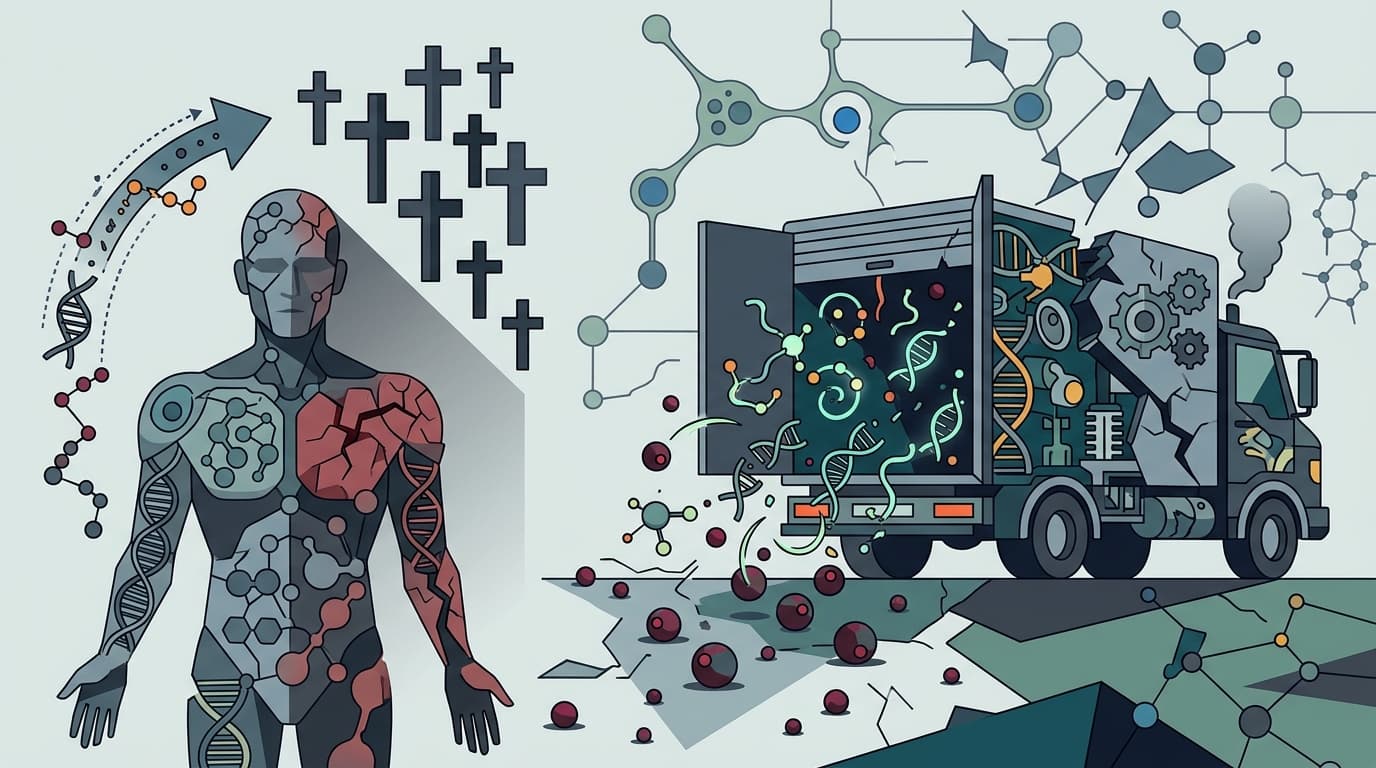
Think of CRISPR like a pair of molecular scissors. On their own, they're remarkably precise tools for editing DNA. But scissors don't deliver themselves. You need something to carry them into the right cells, deep inside a living human body.
That's where viral vectors come in. Scientists hollow out viruses, strip away the parts that make you sick, and stuff them with therapeutic cargo. AAV vectors are the gold standard because they're relatively gentle: low immunogenicity, mostly non-integrating (meaning they don't permanently wedge themselves into your genome).
But "relatively gentle" is doing a lot of heavy lifting in that sentence. When you inject billions of viral particles into a human body, especially at high doses or through systemic delivery, the immune system sometimes treats it like an invasion. Because, well, it is one.
The pattern keeps repeating. The FDA reported three cases of fatal acute liver failure after Sarepta's AAVrh74-based therapies by July 2025, including two pediatric Duchenne patients. Before that, Audentes Therapeutics saw two deaths in its AT132 program from progressive liver dysfunction followed by sepsis. The common thread isn't CRISPR specifically; it's the viral delivery system overwhelmed by the body's own defenses.
China's Oversight Gap
Both Chinese deaths occurred under what's called the investigator-initiated trial (IIT) pathway, which functions a bit like a fast lane for academic researchers to test experimental therapies without the full regulatory scrutiny that a pharmaceutical company would face. Critics argue this pathway allowed treatments to advance with inadequate preclinical evidence and weak disclosure requirements.
In the brain base-editing case, experts quoted in Science noted that animal data had already shown liver and kidney toxicity. Those red flags, they argued, should have triggered more investigation before anyone went near a child.
The regulatory response has been, to put it charitably, uneven. The physician in the Xinhua Hospital case reportedly received a verbal counseling and the hospital was fined roughly $3,600. For context, that's less than the cost of a nice used car, let alone adequate accountability for a child's death.
A new regulatory framework called Order No. 818, which took effect in 2026, imposes stricter requirements on trial design, preclinical safety evaluation, risk management, and product quality controls for IITs.
Whether it's enough remains an open question.
Washington Is Watching
The fallout isn't contained to China. U.S. House Republicans, led by Representatives John Moolenaar and Ben Cline, have asked the FDA to disregard clinical data generated in China unless FDA inspectors have physically visited the trial site within the prior 12 months. That's a significant escalation; it would effectively wall off an entire country's clinical infrastructure from the U.S. regulatory system.
The FDA, for its part, already has draft guidance specifically for in vivo genome-editing products, requiring detailed preclinical genome-editing data, off-target analysis, and long-term safety follow-up (up to 15 years for integrating vector products). But the agency is now under pressure to extend that scrutiny to the provenance of trial data itself, not just the science.
The Non-Viral Alternative Is Gaining Ground
There's a reason Intellia and other next-generation gene-editing companies have bet heavily on lipid nanoparticles (LNPs): tiny fat bubbles (the same basic technology behind mRNA COVID vaccines) that can deliver CRISPR components without any virus at all.
LNPs are transient by design. They deliver the editing machinery, it does its job, and then it degrades. No viral particles for the immune system to rage against. No risk of the vector inserting itself into your DNA. The trade-off is that LNPs don't reach every tissue as effectively as AAV vectors do, particularly for targets like muscle and the central nervous system.
But in a world where the delivery truck keeps crashing, maybe reaching fewer destinations safely is better than reaching more destinations in a body bag.
What This Means for the Field
These deaths won't kill CRISPR. The technology is too powerful and too promising for that. Casgevy, the first approved CRISPR therapy (for sickle cell disease), works ex vivo, meaning cells are removed from the patient, edited in a lab, and put back. That approach sidesteps the delivery problem entirely.
The real question is whether in vivo gene editing (editing cells directly inside the body) can clear its safety hurdle. The answer will depend on three things: better vectors, lower doses, and regulators willing to pump the brakes when the preclinical data says "not yet."
Jesse Gelsinger's death in 1999 didn't end gene therapy. It made it grow up. These deaths in China may do the same for CRISPR, if the field is willing to learn the lesson a second time.
Clinical & Regulatory4 min read
Zero Relapses in Three Years: The Cancer Vaccine That Won't Blink
A personalized cancer vaccine just posted 100% disease-free survival at three years in one of oncology's toughest cancers. Sixteen patients, zero relapses, and a field watching very closely.