
Teva's experimental antibody just aced a mid-stage celiac disease trial, posting the best data anyone has seen in the IL-15 space. With zero approved targeted therapies and a market approaching $1 billion, the race to deliver the first real celiac drug is officially on.
Imagine being allergic to bread. Not in the trendy, I-went-gluten-free-for-a-month way. In the your-immune-system-destroys-your-intestines-every-time-you-eat-a-sandwich way.
That's celiac disease. And right now, the only treatment is a strict gluten-free diet. No pill. No injection. No targeted therapy of any kind. Just willpower and ingredient lists, forever.
Teva just took a big step toward changing that.
On September 2, 2026, Teva announced that its experimental antibody TEV-408 hit the primary endpoint in a Phase 2a trial for celiac disease. In plain English: the drug did what it was supposed to do in a mid-stage study, proving it can prevent gluten-induced intestinal damage better than a placebo.
The trial enrolled 50 adults with celiac disease and used a clever design called a gluten challenge. Patients deliberately ate gluten, and then researchers measured what happened to their gut lining. The key metric was something called the villous height-to-crypt depth ratio (Vh:Cd), which is essentially a scorecard for how healthy the finger-like projections in your small intestine look.
Patients on TEV-408 saw a Vh:Cd change of -0.43, compared to -0.88 for placebo. That treatment difference of 0.45 hit statistical significance (p<0.05). Think of it like this: both groups took damage from the gluten, but the drug group's intestines held up roughly twice as well. Patients also reported fewer GI symptoms, and the safety profile came back clean.
Wall Street noticed. Teva's U.S.-listed shares jumped roughly 3% in premarket trading after the announcement.
Celiac disease is an autoimmune condition. When someone with celiac eats gluten, their immune system overreacts and starts destroying the lining of the small intestine. Over time, this causes nutrient malabsorption, chronic pain, fatigue, and a laundry list of complications.

Ultragenyx's Angelman syndrome drug showed zero benefit over sham treatment in a 129-patient Phase 3 trial, sending shares down over 40%. For families who'd pinned their hopes on the most advanced therapy in development, the fallout is devastating.


Join thousands of biotech professionals who start their day with our free, daily briefing.
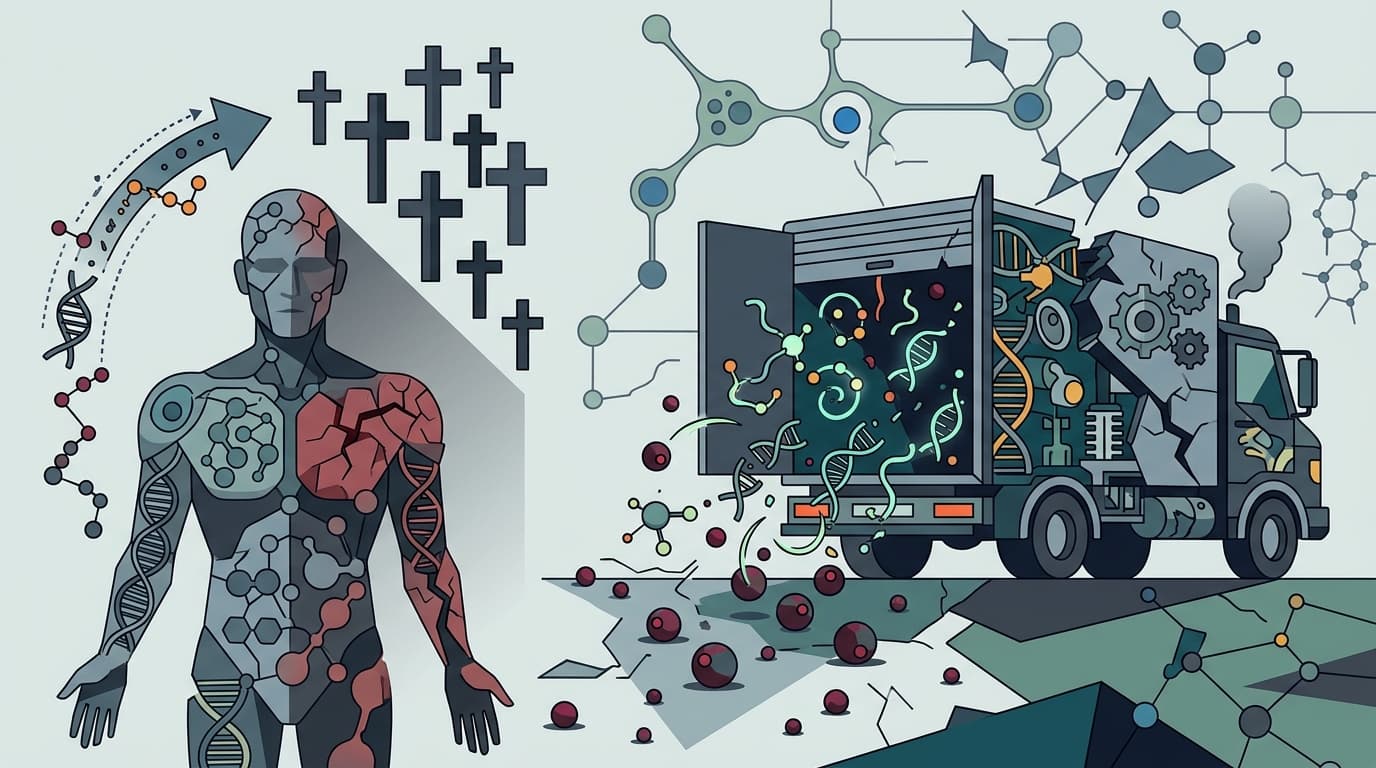
The villain in this story is a protein called interleukin-15 (IL-15). IL-15 acts like a fire alarm stuck in the "on" position. It tells immune cells to attack the gut lining, even when the actual threat (gluten) is gone. TEV-408 is a monoclonal antibody designed to block IL-15, essentially cutting the wire to that alarm so the immune system stops sending in the wrecking crew.
The FDA apparently agrees this is a problem worth solving urgently. It granted TEV-408 Fast Track designation back in May 2025, a label reserved for drugs targeting serious conditions with unmet medical needs.
This is the part that should make investors sit up straight.
There is no approved targeted therapy for celiac disease. None. The global celiac market sits somewhere around $720 million to $880 million in 2026, depending on which analyst report you trust. But that number reflects a world where management is limited to dietary avoidance and supportive care. If a real drug enters the picture, that market could balloon.
Celiac disease affects roughly 1% of the global population, though many cases go undiagnosed. That's a massive patient pool stuck on a treatment plan that essentially amounts to "just don't eat that." Anyone who's tried to be perfectly gluten-free knows how hard it is; cross-contamination at restaurants, hidden gluten in sauces, and the social tax of being that person at every dinner.
The first company to deliver an approved celiac drug won't just fill an unmet need. It'll open a floodgate.
Blocking IL-15 in celiac disease isn't a new idea. Amgen's AMG 714 (also known as PRV-015 or ordesekimab) was the original trailblazer in this space. It showed it could reduce intestinal inflammation, but the program stumbled: it failed to meet primary endpoints in later Phase 2 work. That stumble left the door wide open.
Teva walked right through it. TEV-408 now has the freshest positive data in the IL-15 celiac space, and the Fast Track designation gives it a regulatory tailwind. Meanwhile, Novartis acquired Calypso Biotech in 2024, bringing in CALY-002, another IL-15 blocking antibody. But that program hasn't advanced as far in celiac specifically.
So the competitive picture looks like this: Amgen tried and tripped, Novartis is lurking, and Teva just posted the best report card in the class.
Teva is framing TEV-408 as more than a celiac drug. The company has been using the phrase "pipeline-in-a-product" to describe the antibody, which is corporate-speak for "we think this one molecule can treat a bunch of diseases."
The logic is sound. IL-15 doesn't just cause problems in celiac disease. It plays a role in other autoimmune conditions where the immune system attacks healthy tissue. Teva has already shown Phase 1b activity in vitiligo (the skin condition that causes loss of pigmentation), and the company has mentioned alopecia areata (autoimmune hair loss) as another potential target.
If TEV-408 works across multiple autoimmune diseases, Teva won't just have a celiac drug. It'll have a franchise. That's the kind of asset that transforms a company's valuation, especially for a generics-heavy firm like Teva that's been trying to rebuild its branded pipeline for years.
Phase 2a is encouraging, but it's not the finish line. The trial only enrolled 50 patients, and the drug still needs to prove itself in larger, longer studies before the FDA would consider approval. Phase 3 trials are where most drugs go to die; roughly 50% of oncology drugs that clear Phase 2 fail in Phase 3, and autoimmune drugs face similar attrition.
But the signals here are genuinely promising. The drug hit its primary endpoint. It showed benefits on secondary measures like symptom scores and inflammatory markers (intraepithelial lymphocytes, which are immune cells that accumulate in damaged intestinal tissue). And it did all this with a single subcutaneous injection, not a daily pill regimen.
For celiac patients who've spent years reading every food label and still getting sick from accidental exposure, the idea of a drug that could protect their gut is enormous. It won't replace the gluten-free diet overnight. But it could be the safety net that millions of people have been waiting for.
Teva's next move will likely be designing a Phase 2b or Phase 3 trial. Given the Fast Track designation, the timeline could be compressed. For now, though, the company has something it hasn't had in a while: a headline-worthy clinical win and a clear path to a market that nobody owns yet.
A personalized cancer vaccine just posted 100% disease-free survival at three years in one of oncology's toughest cancers. Sixteen patients, zero relapses, and a field watching very closely.