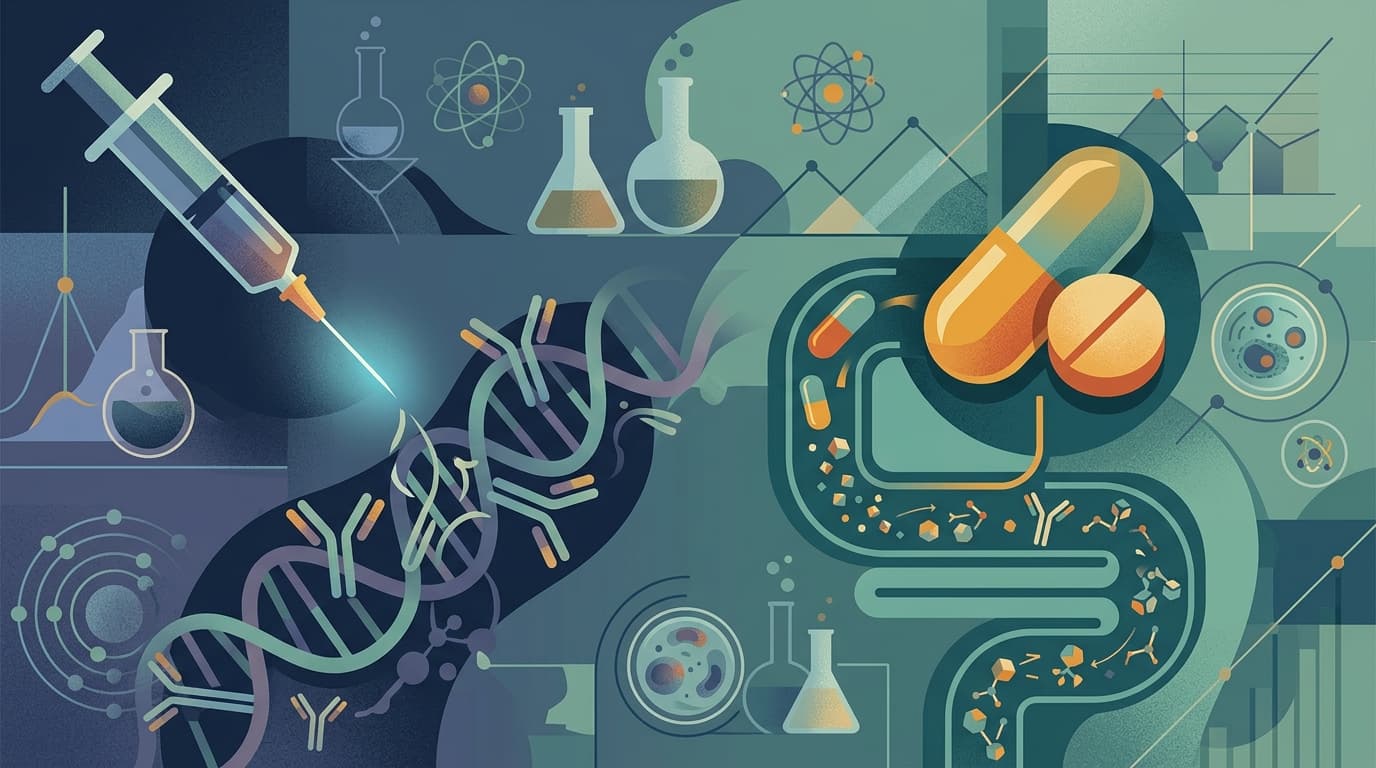

The FDA just approved the first oral peptide that targets the IL-23 pathway for plaque psoriasis, delivering biologic-level skin clearance in a once-daily pill. ICOTYDE could reshape how millions of patients manage their disease, and a $7 billion market along with it.
Imagine telling a psoriasis patient ten years ago that one day, they could swap their biweekly injection for a single pill each morning. They'd probably laugh. Then maybe cry a little. Then ask you to stop teasing them.
That future just arrived.
On March 18, the FDA approved ICOTYDE (icotrokinra), the first oral peptide to target the IL-23 pathway for moderate-to-severe plaque psoriasis. It's a once-daily pill for adults and kids 12 and older (weighing at least 40 kg) who need systemic therapy or phototherapy. And it comes from the unlikely pairing of biotech upstart Protagonist Therapeutics and pharma giant Johnson & Johnson, who've been collaborating on this molecule since 2017.
To understand why this matters, you need to know how psoriasis treatment has worked for the past decade. Patients with moderate-to-severe disease typically have two lanes: older oral drugs (like methotrexate) that suppress the immune system broadly and come with side effects, or newer biologics that target specific inflammatory proteins with impressive precision. The catch? Biologics are injections. Some are every two weeks, some monthly, but they all involve needles.
ICOTYDE is trying to thread a very specific needle (pun intended): biologic-level results in a pill you take with breakfast.
Plaque psoriasis is basically the immune system throwing a tantrum at the skin. A protein called IL-23 tells certain immune cells (Th17 cells) to ramp up inflammation, which causes the red, scaly patches that define the disease. Think of IL-23 as a coach screaming at players to play more aggressively. The players (Th17 cells) then produce other inflammatory proteins like IL-17 and IL-22, which attack the skin.
Most injectable biologics for psoriasis intercept either IL-23 itself or IL-17 downstream. ICOTYDE does something different: it blocks the IL-23 receptor, which is the ear that immune cells use to hear the coach's instructions. No signal received, no inflammatory cascade. Same pathway, new point of intervention, and crucially, delivered as a cyclic peptide you swallow.

For decades, patients with primary biliary cholangitis had treatments for their failing livers but nothing approved for the relentless itch that ruined their sleep and quality of life. The FDA just changed that with a first-of-its-kind approval that validates an entirely new mechanism of action.


Join thousands of biotech professionals who start their day with our free, daily briefing.
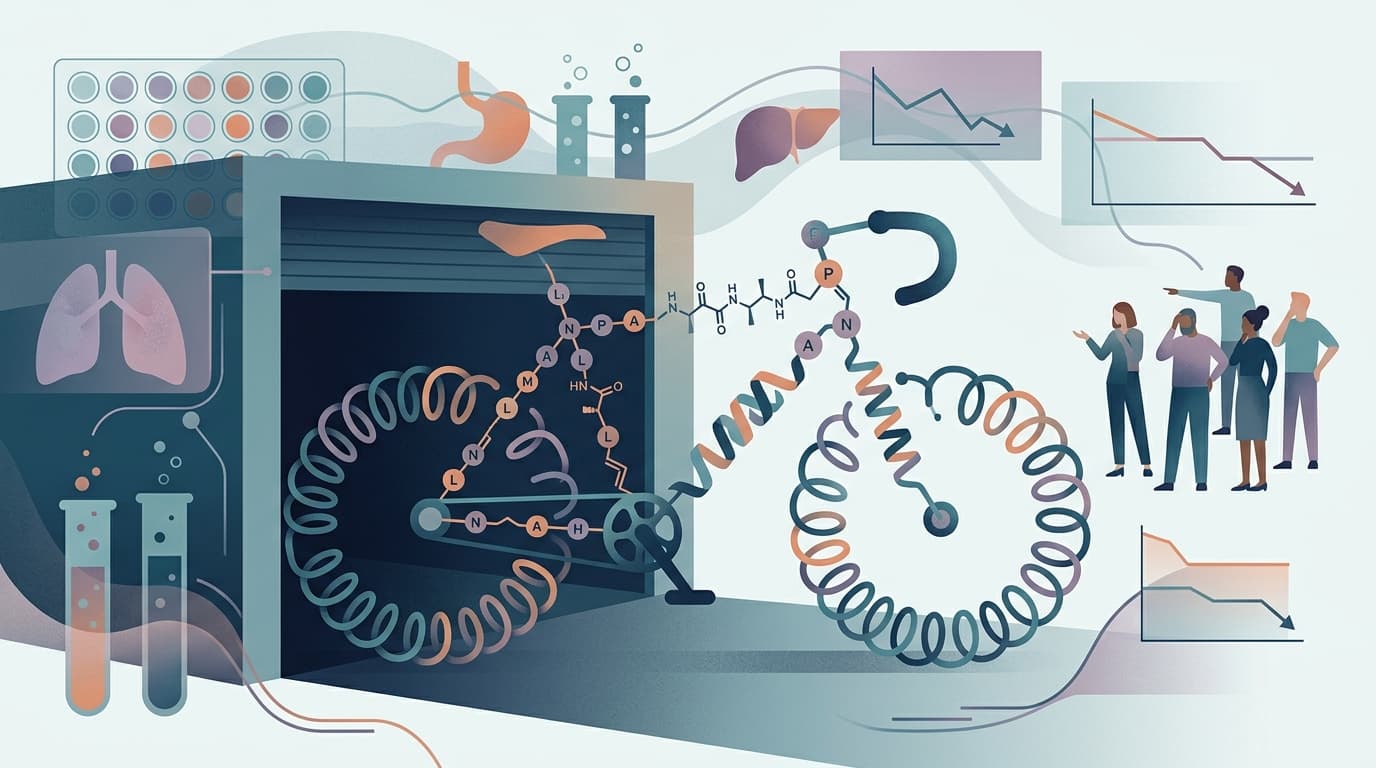
That last part is the engineering marvel. Peptides usually get destroyed in your stomach. Getting one to survive digestion, reach the bloodstream, and bind its target with picomolar (extremely tight) affinity is a bit like mailing a sandcastle across the country and having it arrive intact.
J&J ran the ICONIC Phase 3 program: five trials, roughly 2,500 patients. The results were hard to argue with.
In the flagship ICONIC-LEAD trial, 57% of patients on ICOTYDE achieved clear or almost clear skin (IGA 0/1) at Week 16, compared to just 6% on placebo. Half of the treated patients hit PASI 90, meaning their psoriasis improved by 90% or more. Only 4% of placebo patients could say the same.
Durability looked solid too. In the ICONIC-TOTAL study, 67% of patients maintained clear or almost clear skin from Week 24 through Week 52. For the notoriously stubborn spots (scalp, genitals, hands, and feet), the drug showed particularly strong results: 85% clearance for genital psoriasis and 72% for scalp psoriasis at one year.
One of the most striking findings: adverse event rates for patients on ICOTYDE were within 1.1% of placebo through Week 16. The most common issues were garden-variety stuff like nasopharyngitis (7%), upper respiratory infections (7%), and mild GI symptoms (6%).
No new safety signals popped up through Week 52. For dermatologists who've spent years weighing efficacy against risk, that's a profile that makes prescribing conversations a lot easier.
The psoriasis treatment market is large and growing. Biologics dominate, with TNF inhibitors alone holding nearly half the revenue share. But the market has a clear gap: patients who want biologic-level results without the inconvenience, anxiety, or needle fatigue that comes with injections.
ICOTYDE isn't the only oral player trying to fill that gap. Bristol Myers Squibb's deucravacitinib (a TYK2 inhibitor, brand name Sotyktu) launched a couple of years ago as a non-biologic oral option. But ICOTYDE's Phase 3 program included head-to-head trials showing superiority over deucravacitinib, giving J&J a strong competitive talking point.
Protagonist Therapeutics, which co-discovered the molecule, is eligible for up to $580 million in milestones, plus royalties of 6-10% on global sales. For a small biotech that licensed the molecule to J&J nearly a decade ago, that's a bet that's starting to pay off handsomely.
J&J hasn't disclosed pricing yet, which will be the next major headline. In a market where biologics can cost $30,000 to $70,000+ per year, the pricing of an oral alternative will signal whether ICOTYDE is positioned as a premium option or a broader-access play. Payers, dermatologists, and patients will all be watching.
J&J isn't stopping at psoriasis. The ICONIC program has Phase 3 trials running in psoriatic arthritis, ulcerative colitis, and Crohn's disease, all conditions where IL-23 plays a central role. If icotrokinra performs similarly in those indications, this little pill could become a franchise.
For the roughly 7.5 million Americans living with psoriasis, the significance is simpler. For years, the best treatments came with needles attached. Now there's a pill on the table that matches what those needles deliver. It won't be the right choice for every patient, but for many, this might be the moment they've been waiting for: effective treatment that fits in a pillbox instead of a sharps container.
Gossamer Bio's lead PAH drug missed its Phase 3 goal by the thinnest statistical margin imaginable. Now 77 employees are out, the stock is down 80%, and the company is fighting for survival with $137 million and a prayer.