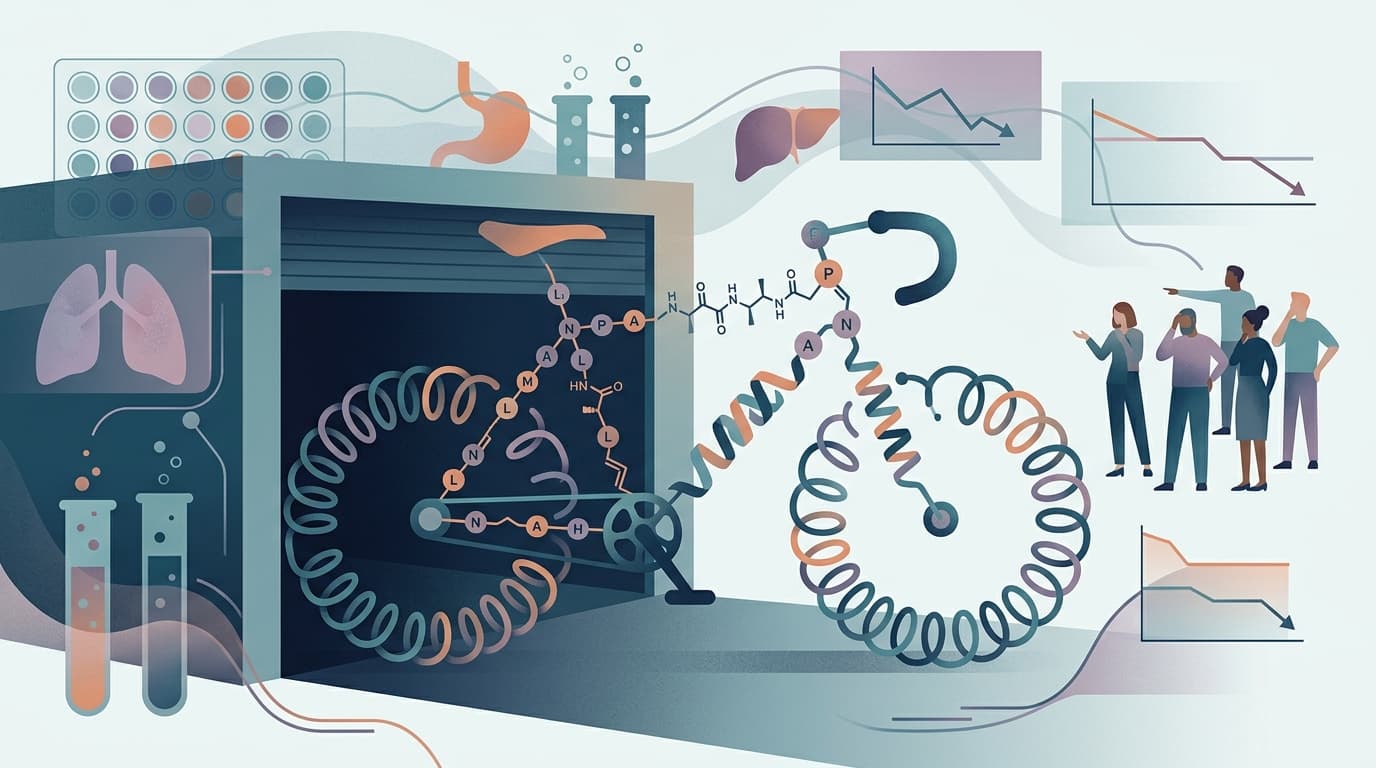

Gossamer Bio's lead PAH drug missed its Phase 3 goal by the thinnest statistical margin imaginable. Now 77 employees are out, the stock is down 80%, and the company is fighting for survival with $137 million and a prayer.
Imagine training for a marathon, putting in years of grueling work, and then losing by a single stride at the finish line. That's essentially what just happened to Gossamer Bio.
The San Diego biotech cut 48% of its workforce on March 17, laying off 77 employees after its lead drug, seralutinib, failed a pivotal Phase 3 trial in pulmonary arterial hypertension (PAH). The drug was supposed to be the company's ticket to the big leagues. Instead, it missed the mark by the slimmest of statistical margins, and now Gossamer is scrambling to survive.
The stock had already cratered more than 80% when the trial results dropped back in late February. Shares now trade around $0.43, barely above pocket change. For a company that once had serious momentum, this is a gut punch.
The Phase 3 study, called PROSERA, enrolled 390 PAH patients and tested inhaled seralutinib against a placebo over 24 weeks. PAH is a rare, progressive disease where high blood pressure in the lungs makes it hard to breathe, exercise, or sometimes even walk across a room. It's serious, and it's deadly.
The main goal was to see if patients on seralutinib could walk farther in six minutes (a standard test in PAH trials) compared to those on placebo. The drug group improved by 28.2 meters. The placebo group improved by about 13.5 meters. That left a placebo-adjusted difference of 13.3 meters.
Sounds like the drug worked, right? Not so fast.
The p-value (a statistical measure of whether a result is real or just random noise) came in at 0.0320. Gossamer had prespecified a stricter threshold of 0.025 to declare success. In plain English: the drug needed to clear a bar, and it clipped the bar on the way over. Close, but no cigar.
Analysts had expected the drug to show a 20 to 25 meter improvement over placebo for commercial viability. Even if the statistics had cooperated, the raw numbers might not have been enough to build a business on.

For decades, patients with primary biliary cholangitis had treatments for their failing livers but nothing approved for the relentless itch that ruined their sleep and quality of life. The FDA just changed that with a first-of-its-kind approval that validates an entirely new mechanism of action.


Join thousands of biotech professionals who start their day with our free, daily briefing.

Gossamer is hanging onto one bright spot. Among sicker patients (those classified as intermediate or high risk), seralutinib showed a 20-meter improvement over placebo. In patients treated at North American sites specifically, the number jumped to 25.9 meters.
The company is planning a Type C meeting with the FDA around June 2026 to discuss whether these subgroup findings could open a regulatory path forward. It's a reasonable play, but subgroup analyses are a bit like showing your teacher only the test questions you got right. The FDA will want to see the whole picture.
Meanwhile, Gossamer has paused enrollment in its other Phase 3 study, SERANATA, which was testing seralutinib in a related lung condition called PH-ILD. The company cited "regional placebo response discrepancies" as a concern, which is a polite way of saying the placebo results varied wildly depending on where patients were treated. That kind of noise makes it nearly impossible to trust the signal.
PAH drug development has always been brutal. The disease is rare (affecting roughly 15 to 50 people per million), which means smaller trials, noisier data, and higher stakes per patient enrolled. But the competitive landscape has also shifted dramatically.
Merck's sotatercept (branded as Winrevair) won FDA approval in March 2024 and immediately changed the game. Unlike older PAH drugs that mostly relax blood vessels, sotatercept actually targets the disease's underlying biology to reverse pulmonary vascular remodeling. In trials, it cut the risk of death or clinical worsening by up to 84% when added to existing therapy.
That's the new benchmark. Showing up with a 13-meter improvement, even in a different drug class, looks underwhelming by comparison. Seralutinib works through a totally different mechanism (it's an inhaled tyrosine kinase inhibitor targeting receptors called PDGFRα/β, CSF1R, and c-KIT that drive vascular remodeling and inflammation). The science was compelling. The Phase 2 data looked promising, with significant reductions in pulmonary vascular resistance. But Phase 2 promise is like a great first date; it tells you almost nothing about the long-term relationship.
Gossamer's balance sheet tells a sobering story. The company reported $136.9 million in cash at the end of 2025, with a projected runway into Q1 2027. Revenue dropped to $48.5 million in 2025 from $114.7 million the year before. The net loss: $170.4 million. And with negative equity of $122.8 million, this is a company spending money far faster than it's bringing it in.
The 48% workforce cut is classic biotech triage. When your lead program stumbles, you slash costs to buy time. Gossamer says it's "evaluating strategic options," which is corporate code for: we're open to partnerships, licensing deals, or a sale. Their partner Chiesi Farmaceutici is reportedly reviewing the full PROSERA dataset alongside Gossamer, so there's at least one lifeline still attached.
Gossamer isn't alone in this kind of freefall. Late-stage clinical failures routinely trigger layoffs, restructuring, and sometimes outright shutdowns in biotech. Tracon Pharmaceuticals terminated its workforce and shut down after a Phase 2 failure. Synlogic cut over 90% of its staff following a similar stumble. The playbook is depressingly familiar: trial fails, stock tanks, people lose their jobs, company pivots to "strategic alternatives."
What makes Gossamer's case particularly painful is the margin. Missing a statistical threshold by less than one percentage point (0.0320 vs. 0.025) is the biotech equivalent of losing the Super Bowl on a missed field goal in overtime. The science might still have merit. The drug might still help patients. But statistics don't grade on a curve, and Wall Street certainly doesn't either.
For the 77 people who just lost their jobs, those 13.3 meters might as well have been 13.3 inches. In biotech, close is just a more expensive way to fail.
Bicycle Therapeutics just axed 30% of its staff and shelved its most promising cancer drug after the FDA rejected the trial as an approval path. The pivot to radioconjugates is bold, but can a company rebuild its identity around earlier-stage assets?