The First Drug to Fight the Itch That Keeps 100,000 Americans Awake at Night
For decades, patients with primary biliary cholangitis had treatments for their failing livers but nothing approved for the relentless itch that ruined their sleep and quality of life. The FDA just changed that with a first-of-its-kind approval that validates an entirely new mechanism of action.
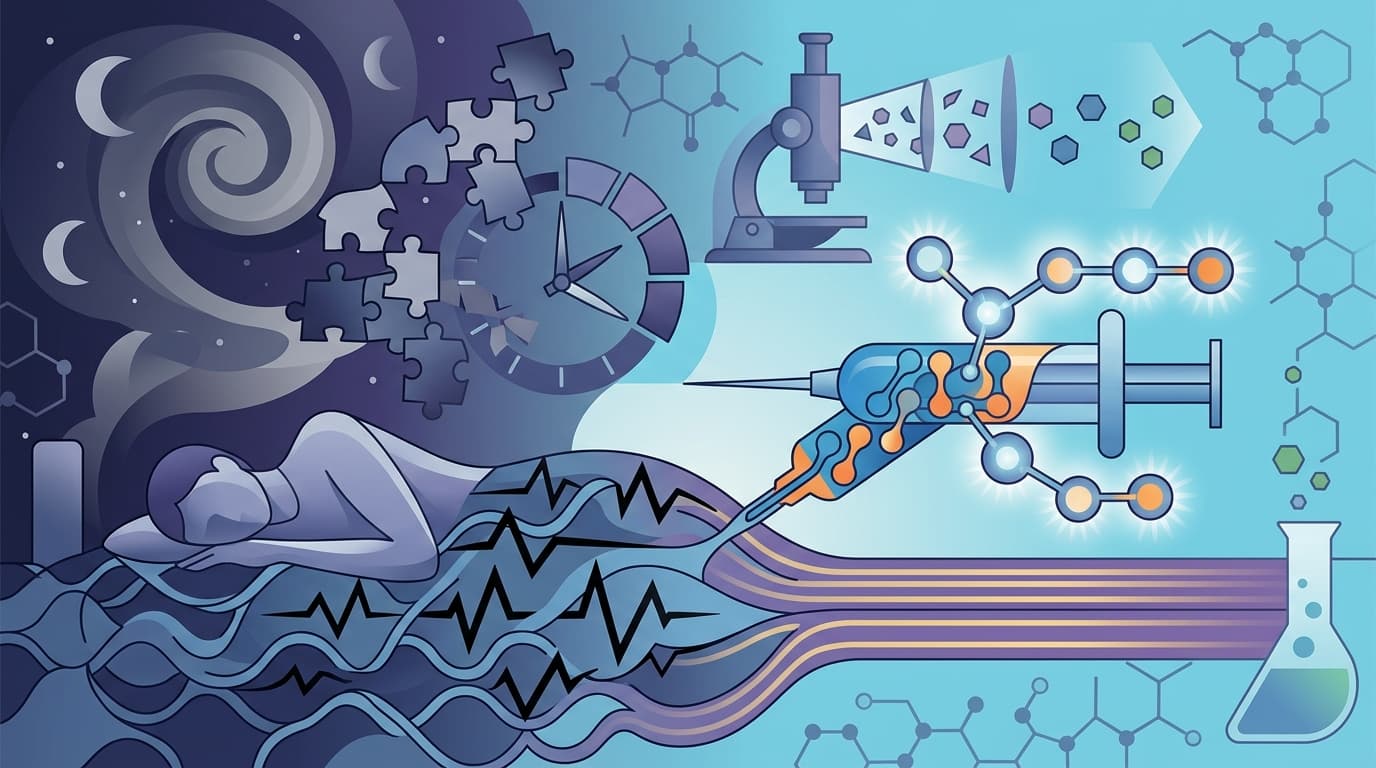
Imagine an itch you can't scratch away. Not a mosquito bite. Not poison ivy. An itch that comes from inside your body, triggered by bile acids pooling in your bloodstream because your liver is slowly destroying itself. An itch so relentless it wrecks your sleep, drains your energy, and dominates your waking hours.
Until last week, there was no FDA-approved drug for it. Doctors could only cobble together off-label remedies and hope for the best. That changed on March 17, when the FDA approved Lynavoy (linerixibat), the first therapy specifically designed to treat cholestatic pruritus in adults with primary biliary cholangitis.
For roughly 105,000 Americans living with PBC, this is a very big deal.
What PBC Does to Your Body (and Your Sanity)
Primary biliary cholangitis (PBC) is a chronic autoimmune disease where your immune system slowly attacks the bile ducts inside your liver. Think of bile ducts as the plumbing that carries bile, a digestive fluid, from the liver to the small intestine. When that plumbing gets damaged, bile backs up. Toxic bile acids spill into the bloodstream.
The result? An itch that up to 89% of PBC patients experience. We're not talking about mild discomfort. This is the kind of itch that makes people claw at their skin until it bleeds, the kind that ruins sleep night after night. Fatigue, depression, and a cratered quality of life follow close behind.
PBC predominantly affects women; about 70–80% of diagnosed cases occur in women, typically between ages 40 and 70. The standard treatment has been ursodeoxycholic acid (UDCA), which was approved by the FDA for PBC in 1987, a drug that slows liver damage. But UDCA doesn't fix the itch. Neither do the newer second-line drugs like obeticholic acid, seladelpar, or elafibranor, which focus on the underlying liver disease rather than the maddening pruritus.
So for decades, patients had treatments for their liver but nothing approved for the symptom that tortured them most.
How Lynavoy Breaks the Itch Cycle
To understand why linerixibat works, you need to know about a tiny protein gatekeeper sitting in your small intestine called IBAT (ileal bile acid transporter). Normally, IBAT recycles about your body produces, shuttling them from the gut back to the liver in a loop called enterohepatic circulation. It's efficient. It's elegant. And in PBC patients, it's part of the problem.
Get tomorrow's biotech intelligence before your competitors.
Join thousands of biotech professionals who start their day with our free, daily briefing.
95% of the bile acids
When bile acids can't flow properly through a damaged liver, that recycling loop keeps pumping more bile acids into an already overloaded system. The acids build up in the blood. The itch intensifies.
Linerixibat is like putting a "closed" sign on that recycling station. It blocks IBAT, preventing bile acids from being reabsorbed. Instead of circling back to the liver, the bile acids exit the body through the stool. Serum bile acid levels drop. The itch fades.
The beauty of the approach is its simplicity. Rather than trying to fix the damaged liver or suppress the immune system, linerixibat goes after the itch at its biochemical source: too many bile acids in the blood.
The Trial That Proved It Works
The FDA's decision rested on the GLISTEN trial, a Phase 3 study that enrolled 238 adults with PBC and moderate-to-severe itching across 19 countries. It was double-blind and placebo-controlled, the gold standard for proving a drug actually does what it claims.
The primary endpoint measured changes in monthly "worst itch" scores over 24 weeks. Linerixibat beat placebo with statistical significance (p=0.0013). The improvement showed up fast, too: patients reported itch relief as early as week two.
Beyond just itch scores, the trial hit its key secondary endpoint for sleep interference. That matters enormously. When your itch improves but you're still lying awake at 3 a.m., have you really gotten better? GLISTEN showed the answer was no: 56% of linerixibat patients experienced meaningful itch improvement, compared to 43% on placebo. Patients also reported better outcomes on the Patient's Global Impression of Change scale, plus reductions in alkaline phosphatase and bilirubin (both markers of liver stress).
The most common side effect was diarrhea, which makes biological sense. If you're diverting bile acids away from reabsorption and into the stool, your gut is going to notice. It's a trade-off most patients with severe, unrelenting itch would probably accept in a heartbeat.
A Drug With a Complicated Family Tree
Linerixibat's journey to approval is a story of corporate musical chairs. GSK discovered the molecule, shepherded it through early development, secured orphan drug designation in 2019, and ran the Phase 3 (GLISTEN) trial. The company did all the heavy lifting.
Then, just eight days before the FDA approved the drug, GSK handed the keys to someone else.
On March 9, 2026, GSK licensed worldwide rights to Alfasigma S.p.A., an Italian pharmaceutical company with deep roots in gastrointestinal and liver diseases. The deal was worth up to $690 million: $300 million upfront, $100 million triggered by FDA approval (cha-ching), $20 million for EU/UK approval, up to $270 million in sales milestones, and tiered double-digit royalties.
GSK's Chief Scientific Officer Tony Wood pointed to Alfasigma's PBC expertise as the rationale, saying the move lets GSK refocus on other liver programs like MASH and hepatitis B. Alfasigma CEO Francesco Balestrieri said his company is "uniquely positioned to lead the worldwide commercialisation."
The timing is fascinating. GSK spent years and considerable resources developing this drug, only to sell it right before the finish line. That $300 million upfront is nice, but if linerixibat becomes a blockbuster in a patient population starved for options, those royalty checks could look like a bargain for Alfasigma.
The Bigger Picture: Why This Approval Matters Beyond PBC
Lynavoy's approval does more than help PBC patients. It validates a whole mechanism of action. IBAT inhibition has been explored for other conditions, including metabolic liver diseases like NASH (now called MASH). Linerixibat's own early data showed improvements in cholesterol and triglyceride levels through the same bile acid pathway. Animal studies demonstrated reduced liver inflammation and fibrosis.
If blocking bile acid reabsorption proves useful across multiple liver diseases, Lynavoy could be the opening act for an entire class of therapies. That's the kind of precedent that gets drug developers and investors excited.
The commercial opportunity is significant too. The global PBC treatment market is projected to grow from $1.33 billion in 2024 to $2.72 billion by 2033. Lynavoy won't capture all of that (it treats itch, not the underlying disease), but it fills a gap that no other approved drug currently addresses. And with regulatory reviews underway in the EU, UK, Canada, and China (where it received priority review), the addressable market extends well beyond the U.S.
What's Left to Watch
A few open questions remain. Alfasigma hasn't announced pricing yet, and in an era of intense scrutiny over drug costs, the orphan drug designation (which offers market exclusivity and tax incentives) will shape that conversation. A long-term safety study is still ongoing, which should provide more data on whether diarrhea and other side effects remain manageable over years of use.
There's also the access question. Only about 53.5% of PBC patients are currently managed by a specialist, despite the disease's complexity. Nearly half are seeing general practitioners who may not be aware that an itch-specific therapy now exists. Alfasigma's commercial strategy will need to bridge that gap, getting the word out to the hepatologists, gastroenterologists, and primary care doctors who see these patients.
But for the tens of thousands of Americans who've been clawing at their skin for years with no relief in sight, those are tomorrow's problems. Today, for the first time, there's an FDA-approved drug built specifically for them.
That alone is worth losing sleep over. (In a good way, for once.)
4 min read
Bicycle Therapeutics Just Parked Its Best Bike in the Garage
Bicycle Therapeutics just axed 30% of its staff and shelved its most promising cancer drug after the FDA rejected the trial as an approval path. The pivot to radioconjugates is bold, but can a company rebuild its identity around earlier-stage assets?