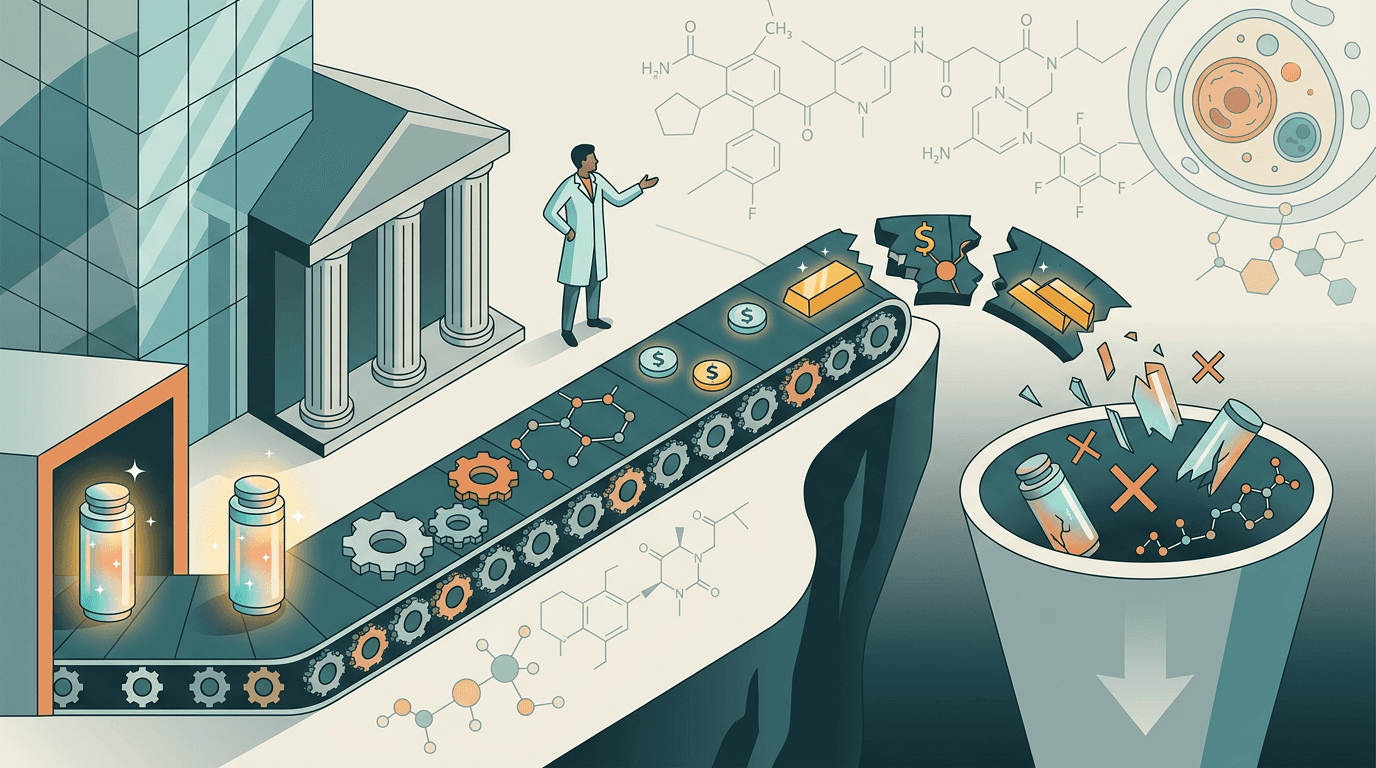

Ipsen paid $952 million for Albireo Pharma in 2023, then quietly shelved two of the pipeline candidates that came with the deal. The crown jewel is thriving, but the extras just hit the trash — and it's a pattern pharma keeps repeating.
Imagine buying a house because you love the kitchen, then discovering the basement floods and the roof leaks. You'd probably stop fixing those rooms and just enjoy cooking. That's basically what Ipsen did with its 2023 acquisition of Albireo Pharma.
The French drugmaker paid $952 million upfront (plus up to approximately $227 million in milestone payments) to acquire the rare liver disease specialist. The crown jewel: Bylvay, an approved drug for a brutal pediatric condition. But the deal also came with two earlier-stage liver disease candidates, ritivixibat (A3907) and A2342. Both programs have now been quietly shelved following a strategic portfolio review.
No dramatic trial failure. No shocking safety signal. Just a slow fade into irrelevance.
Let's start with ritivixibat, the more advanced of the two. This was a Phase 2 candidate being tested in primary sclerosing cholangitis (PSC), a chronic liver disease with no approved treatments. PSC is a notoriously difficult disease to study: patients are rare, progression is slow, and clinical trials struggle to enroll enough people.
That's exactly what happened. Ipsen's Phase 2 trial ran into recruitment difficulties and was terminated early. Not because the drug was dangerous or clearly ineffective, but because they simply couldn't get enough patients into the study to generate meaningful data. It's the clinical trial equivalent of throwing a party that nobody shows up to.
Then there's A2342, which targets a different bile acid pathway (NTCP inhibition, for the curious). This one was still in early development at the time of the acquisition. No Phase 2 was initiated. No new trials were planned. The drug quietly disappeared from Ipsen's official pipeline documents.
By February 2026, neither asset appeared in Ipsen's pipeline PDF. The message was clear without anyone having to say it out loud.
If you're wondering whether this means the Albireo deal was a total disaster, the answer is more nuanced than that. remains on a strong growth trajectory. Ipsen is actively expanding the drug into new indications, with an ongoing Phase 3 trial in pediatric biliary atresia.

A bipartisan bill would ban all nonhuman primate imports into the U.S., threatening the supply chain for preclinical drug testing. With 20,000+ monkeys imported annually for research, the legislation could force an industry-wide scramble toward alternative testing methods.


Join thousands of biotech professionals who start their day with our free, daily briefing.
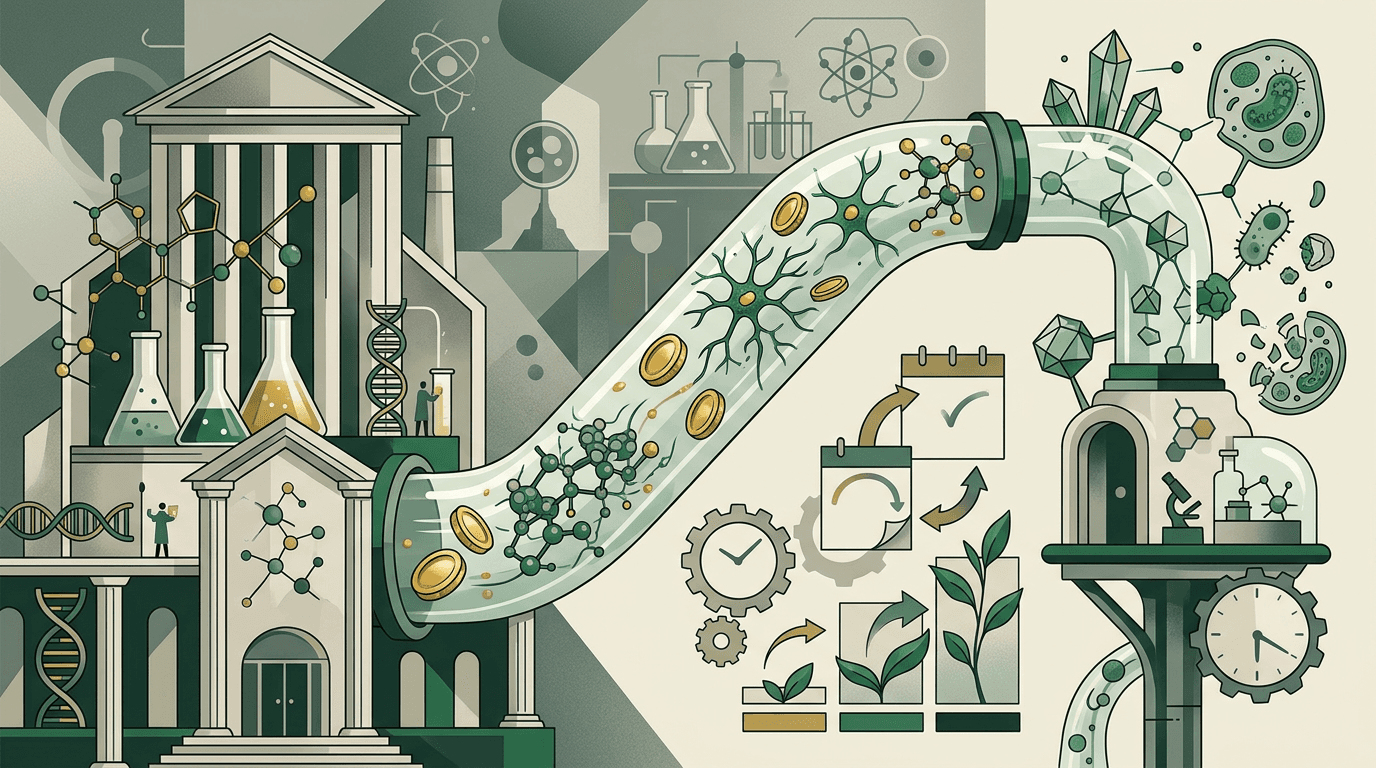
The acquisition's contingent value right (CVR) of $10 per share is actually tied to that biliary atresia approval. If the FDA greenlights it, Ipsen pays former Albireo shareholders an additional approximately $227 million. So the deal's biggest bet hasn't even played out yet.
In other words: the house's kitchen is performing beautifully. The basement and roof were just more trouble than they were worth.
Ipsen's situation illustrates a pattern that repeats across the industry like a bad sequel nobody asked for. A big company buys a smaller one primarily for its lead asset, gets a couple of early-stage programs thrown in as "bonus" pipeline candidates, then discovers those extras don't justify the investment required to develop them.
The math tells the story. Ipsen paid a 104% premium over Albireo's 1-month volume-weighted average price to close this deal. That premium was justified by Bylvay's commercial potential and the biliary atresia opportunity. The Phase 2 PSC program and Phase 1 NTCP inhibitor were nice-to-haves, not deal drivers.
But here's the uncomfortable truth: when you pay nearly a billion dollars for a company, investors naturally expect you to maximize every piece of the portfolio. Shelving two programs signals that some of that value has evaporated, even if the acquirer never explicitly books a write-down.
To their credit, Ipsen isn't sitting around mourning lost candidates. The company posted Q1 2026 sales growth of 22.6% and is running a diversified pipeline across oncology, rare diseases, and neuroscience. In December 2025, they acquired ImCheck Therapeutics to bolster their immuno-oncology portfolio. They licensed an antibody-drug conjugate (ADC) from Simcere. They signed a research collaboration with the Université de Montréal.
Their rare disease segment grew over 100% in 2025, largely thanks to Bylvay and another recent launch. Core operating margins hit 35.2%, up 2.6 percentage points. This is a company that's doing well overall.
But the ritivixibat and A2342 terminations serve as a reminder: in pharma M&A, you're often paying filet mignon prices for a meal that comes with sides you might not eat.
The lesson isn't that acquisitions are bad. Ipsen clearly got enormous value from Bylvay. The lesson is about how companies and investors should think about early-stage pipeline assets in an acquisition context.
When a buyer trumpets all the "additional pipeline value" in a deal announcement, remember that early-stage programs fail at astronomical rates. A Phase 1 asset has roughly a 10% chance of ever reaching patients. A Phase 2 program in a disease as tricky as PSC? Maybe slightly better odds, but not by much.
Ipsen's strategic review was probably the right call. Pouring resources into a PSC trial that couldn't recruit, or advancing a Phase 1 compound with uncertain differentiation, would have been throwing good money after bad. Sometimes the smartest move is cutting your losses and focusing on what's working.
But it does make you wonder: when the next billion-dollar acquisition gets announced with a "robust pipeline of additional candidates," how many of those candidates will still be around three years later?
History suggests: fewer than the press release implies.
The FDA is letting Amgen and AstraZeneca stream clinical trial data to regulators in real time, ditching the decades-old "run the study, then submit everything" model. If it works, drug development timelines could compress by months, and the entire industry will want in.