

Immutep's stock lost nearly 89% of its value in a single morning after regulators pulled the plug on its flagship Phase 3 lung cancer trial. A 15-year bet on a novel immunotherapy approach just hit the wall.
Imagine spending 15 years building a house. You pour the foundation, frame the walls, wire the electricity. You're finally ready to install the roof. Then someone tells you the whole structure can't stand.
That's roughly what happened to Immutep on March 13, 2026. The Australian biotech's stock cratered roughly 78–80% in a single trading session, vaporizing most of the company's market value before lunch. Investors weren't just selling; they were sprinting for the exits.
The trigger? An independent data monitoring committee (IDMC), basically a safety referee for clinical trials, looked at the interim data from Immutep's crown jewel Phase 3 study and said: stop. This isn't going to work.
The trial in question was TACTI-004, a massive Phase 3 study testing Immutep's drug eftilagimod alfa (efti) combined with Merck's blockbuster Keytruda and chemotherapy as a first-line treatment for non-small cell lung cancer (NSCLC). This is the most common type of lung cancer, and cracking the code for frontline treatment is the kind of prize that makes or breaks entire companies.
The study was designed to enroll around 756 patients across more than 150 sites in over 25 countries. It had reached approximately half enrollment when the IDMC pulled the plug after a planned futility analysis, which is exactly what it sounds like: a statistical check to see if there's any realistic chance the drug can still win. The answer was no.
Both primary endpoints, progression-free survival and overall survival, were headed nowhere. The committee recommended discontinuing the trial entirely. Not pausing. Not adjusting. Discontinuing.
To understand why this stings so much, you need to understand what efti was supposed to do. Most cancer immunotherapies work by "releasing the brakes" on your immune system. Checkpoint inhibitors like Keytruda block proteins that cancer cells use to hide from T cells. Think of it as removing a disguise.

For decades, patients with primary biliary cholangitis had treatments for their failing livers but nothing approved for the relentless itch that ruined their sleep and quality of life. The FDA just changed that with a first-of-its-kind approval that validates an entirely new mechanism of action.


Join thousands of biotech professionals who start their day with our free, daily briefing.
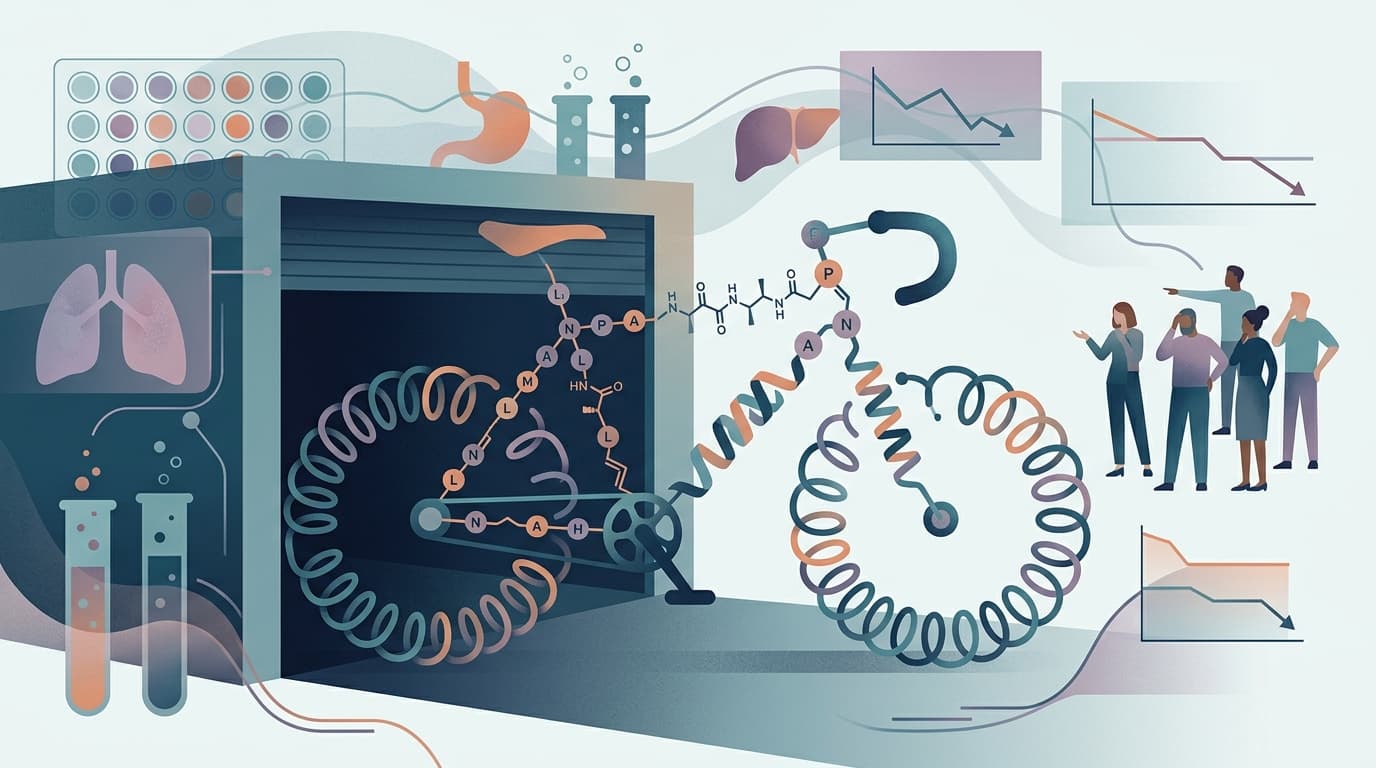
Efti was designed to do something fundamentally different. Instead of just removing the disguise, it was supposed to push the gas pedal. Efti is a soluble LAG-3 protein, and rather than blocking LAG-3 on T cells (like Bristol Myers Squibb's approved drug Opdualag does), it activates antigen-presenting cells: the immune system's scouts that identify threats and rally the troops. The idea was elegant. Combine the gas pedal (efti) with the brake release (Keytruda) and let the immune system go full throttle against tumors.
On paper, beautiful. In a Phase 3 trial, not so much.
This is where the story gets painful, because Immutep had reasons to believe. Their Phase 2 data looked genuinely promising. The earlier TACTI-002 study showed a median overall survival of 20.2 months across all patients, climbing to 25 months in patients with higher PD-L1 expression (a biomarker that suggests immunotherapy might work). In head and neck cancer, the Phase 2b TACTI-003 trial delivered an objective response rate of 34%.
But Phase 2 trials are smaller, often uncontrolled, and notoriously unreliable predictors of Phase 3 success. It's like acing a practice test and assuming the real exam will be just as easy. One analyst group, ApexOnco, highlighted exactly this risk: advancing from a small, single-arm Phase 2 to a controlled Phase 3 is where promising data goes to die. The signal rarely replicates.
And the industry data backs this up. Roughly 40% or more of Phase 3 trials fail, even after clearing Phase 2.
Analysts didn't mince words. Baird's Colleen Kusy downgraded the stock from Outperform to Neutral and slashed the price target from $7.00 to $1.00. Citizens analyst Reni Benjamin dropped his rating to Market Perform and stripped all NSCLC revenue projections from his financial models. When analysts start zeroing out your revenue forecasts, that's not a haircut; it's a scalping.
Jefferies noted that efti's efficacy is "obviously in question" following the failure. That distinction matters, but it's cold comfort when your market cap has fallen below your cash balance.
Immutep CEO Marc Voigt said he was "very disappointed and surprised," which is about as candid as biotech CEOs get in public.
Immutep isn't dead, but its flagship program is. NSCLC was the company's biggest bet, the indication that justified its valuation and gave investors a reason to hold on. Without it, the strategic picture narrows dramatically.
The company still has irons in the fire. Its AIPAC-003 Phase 2 trial in metastatic breast cancer showed response rates of 42% to 49% depending on dose, which is encouraging. There's early work in soft tissue sarcomas and other indications. But none of these programs are anywhere close to Phase 3, and rebuilding investor confidence after a crash of this magnitude is like trying to refill a swimming pool with a garden hose.
The broader LAG-3 landscape isn't going away. BMS's Opdualag is already approved for melanoma, with studies ongoing in other cancers. The LAG-3 market is projected to grow from roughly $588 million in 2025 to over $6 billion by 2035. But Immutep just lost its seat at that table's head, and getting it back will require years of new data, new trials, and a whole lot of patience from whatever investors remain.
Biotech investing is, at its core, a binary bet. Either the drug works or it doesn't, and when you're a small company with one Phase 3 program carrying most of your valuation, the downside is existential. Immutep joins a growing list of companies that have seen their valuations decimated by late-stage trial failures.
Phase 3 trials can cost tens of millions of dollars, with daily operational costs running around $55,000 per day. When they fail, the money is gone, the years are gone, and the market moves on with brutal efficiency.
For Immutep, fifteen years of development culminated in a single committee meeting and a single recommendation: futile. The science may still have merit somewhere down the road. But on March 13, the market delivered its own interim analysis, and the conclusion was unambiguous.
Gossamer Bio's lead PAH drug missed its Phase 3 goal by the thinnest statistical margin imaginable. Now 77 employees are out, the stock is down 80%, and the company is fighting for survival with $137 million and a prayer.