
GSK is paying up to $1.3 billion for a HUTCHMED cancer drug that hasn't been tested in a single human. The molecule targets both KRAS and EGFR simultaneously, attacking the biological escape route that makes these cancers so hard to treat.
Cancer cells are escape artists. Block one pathway, and they reroute through another like traffic dodging a closed highway. That's been the central frustration of targeting KRAS, one of the most common cancer-driving mutations in the world. Now GSK is spending up to $1.3 billion on a molecule designed to shut down two escape routes at once.
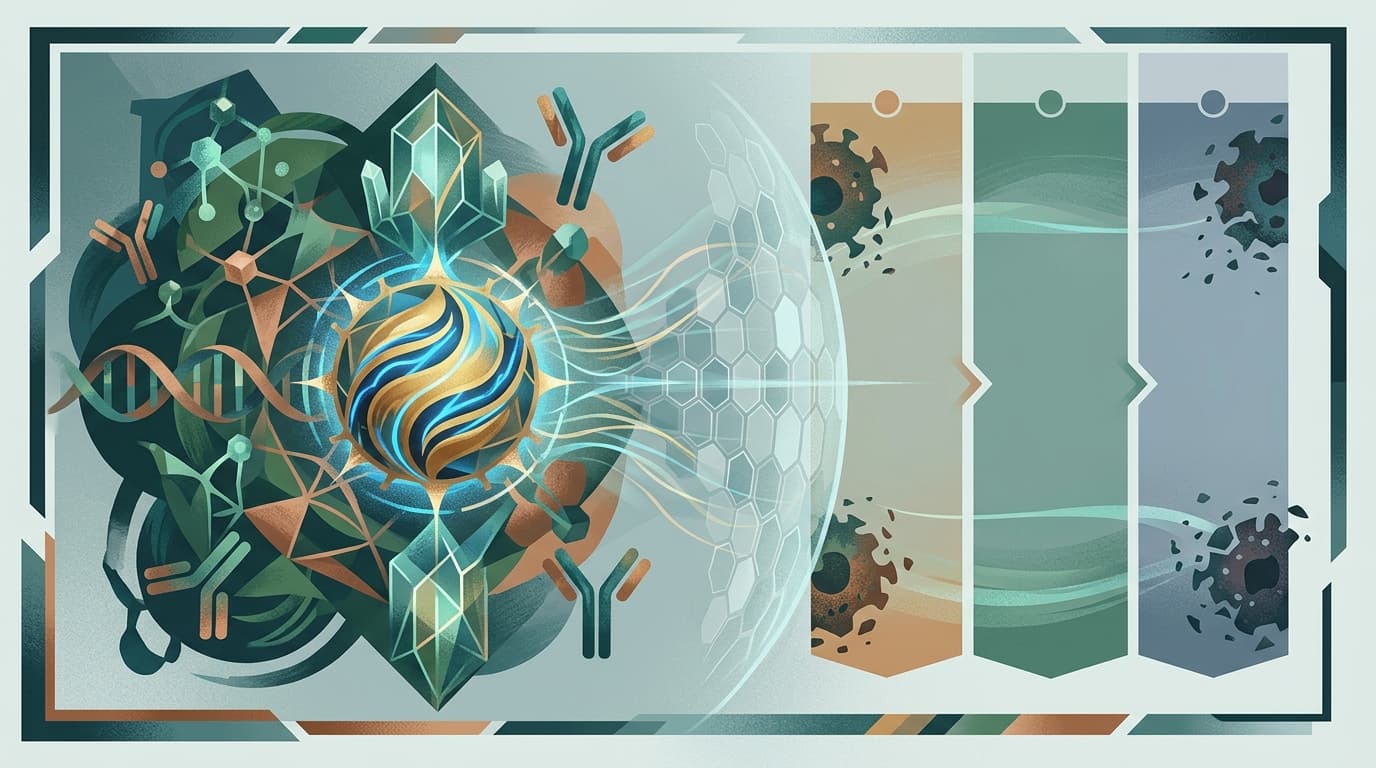
The deal, announced this week, gives GSK exclusive rights to HUTCHMED's HMPL-A830, a first-in-class drug that combines an anti-EGFR antibody with a KRAS inhibitor payload in a single molecule. Think of it as a guided missile that locks onto a tumor's front door (EGFR) while smuggling in a bomb for the back room (KRAS). The drug has only recently entered early clinical development, with a Phase I/IIa first-in-human trial (NCT07718581) registered for an August 2026 start, which makes the price tag all the more striking.
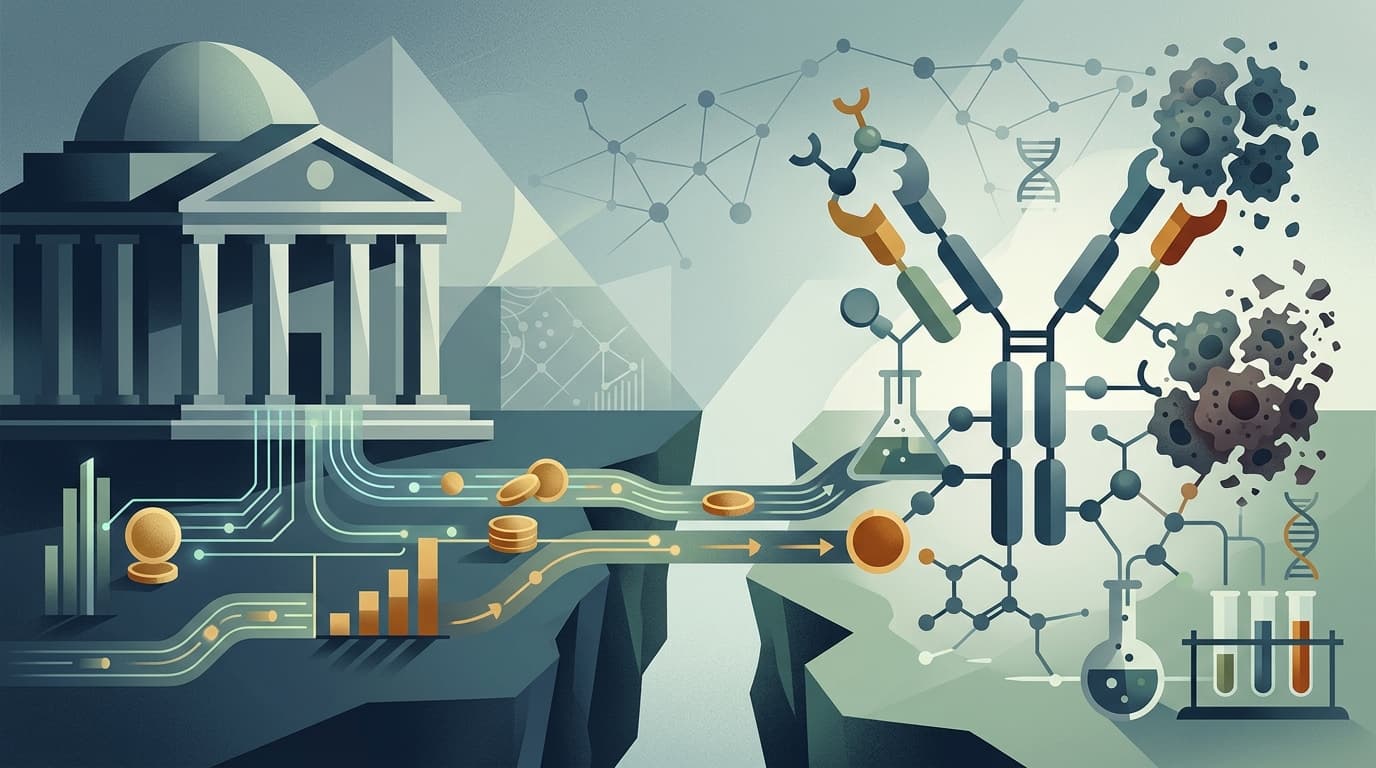
The financial structure follows a familiar playbook, but the numbers are notable for something so early. HUTCHMED pockets $110 million upfront at closing. On top of that, GSK could pay up to $1.185 billion in development, regulatory, and commercial milestones, with tiered royalties layered on top of any eventual sales.
GSK gets worldwide rights outside of Mainland China, Hong Kong, Macau, and Taiwan. HUTCHMED keeps those territories for itself. And HUTCHMED will actually run the global Phase I program, which is expected to kick off in the second half of 2026 targeting colorectal, pancreatic, and lung cancers.
For context, HUTCHMED's biggest prior deal was a $1.13 billion pact with Takeda for fruquintinib back in 2023. This GSK agreement tops that ceiling and signals that the Hong Kong-based company's partnering strategy is paying off. HUTCHMED has been methodically positioning itself as a China-rooted innovation engine that licenses globally through partners rather than building its own worldwide sales force.
To understand why GSK is willing to pay this much for an untested drug, you need to understand the problem it's trying to solve.

Ultragenyx's Angelman syndrome drug showed zero benefit over sham treatment in a 129-patient Phase 3 trial, sending shares down over 40%. For families who'd pinned their hopes on the most advanced therapy in development, the fallout is devastating.


Join thousands of biotech professionals who start their day with our free, daily briefing.
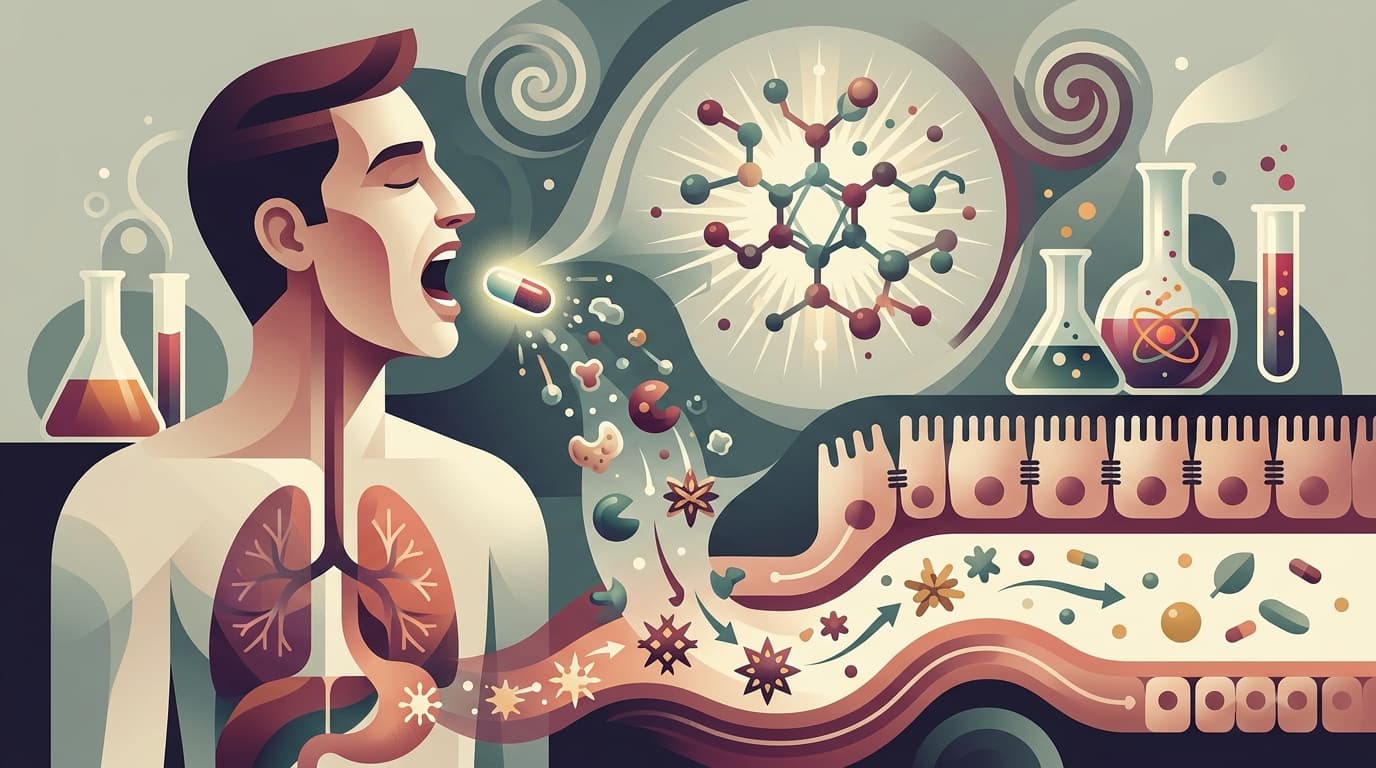
EGFR and KRAS sit on the same signaling highway inside cancer cells. EGFR is the on-ramp; KRAS is a major interchange further down. When doctors block EGFR with drugs like cetuximab, tumors often develop KRAS mutations that bypass the blockade entirely. And when newer KRAS inhibitors shut down that interchange, cancer cells crank up EGFR signaling as a workaround. It's a biological game of whack-a-mole.
This is what scientists call signaling redundancy: the cell has backup wiring, and hitting one switch just flips the other. The result is that single-target drugs in this pathway tend to work for a while, then stop.
HMPL-A830 is designed to break this cycle. The anti-EGFR antibody delivers the KRAS inhibitor directly into EGFR-expressing tumor cells, concentrating the payload where it's needed while sparing normal tissue. Meanwhile, the antibody itself blocks EGFR signaling. One molecule, two mechanisms, one (theoretical) closed loop.
The strongest scientific case for this approach is in KRAS-mutant colorectal cancer, where EGFR-mediated feedback has been repeatedly identified as the dominant resistance mechanism to KRAS inhibitors. That's why CRC is at the top of the target list for the upcoming trial.
This isn't a one-off bet for GSK. The pharma giant has been on an oncology shopping spree that would make a private equity firm blush.
Earlier in 2026, GSK agreed to acquire Nuvalent for roughly $10.6 billion, adding late-stage lung cancer assets to its portfolio. It also picked up IDRx for an experimental gastrointestinal-tumor drug. And its internal pipeline features two antibody-drug conjugates (ADCs) targeting B7-H3 and B7-H4, with the B7-H3 ADC (risvutatug rezetecan) already in a pivotal Phase III trial since August 2025 and the B7-H4 program heading toward pivotal trials.
The pattern is unmistakable: GSK is buying and licensing targeted oncology assets at a pace that suggests the company views cancer as its next major growth franchise. The HUTCHMED deal fits neatly into this strategy, adding a novel conjugate modality to a portfolio already heavy on precision approaches.
Zoom out further and the GSK-HUTCHMED deal is just one chapter in a much bigger story. Big pharma has decided that KRAS is no longer a "maybe" market; it's a validated franchise with room for multiple winners.
In just the past year, AstraZeneca licensed a pan-KRAS inhibitor from Jacobio in a deal worth up to $2.015 billion. Bayer grabbed a KRAS G12D inhibitor from Kumquat for up to $1.3 billion. Merck signed a $2.5 billion licensing deal with Taiho and Astex for KRAS inhibitors. The capital flooding into this space is staggering.
The first-generation KRAS drugs, Amgen's sotorasib (Lumakras) and Bristol Myers Squibb's adagrasib (Krazati), both target a single mutation called G12C. They've had mixed commercial results so far, but industry projections suggest each could top $500 million in annual sales by 2030. The next wave of competition is coming from programs targeting G12D, pan-KRAS, and (in HUTCHMED's case) combination approaches that pair KRAS inhibition with a second mechanism.
All of this sounds compelling on paper. And that's exactly where it lives right now: on paper.
HMPL-A830 has zero human data. The preclinical results reportedly show superior potency and safety compared to single-target approaches, but preclinical results are the dating profile of drug development. They show you the best version; reality often looks different.
The Phase I trial (registered as NCT07718581) will be the first real test. Can the molecule actually deliver its KRAS payload selectively into tumors? Does the dual mechanism translate into meaningful clinical benefit? And does the safety profile hold up when you move from mice to humans?
GSK is clearly betting that the scientific logic is sound enough to justify the risk. The $110 million upfront is real money, but it's also less than 9% of the deal's total potential value. The bulk of the payout is milestone-gated, meaning HUTCHMED only collects the full $1.295 billion if the drug actually works.
That's the beauty of biotech dealmaking: big numbers make great headlines, but the fine print tells you how much confidence is real and how much is aspiration. GSK is intrigued. But it's not all-in. Not yet.
A personalized cancer vaccine just posted 100% disease-free survival at three years in one of oncology's toughest cancers. Sixteen patients, zero relapses, and a field watching very closely.