
The FDA just approved the first drug that targets the root cause of narcolepsy type 1, not just its symptoms. Takeda's Orzeyful could open a multibillion-dollar market in sleep medicine, but its most ironic side effect might surprise you.
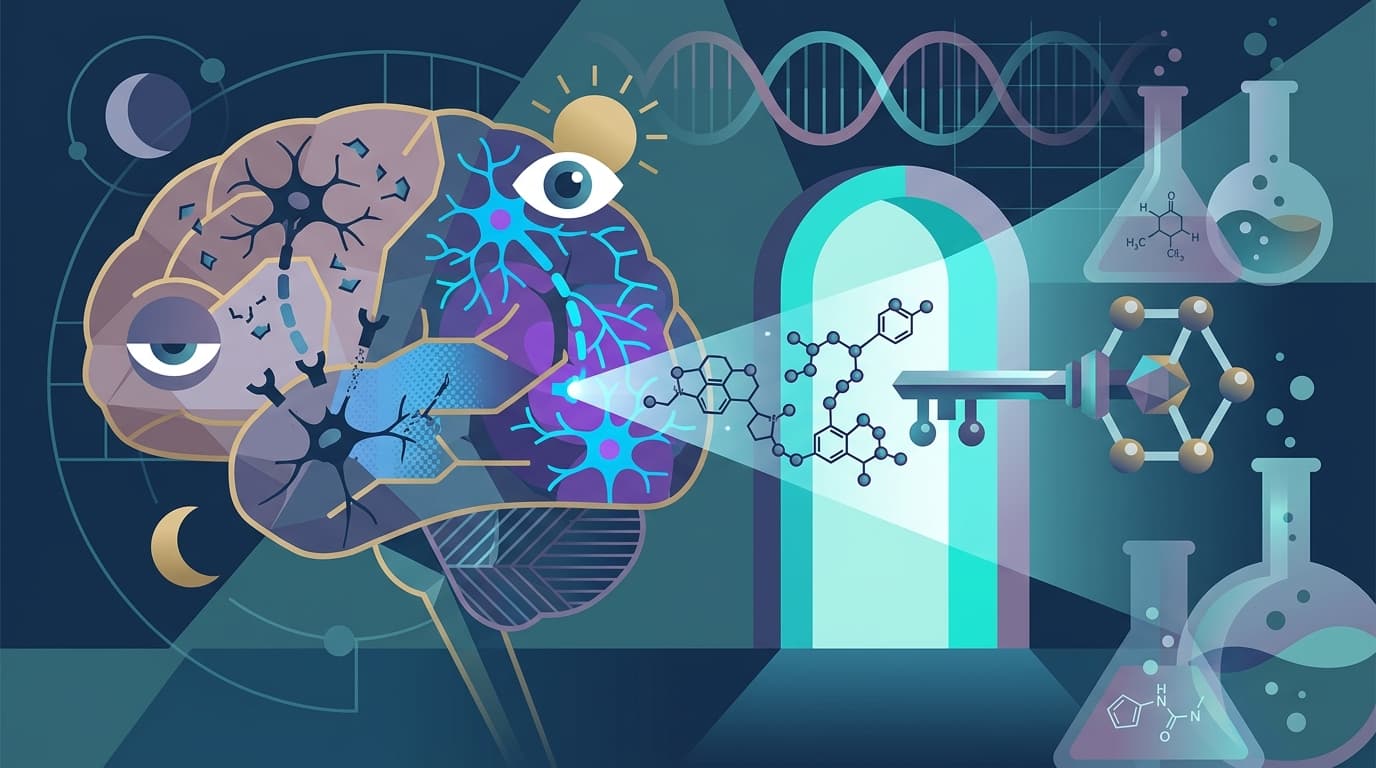
Imagine your brain has a light switch for wakefulness. Now imagine someone ripped that switch off the wall. That's narcolepsy type 1 in a nutshell: the neurons that produce orexin, a chemical signal that keeps you awake and alert, are destroyed. Every treatment until now has been the equivalent of duct-taping a flashlight to the ceiling. Helpful, sure. But not exactly fixing the problem.
On August 5, the FDA approved Takeda's Orzeyful (oveporexton), the first drug that directly targets the broken orexin system in narcolepsy type 1. It's not a cure, but it's the closest thing to reinstalling that light switch that medicine has ever produced. And it could open the door to a multibillion-dollar market in sleep disorders.
Narcolepsy type 1 (NT1) affects roughly 1 in 5,000 to 1 in 8,000 people. Patients lose the hypothalamic neurons that produce orexin, which leads to crushing daytime sleepiness, cataplexy (sudden muscle weakness triggered by emotions), hallucinations, sleep paralysis, and fragmented nighttime sleep. It's a full-body disruption of the sleep-wake cycle.
Until now, every approved treatment has been purely symptomatic. Modafinil keeps you awake. Sodium oxybate helps with cataplexy. Pitolisant, solriamfetol: more symptom management. None of them address why the symptoms exist in the first place.
Orzeyful is an oral orexin receptor 2 (OX2R) agonist, which is a fancy way of saying it activates the same receptor that orexin normally would. The neurons are gone, but the receptors they used to talk to are still there, waiting for a signal. Orzeyful provides that signal. Think of it like a master key fitting into a lock that's been sitting unused: the door still works, even though the original key was lost.
The FDA called it the first medicine approved for NT1 as a complete disorder, not just one symptom at a time.
Takeda's approval rested on two Phase 3 trials, FirstLight and , which enrolled with NT1. Both were randomized, double-blind, and placebo-controlled over 12 weeks.

Epicrispr just completed enrollment in the first-ever epigenetic editing trial for muscular dystrophy, a therapy that silences disease genes without cutting DNA. Twelve patients are dosed, early signals look promising, and the implications stretch far beyond one rare disease.


Join thousands of biotech professionals who start their day with our free, daily briefing.

The primary measure was the Maintenance of Wakefulness Test, which gauges how well patients can stay awake during the day. Both the 1 mg and 2 mg twice-daily doses hit statistically significant improvements over placebo on that primary endpoint and on secondary measures: daytime sleepiness scores, weekly cataplexy rates, and patient-reported global improvement.
The cognitive results were particularly striking. About 70% of patients across dose groups reported no significant cognitive difficulties by week 12, compared to just 15% on placebo. For people who've spent years fighting through brain fog, that's a transformative number.
But there's a catch, and it's a big one.
Yes, you read that right. The most common side effect of this narcolepsy drug is insomnia. For a drug designed to normalize sleep-wake cycles, that's an almost comically ironic safety signal.
Takeda's label says patients should be warned upfront, and if insomnia persists beyond seven days with meaningful quality-of-life impact, doctors should consider lowering the dose or stopping. Other side effects included increased urinary frequency, urgency, and excess saliva production. There were also asymptomatic creatine phosphokinase elevations (a muscle enzyme marker) in 11% of treated patients versus 5% on placebo. No treatment-related serious adverse events were reported in the Phase 3 program.
The insomnia issue makes intuitive sense: you're cranking up the brain's wake signal, and sometimes it doesn't know when to quit. Managing that dial will be a real-world challenge for prescribers.
Orzeyful can't fully launch until the DEA assigns a controlled-substance classification, which is expected within 90 days of approval. Takeda has said the approval won't materially affect its fiscal 2027 guidance, which is corporate-speak for "don't expect fireworks immediately."
The longer-term picture is far more interesting. Jefferies analysts have estimated pricing in the range of $142,000 to over $250,000 per patient per year. At the lower end of that range, one projection pegs peak annual net sales at around $2 billion. Those are eye-catching numbers for a rare disease drug, and they don't even account for potential label expansions into narcolepsy type 2 or idiopathic hypersomnia.
Payer access and pricing negotiations will be the main variables determining how fast revenue ramps. Rare disease drugs often command premium prices, but insurers will want to see real-world outcomes before writing blank checks.
Takeda has first-mover advantage, but the orexin agonist race is heating up quickly. Centessa's ORX750 is targeting narcolepsy types 1 and 2 plus idiopathic hypersomnia, with a registrational program expected to have started in early 2026. Alkermes' alixorexton planned a Phase 3 start in NT1 around the same time. Takeda itself has a second orexin agonist, TAK-360, in earlier development for NT2 and idiopathic hypersomnia.
This is shaping up to look like the GLP-1 playbook: one company proves the mechanism, then a wave of competitors rushes in with their own versions. The question is whether Orzeyful can build enough market share and physician loyalty before the fast followers arrive. Being first matters enormously in rare disease, where specialist prescribers tend to stick with what they know.
The real significance of this approval isn't just one drug for one disease. It's validation of orexin receptor agonism as a therapeutic mechanism. For decades, scientists knew that orexin loss caused narcolepsy. Turning that knowledge into a working drug took years of medicinal chemistry to create a small molecule that could cross the blood-brain barrier, selectively hit OX2R, and maintain the right pharmacokinetic profile with twice-daily dosing.
Now that the mechanism is proven, the entire sleep medicine field has a new toolkit. Orexin agonists could eventually be explored for other conditions involving excessive sleepiness or disrupted arousal. The pipeline companies are already positioning for that broader opportunity.
For the roughly 200,000 Americans living with narcolepsy, though, the significance is more immediate and more personal. After decades of managing a disorder one symptom at a time, there's finally a drug that speaks the brain's own language. It's not a cure; the destroyed neurons aren't coming back. But for the first time, the treatment matches the biology of the disease.
That light switch might be gone. But somebody finally figured out how to wire a new one.
BioCryst is shutting down its 40-year-old internal drug discovery operation and betting everything on external deals. The rare-disease biotech is profitable, growing, and making a deliberate strategic gamble that could redefine what a mid-cap biotech looks like.