An AI Just Designed a Parkinson's Drug. Now It's Heading Into Humans.
A molecule designed entirely by AI just got cleared for clinical trials in Parkinson's disease across three continents. Insilico Medicine's ISM8969 could validate generative AI drug discovery, but Parkinson's has a nasty habit of humbling even the most promising drugs.
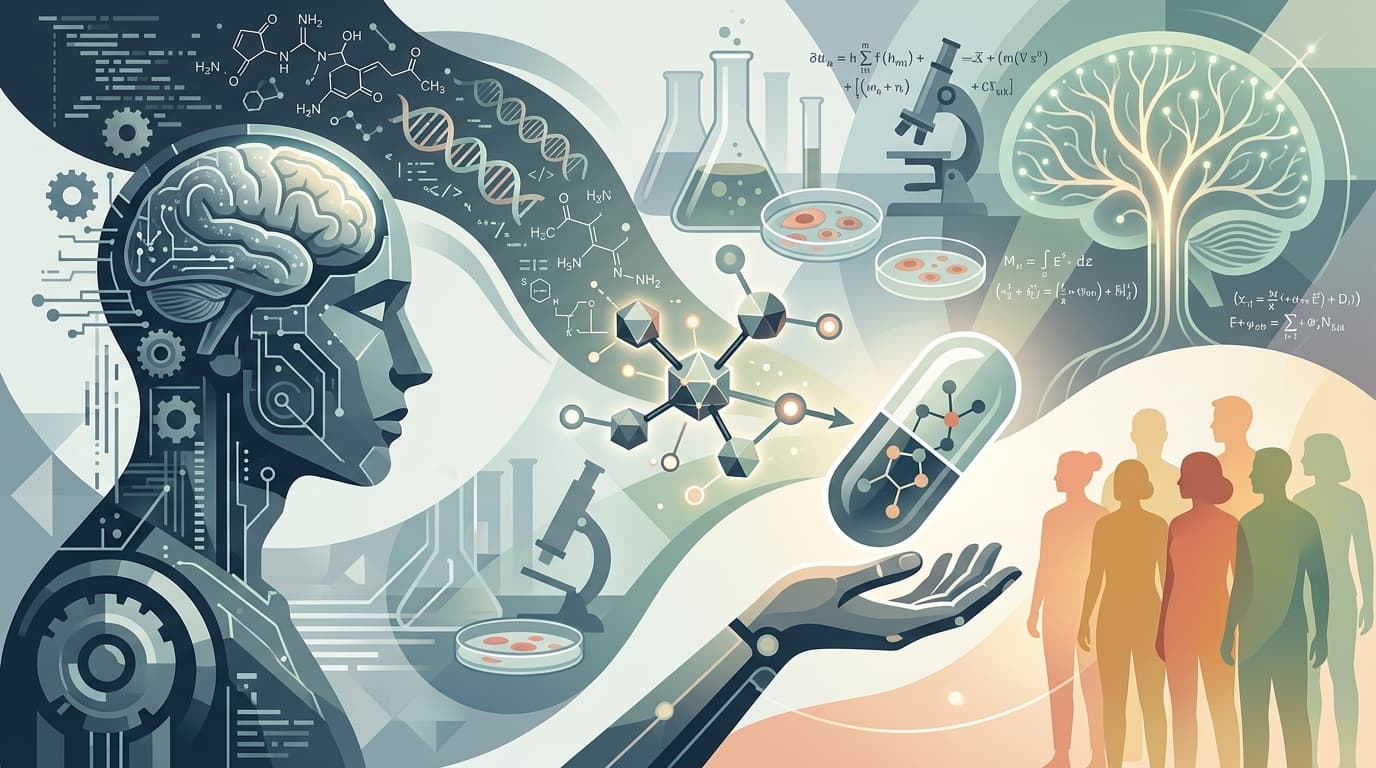
No human chemist dreamed up ISM8969. A machine did.
Insilico Medicine's generative AI platform designed the molecule from scratch, and now it's cleared to enter clinical trials in China for Parkinson's disease. China's National Medical Products Administration (NMPA) greenlit the IND (investigational new drug application) in late July 2026, making ISM8969 one of the first AI-originated drugs to target a neurodegenerative disease in humans.
That's a big deal. Not because AI-designed drugs are new anymore, but because Parkinson's is one of the hardest problems in medicine. And if a computer-designed molecule can even get to the starting line here, it tells us something important about where drug discovery is heading.
The Drug That a Computer Dreamed Up
ISM8969 is an oral pill designed to cross the blood-brain barrier and block something called the NLRP3 inflammasome. Think of NLRP3 as a molecular fire alarm inside your cells. When it detects danger signals (like the misfolded alpha-synuclein proteins that pile up in Parkinson's), it triggers a cascade of inflammation. That inflammation, over time, kills dopamine-producing neurons in the brain.
The logic is straightforward: shut down the fire alarm before it burns the house down.
In preclinical studies, ISM8969 showed dose-dependent improvement in motor function in mice. At 20 mg/kg, the animals performed nearly as well as healthy controls on tests of movement and grip strength. The drug also demonstrated strong safety data, potent activity in lab dishes, and solid pharmacokinetics (how the body absorbs and processes the drug).
What makes this molecule unusual isn't the target. Other companies have explored NLRP3 inhibitors. It's how it was found.
How You Build a Drug Without a Chemist's Pencil
Insilico's platform, called Chemistry42, works like a hyper-creative brainstorming partner for medicinal chemists. Imagine giving a machine a wish list: "I want a molecule that fits this protein pocket, crosses the blood-brain barrier, doesn't get destroyed by the liver, and can actually be manufactured." Then the machine generates thousands of candidates and scores them all.
Get tomorrow's biotech intelligence before your competitors.
Join thousands of biotech professionals who start their day with our free, daily briefing.
Under the hood, Chemistry42 runs more than 40 generative models simultaneously, including neural networks, evolutionary algorithms, and language models that treat molecular structures like sentences to be written. Each candidate gets graded on potency, selectivity, metabolic stability, and synthetic accessibility (can a chemist actually make it in a lab?).
It's not fully autonomous. Scientists still set the constraints, review the outputs, and steer the process. Think of it less like a self-driving car and more like an incredibly powerful GPS: you still decide where to go, but the system finds routes you'd never have considered.
The result? Insilico claims its fibrosis drug, ISM001-055 (now called Rentosertib), went from target discovery to Phase I trials in under 30 months. Traditional timelines for that journey typically run five to seven years.
Parkinson's Is the Ultimate Test
If you wanted to pick the hardest possible proving ground for AI drug discovery, neurodegenerative disease would be near the top. The biology is fiendishly complex. Clinical trials take years. Endpoints are fuzzy. The brain is protected by the blood-brain barrier, which blocks most drugs from getting where they need to go.
And here's the uncomfortable truth about NLRP3 as a Parkinson's target: the preclinical evidence is strong, but the human genetics don't fully cooperate. A 2024 study in npj Parkinson's Disease found no association between common NLRP3-pathway gene variants and Parkinson's risk. Mendelian randomization (a method that uses genetics to test cause and effect) didn't support the target either.
That doesn't kill the thesis. Plenty of successful drugs hit targets that don't show up in genetic studies. But it does mean ISM8969 is walking a tightrope: promising animal data on one side, uncertain human biology on the other.
Not Their First Rodeo
Insilico isn't betting the company on a single molecule. By the end of 2024, the company had 22 development candidates and 10 IND clearances across its portfolio. Its most advanced program, Rentosertib for idiopathic pulmonary fibrosis (IPF, a scarring lung disease), completed a Phase IIa trial showing dose-dependent improvement in lung function alongside a clean safety profile. The company called it the first clinical proof-of-concept for an AI-discovered drug.
Beyond IPF, Insilico has Phase I trials running for a gut-restricted IBD drug (ISM5411), a pan-TEAD inhibitor for solid tumors (ISM6331), and a MAT2A inhibitor for certain cancers (ISM3412). The pipeline spans oncology, fibrosis, inflammation, and now neurodegeneration.
For ISM8969 specifically, the company already received FDA IND clearance in January 2026 and began dosing healthy volunteers in an Australian Phase I study by June. The NMPA approval enables parallel trials in China, where the study will test safety, tolerability, and early signs of efficacy in Parkinson's patients.
The Bigger Picture: Proof or Just Promise?
The AI drug discovery industry has spent years making bold claims. Now, the receipts are starting to trickle in. An early analysis of AI-native biotech pipelines found an 80 to 90% Phase I success rate and roughly 40% in Phase II. Those numbers are encouraging, broadly matching historical averages for later phases.
But analysts urge caution. The sample size is still tiny; we're talking about a few dozen programs across the entire industry. That's not enough data to declare that AI produces better drugs. It's enough to say AI can produce viable drugs, which is a meaningful distinction.
The expert consensus for neurodegenerative diseases is even more measured. Neurology represents a small slice of AI drug discovery studies so far, and the brutal failure rates in Alzheimer's and Parkinson's research mean that early promise rarely translates into approved treatments. AI may speed up the chemistry, but it can't shortcut the biology.
What to Watch
ISM8969's Phase I data from Australia should offer the first real look at whether the drug behaves in humans the way it did in mice. Can it cross the blood-brain barrier at therapeutic levels? Does it suppress neuroinflammation without wrecking the immune system? Those readouts will matter far more than the IND approval itself.
For now, this milestone is best understood as a proof of process, not a proof of cure. A machine designed a molecule. That molecule looked good in animals. Regulators on three continents (the U.S., Australia, and China) agreed it was worth testing in people. That's genuinely impressive.
But Parkinson's has humbled far more drugs than it has crowned. The real test isn't getting into the clinic. It's surviving it.
Deals & M&A
4 min read
BioCryst Just Killed Its Own Lab. Here's Why That Might Be Brilliant.
BioCryst is shutting down its 40-year-old internal drug discovery operation and betting everything on external deals. The rare-disease biotech is profitable, growing, and making a deliberate strategic gamble that could redefine what a mid-cap biotech looks like.