
For decades, warm autoimmune hemolytic anemia had exactly zero FDA-approved treatments. J&J just changed that with IMAAVY, the first drug ever greenlit for the condition, and it signals something bigger about the FcRn inhibitor arms race.
Imagine having a disease where your own immune system destroys your red blood cells, and the best your doctor can offer is a steroid that wasn't actually designed for your condition. No FDA-approved treatment. No targeted therapy. Just borrowed drugs and crossed fingers.
That was reality for roughly 42,000 Americans living with warm autoimmune hemolytic anemia (wAIHA) until recently. On August 24, 2026, Johnson & Johnson's IMAAVY (nipocalimab) became the first drug ever approved specifically to treat the condition. Ever. As in, this disease has existed for decades, and patients have been cobbling together off-label options while waiting for pharma to show up.
Pharma finally showed up.
wAIHA is one of those rare diseases that sounds like a biology thought experiment gone wrong. Your immune system produces antibodies (specifically IgG) that mistakenly tag your own red blood cells as invaders. Your body then destroys those cells like it's fighting an infection, except it's fighting itself. The result: anemia, crushing fatigue, and a chronic cycle of flare-ups that can land you in the hospital.
The disease accounts for about 70–80% of all autoimmune hemolytic anemia cases, and it hits about 1 to 3 people per 100,000 each year. Women are disproportionately affected (up to 60% of cases), and prevalence climbs with age.
Until now, the standard playbook was corticosteroids first, then rituximab if steroids failed. About 80% of patients respond to steroids initially, which sounds great until you learn that many need long-term steroid therapy or additional treatments. Living on chronic steroids is its own kind of misery: weight gain, bone loss, mood swings, infection risk. It's like putting out a house fire with a garden hose that also floods your basement.
The drug's mechanism is clever, and it represents a growing class of therapies called FcRn blockers. Think of the neonatal Fc receptor (FcRn) as a recycling plant for antibodies. Normally, FcRn grabs IgG antibodies before they get broken down and sends them back into circulation. That's useful when your antibodies are doing good work. It's a nightmare when those antibodies are destroying your red blood cells.

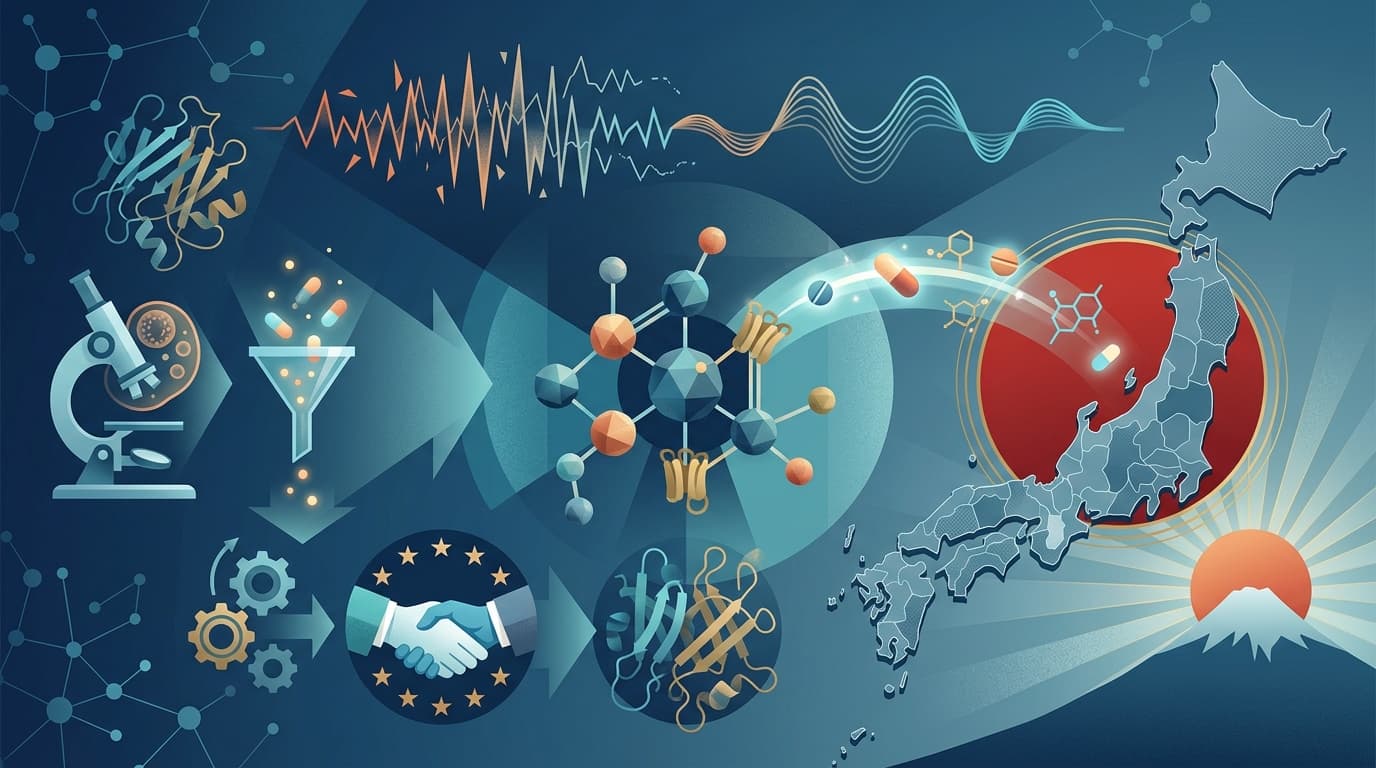
Takeda's oveporexton just became the first drug to target the root cause of narcolepsy type 1, earning Japanese approval after hitting every endpoint in two pivotal trials. It's not just a new pill; it could validate an entire class of brain-chemistry drugs.


Join thousands of biotech professionals who start their day with our free, daily briefing.

Nipocalimab blocks that recycling plant. By binding to FcRn, it prevents the receptor from rescuing harmful IgG antibodies, so your body breaks them down faster. Fewer pathogenic antibodies means fewer red blood cells getting destroyed. It's targeted demolition: take out the bad actors without shutting down the whole immune system.
What makes nipocalimab slightly different from other FcRn blockers (like Argenx's efgartigimod or UCB's rozanolixizumab, both approved for myasthenia gravis) is that it binds FcRn at both acidic and neutral pH, aiming for more complete receptor coverage. It's also engineered to be "effectorless," meaning it blocks the receptor without triggering additional immune responses. Whether those differences matter clinically across diseases is still playing out, but the wAIHA approval gives J&J a meaningful first-mover advantage in a brand-new market.
Let's be honest about the numbers. The pivotal ENERGY Phase 2/3 trial met its primary endpoint, but the response rates won't blow anyone's socks off. The main goal was "durable hemoglobin response": getting hemoglobin to at least 10 g/dL with at least a 2 g/dL increase from baseline, beginning by Week 16 and sustained across three consecutive visits spanning at least 28 days, without rescue therapy and without increases in background wAIHA medications including oral corticosteroids.
In the higher-dose group (30 mg/kg every four weeks), 23.7% of patients hit that bar, compared to 7.7% on placebo. That's statistically significant (p=0.015), but it means roughly three out of four patients on the drug didn't achieve a durable response.
So why is this still a big deal? Context matters enormously. These patients had nothing approved for their disease. And the secondary endpoints told an encouraging story: hemoglobin levels improved by at least 1 g/dL as early as Week 1. Fatigue scores improved. Steroid doses dropped by about 15% in the treatment group versus just 4% on placebo. For patients trapped in a cycle of steroids and hospitalizations, even incremental improvement can be life-changing.
The safety profile was generally tolerable. The most common side effects were respiratory tract infections, peripheral edema, and muscle spasms. Two deaths occurred in the lower-dose group, though both were deemed unrelated to the drug.
This wAIHA approval isn't just one product launch; it's a proof point for J&J's broader nipocalimab strategy. The company paid $6.5 billion to acquire Momenta Pharmaceuticals in 2020, and nipocalimab was the crown jewel of that deal.
The drug already had its first approval in April 2025 for generalized myasthenia gravis, and the pipeline stretches across a number of conditions: Sjögren's disease, chronic inflammatory demyelinating polyneuropathy (CIDP), fetal and neonatal alloimmune thrombocytopenia, idiopathic inflammatory myopathy, and rheumatoid arthritis. J&J has described the asset as a potential multi-billion-dollar peak sales product.
That ambition makes sense when you look at the math. FcRn blockade works wherever pathogenic IgG antibodies drive disease, and that's a lot of conditions. Each new indication expands the addressable market. Nipocalimab is less of a single drug and more of a platform play; think of it as one key that opens many different locks.
The FcRn inhibitor class has moved from experimental curiosity to crowded battlefield in just a couple of years. Efgartigimod and rozanolixizumab both have myasthenia gravis approvals, and multiple companies are chasing the same list of antibody-mediated diseases.
But wAIHA was an open lane, and J&J got there first. Being the only approved therapy for a disease with zero alternatives is a powerful commercial position, even with modest efficacy numbers. Patients and doctors don't compare your drug to perfection; they compare it to nothing.
The bigger question is whether the FcRn class can deliver more dramatic efficacy in future trials across its expanding list of targets. For now, though, J&J has something its competitors don't: an FDA-approved monopoly in a disease that's been ignored for far too long.
For the 42,000 Americans with wAIHA, "modest but meaningful" beats "sorry, there's nothing approved for you" every single day of the week.
The FDA just authorized the first-ever robotic blood-draw device in the U.S., and it nails hard-to-find veins better than most humans. Vitestro's Aletta could reshape everything from clinical trials to your next lab visit.