The First Drug That Actually Fixes Narcolepsy Just Landed in Japan
Takeda's oveporexton just became the first drug to target the root cause of narcolepsy type 1, earning Japanese approval after hitting every endpoint in two pivotal trials. It's not just a new pill; it could validate an entire class of brain-chemistry drugs.
Imagine your brain has a light switch for staying awake. Now imagine someone ripped that switch off the wall. That's narcolepsy type 1 in a nutshell: the neurons that produce orexin, the chemical messenger that keeps you alert, are destroyed. Every drug on the market for the past several decades has tried to work around the missing switch, jury-rigging the wiring with stimulants and sedatives. None of them actually replaced it.
Until now.
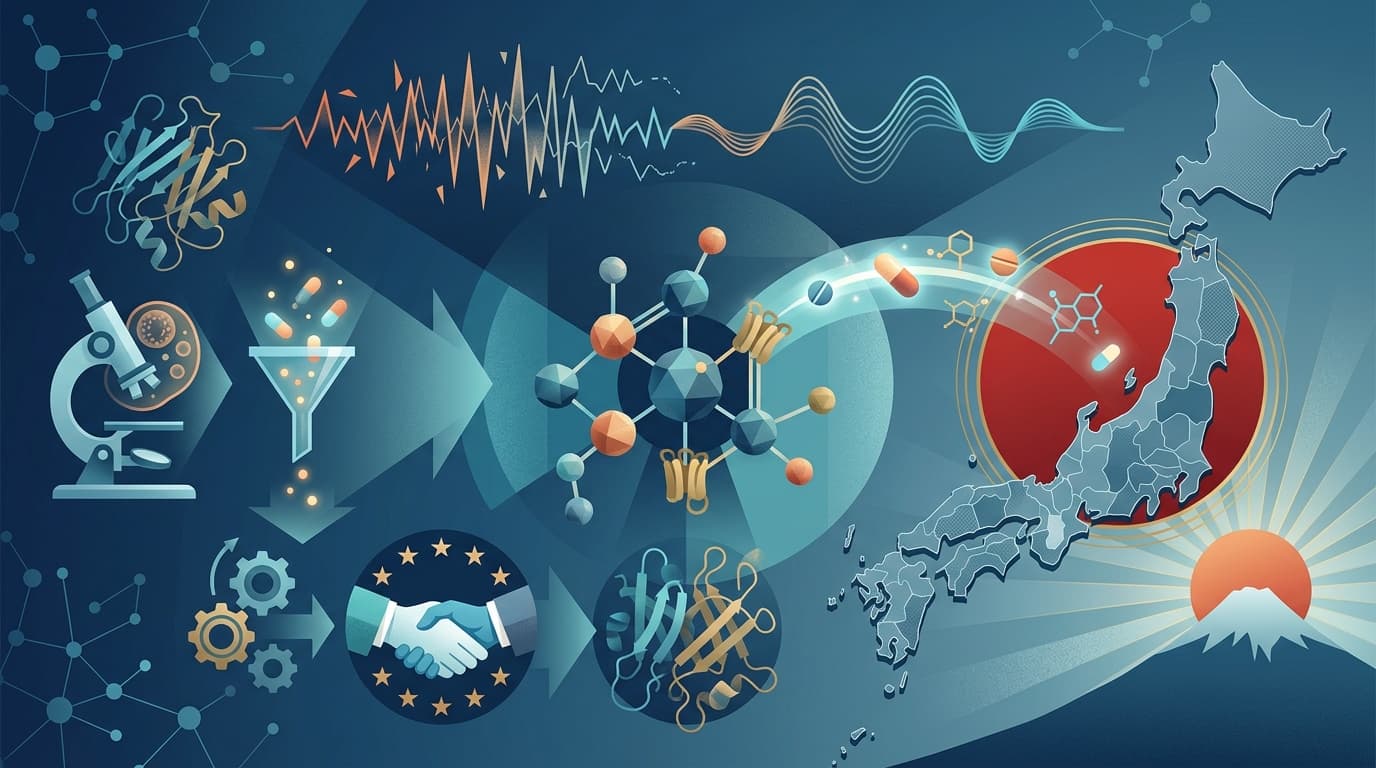
Takeda is seeking Japanese approval for oveporexton (brand name Orzeyful), the first medicine designed to restore orexin signaling in adults with narcolepsy type 1. It's not masking symptoms. It's going after the root cause. And that distinction matters for a lot more than just the approximately 23,000 people in Japan living with narcolepsy.
Why "First-in-Class" Actually Means Something This Time
Pharma loves to slap "first-in-class" on anything that's slightly different. But oveporexton genuinely earns the label. It's an oral orexin receptor 2 (OX2R) agonist, meaning it activates the specific receptor that orexin normally would. Think of it as installing a brand-new dimmer switch where the old one used to be.
Previous narcolepsy treatments work like this: stimulants (modafinil, methylphenidate) crank up general alertness, sort of like turning on every light in the house because you can't fix the one in the living room. Antidepressants like clomipramine help with cataplexy (sudden muscle weakness triggered by emotions) but don't touch the underlying biology. Sodium oxybate (Jazz Pharma's Xyrem) manipulates sleep architecture overnight. All of these are symptom management.
Oveporexton is cause management. That's not marketing spin; it's a fundamentally different pharmacological approach.
The Data That Got It Across the Finish Line
Takeda's approval rests on two pivotal Phase 3 trials, FirstLight and RadiantLight, both randomized, double-blind, and placebo-controlled. The headline: oveporexton with p-values below 0.001 at week 12.
Get tomorrow's biotech intelligence before your competitors.
Join thousands of biotech professionals who start their day with our free, daily briefing.
met every primary and secondary endpoint
The primary measure was the Maintenance of Wakefulness Test, which basically asks, "How long can you stay awake in a dark, quiet room?" (Harder than it sounds for narcolepsy patients.) Patients on oveporexton stayed awake significantly longer than those on placebo.
But the secondary endpoints are where the story gets compelling. Patients also saw meaningful reductions in weekly cataplexy episodes, better scores on the Epworth Sleepiness Scale (a standard questionnaire for daytime drowsiness), and improvements in attention, quality of life, and daily functioning. The Phase 2 data give a sense of the magnitude: patients on active doses gained anywhere from 12.5 to 25.4 extra minutes of wakefulness on the MWT, compared to a 1.2-minute decline on placebo.
On the safety front, the most common side effects were insomnia (ironic, but pharmacologically predictable for a wakefulness drug), urinary urgency, and urinary frequency. Importantly, no liver toxicity showed up in the trials. That matters because Takeda's earlier OX2R agonist, TAK-994, had to be scrapped due to dose-dependent liver damage. Oveporexton was essentially designed as the safer sequel.
A Graveyard Behind the Breakthrough
It's worth pausing on that TAK-994 story, because drug development rarely moves in a straight line. Takeda's first orexin agonist proved the concept brilliantly: yes, you can restore orexin signaling and dramatically improve narcolepsy symptoms. But it also poisoned livers. Development stopped.
Takeda went back to the drawing board with TAK-861 (oveporexton), engineering around the toxicity problem while preserving the efficacy. The fact that it worked is a testament to iterative drug design, and a reminder that the drug that gets approved often stands on the shoulders of a drug that failed.
The Competitive Chessboard
Takeda isn't the only company chasing orexin. Alkermes has alixorexton, another OX2R agonist with positive Phase 2 data moving toward Phase 3. A third candidate, cleminorexton, is also in late-stage development. The orexin agonist race has real runners.
Analysts are already gaming out the implications. Jefferies noted Takeda is "leading the race" to launch drugs that treat narcolepsy's root causes, while other analysts flagged the approval as a potential threat to Jazz Pharmaceuticals' sleep franchise and products from Harmony Biosciences. Truist pointed out that the most direct competitive overlap is with Xywav, since oveporexton's label is limited to adults with NT1.
Jefferies also suggested the clinical data support a likely Schedule IV classification, which could smooth payer access and make prescribing less cumbersome than heavily controlled alternatives.
Bigger Than Narcolepsy
This is where things get really interesting. Proving that an OX2R agonist works in narcolepsy type 1 validates the entire orexin agonist platform as a therapeutic strategy. It's like proving that electric motors can power a car; once you've done that, people start thinking about trucks, buses, and boats.
Takeda is already building out the franchise. The company has TAK-360 in development for broader indications including narcolepsy type 2 and idiopathic hypersomnia (excessive sleepiness with no identifiable cause). Analysts view this not as a one-drug story but as a pipeline built around a validated biological insight.
The orexin pathway itself has a fascinating dual history. While Takeda was building agonists to activate orexin receptors for narcolepsy, other companies built antagonists to block them for insomnia. Suvorexant became the first approved orexin-targeting drug back in 2014, but it works in the opposite direction. The fact that both sides of the coin have produced approved medicines tells you the biology is robust and well understood.
What Comes Next
Oveporexton already secured FDA approval earlier in 2026. But it matters strategically: Japan has a relatively high narcolepsy prevalence (claims-based estimates range from roughly 5.7 to 37.5 per 100,000 depending on the methodology, with older survey-based estimates as high as 160–180 per 100,000), and the disease burden falls disproportionately on teenagers and young adults who are diagnosed during their most formative years.
For these patients, the current options of stimulants and antidepressants leave a lot on the table. A drug that actually restores the missing biological signal, rather than compensating for it, changes the conversation entirely.
Takeda's orexin story took over a quarter century from the discovery of the molecule in 1998 to an approved drug in 2026. It survived a major safety setback, required a complete molecular redesign, and demanded two large Phase 3 trials to prove itself. The result is a new class of medicine that treats a disease at its source rather than chasing its symptoms around the body.
That's not just a win for narcolepsy patients. It's a proof of concept for an entire branch of neuroscience.
5 min read
Lady Gaga Just Launched a Biotech Company. No, Seriously.
Lady Gaga and fiancé Michael Polansky just emerged from stealth with Outer Biosciences, a $23 million startup that keeps human skin alive in a lab for weeks to discover skincare ingredients with AI. It's weirder (and more legit) than it sounds.