The First Drug That Actually Fixes What's Broken in Narcolepsy
Takeda's oveporexton just swept every endpoint in two Phase 3 narcolepsy trials by replacing the brain signal that's actually missing. It's the first time anyone has proven orexin receptor agonism works in late-stage testing, and it could reshape how we think about sleep disorders.
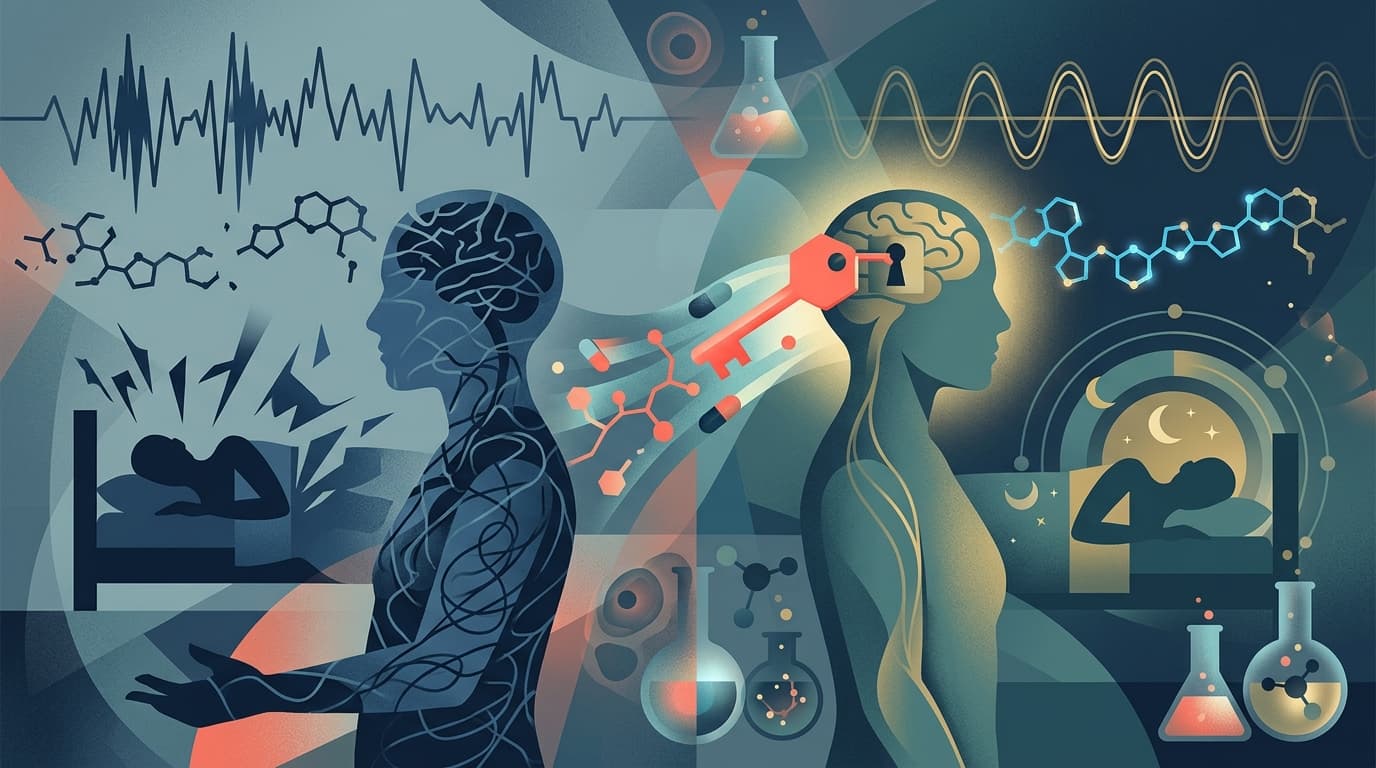
Imagine your brain has a thermostat for sleep and wakefulness. Now imagine someone ripped out the wiring. That's narcolepsy type 1 in a nutshell: the neurons that produce orexin, the chemical that keeps you awake and stabilized, are gone. Every treatment on the market right now is basically duct tape over that broken thermostat. Stimulants crank up alertness. Sodium oxybate smooths out nighttime sleep. But none of them replace the missing signal.
Takeda just proved it can.
Replacing What's Missing, Not Masking What's Wrong
Oveporexton (TAK-861) is an oral drug that selectively activates orexin receptor 2 (OX2R), the specific receptor most tightly linked to wakefulness and REM-sleep control. Instead of boosting general alertness or sedating patients into better nighttime sleep, it mimics the exact molecule that narcolepsy type 1 patients are missing. Think of it as a prosthetic limb for a broken brain circuit, not a painkiller.
That's a fundamentally different approach. And in two pivotal Phase 3 trials, it delivered on the promise.
A Clean Sweep Across the Board
The two studies, called FirstLight and RadiantLight, enrolled a combined 273 adults with narcolepsy type 1. Both were 12-week, placebo-controlled, double-blind trials; FirstLight tested oveporexton at doses of 1 mg and 2 mg twice daily, while RadiantLight tested 2 mg twice daily.
The primary measure was the Maintenance of Wakefulness Test (MWT), which tracks how long a patient can stay awake in a quiet, dark room. Patients on oveporexton stayed awake approximately 15.9 to 20.1 minutes longer than those on placebo at week 12, depending on dose and analysis (p<0.001). That's not a marginal bump; for someone who involuntarily falls asleep during conversations, it's transformative.
But the data didn't stop at wakefulness. Daytime sleepiness scores on the Epworth Sleepiness Scale dropped by up to 9.7 points more than placebo (p<0.001). For context, the ESS runs from 0 to 24, so an improvement of that magnitude is massive.
Get tomorrow's biotech intelligence before your competitors.
Join thousands of biotech professionals who start their day with our free, daily briefing.
Cataplexy Took the Biggest Hit
Cataplexy is the hallmark symptom most people associate with narcolepsy: sudden muscle weakness triggered by emotion, sometimes causing full-body collapse. It's terrifying, unpredictable, and socially devastating. Patients on oveporexton saw their weekly cataplexy episodes drop by 79% to 89%, compared to just 28% to 39% with placebo.
That alone would make the drug noteworthy. But Takeda also reported improvements in cognition, quality of life, and daily functioning. About 70% of treated patients reported no significant cognitive difficulties, versus roughly 15% on placebo. Most patients hit normative thresholds on standard quality-of-life measures (the SF-36 and FINI scales), meaning they were functioning at levels comparable to people without narcolepsy.
Every primary and secondary endpoint was met with statistical significance. In clinical trials, that kind of clean sweep is rare.
The Side Effects Are Manageable (With a Caveat)
No drug is perfect, and oveporexton has a quirky side-effect profile. The most common issues were insomnia (ironic for a sleep disorder drug, but mechanistically logical), urinary urgency and frequency, and excessive saliva. Most adverse events were mild to moderate. Most insomnia cases resolved within a week. About half of the urinary symptoms had cleared up by week 12.
Critically, no serious treatment-related adverse events were reported across the Phase 3 program. That's a clean safety signal, though real-world use with larger and more diverse patient populations will be the true test of tolerability.
Why This Matters Beyond Narcolepsy
The bigger story here isn't just one drug. It's the validation of an entire drug class.
Orexin receptor agonism has been a tantalizing but unproven concept for years. We've had orexin receptor antagonists (drugs that block orexin to promote sleep; think Merck's Belsomra), but going the other direction, activating the orexin system to promote wakefulness, had never been proven in a late-stage trial. Until now.
Takeda's clean Phase 3 package essentially says: yes, you can replace orexin signaling in patients who've lost it, and the clinical benefit is broad and meaningful. That opens the door to orexin agonists for narcolepsy type 2, idiopathic hypersomnia (excessive sleepiness with no clear cause), and potentially other sleep-wake disorders.
Takeda is already building out an orexin franchise, with TAK-360 aimed at narcolepsy type 2 and idiopathic hypersomnia, plus another early-stage program called TAK-495. Competitors are circling too: Alkermes has ALKS 2680 in Phase 2, and Centessa is developing ORX750, which has advanced into Phase 2a, and ORX142 in earlier stages.
But Takeda has a massive head start. The FDA has accepted oveporexton's NDA (New Drug Application) and granted it Priority Review, which means a decision could come within months rather than the standard timeline.
The Commercial Picture: Promising but Niche
Narcolepsy type 1 is a rare disease. The patient population is small, and diagnosis rates remain frustratingly low (many patients go years before getting a correct diagnosis). That limits the revenue ceiling.
The bull case for Wall Street is compelling, though: a first-in-class, disease-modifying drug for an underserved rare disease, with a pristine clinical package, can command premium pricing and strong reimbursement. Takeda is positioning oveporexton as the first and only medicine that treats the underlying cause of narcolepsy type 1, which is exactly the kind of story that supports orphan-drug-level pricing.
The bear case is simpler. Insomnia and urinary side effects could limit real-world persistence. And expanding beyond NT1 into broader sleep disorders will require new trials and new data.
The Bottom Line
For decades, narcolepsy treatment has been about managing symptoms with blunt instruments: stimulants to stay awake, sodium oxybate to sleep better, antidepressants to control cataplexy. None of them addressed why the disease happens.
Oveporexton does. It replaces the missing signal. And it does so with the kind of efficacy data that makes clinicians and patients genuinely excited. Takeda hasn't just advanced a drug; it's proven that orexin receptor agonism works as a therapeutic strategy. That's a win for an entire field, not just one company's pipeline.
Clinical & Regulatory4 min read
A CAR-T for Patients Who Already Failed CAR-T
A tiny California biotech just published Lancet data showing its CAR-T therapy worked in patients who'd already failed the standard CAR-T approach. Nine patients, seven complete responses, zero relapses so far. The catch? It's Phase 1, and nine patients is barely a dataset.