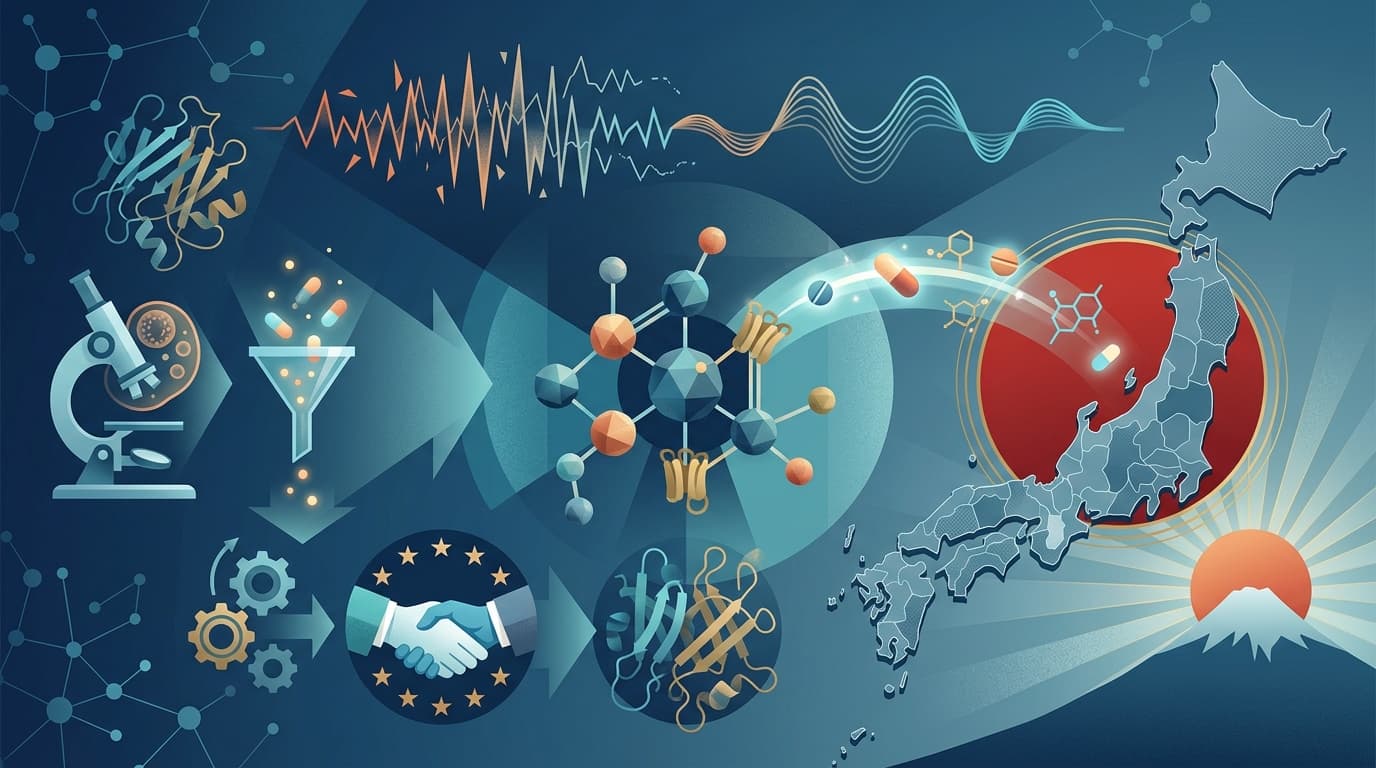

Japan just approved the world's first functional cure for chronic hepatitis B, and it's not even close to what current treatments do. GSK's Hibsago could reshape a disease that affects 240 million people globally.
For decades, treating chronic hepatitis B has felt a lot like mowing a lawn. You keep cutting it down, but the roots never die. Patients take daily pills for years, sometimes for life, just to keep the virus from flaring up. Nobody talks about a cure, because there hasn't been one.
Until now.
Japan just approved the world's first drug designed to functionally cure chronic hepatitis B. GSK's Hibsago (bepirovirsen) cleared regulatory review and is now available to adult patients who've been on standard antiviral therapy for at least six months. It's not just a new drug; it's an entirely new category of treatment.
Let's unpack that phrase, because it matters. Current hepatitis B drugs, called nucleos(t)ide analogues (think tenofovir and entecavir), work by suppressing the virus. They're effective, but they don't eliminate it. Patients stay on them indefinitely, like putting the virus on pause instead of pressing delete.
A functional cure means something radically different: the virus becomes undetectable, and it stays undetectable even after you stop taking the drug. No more daily pills. No more indefinite treatment. The body regains control on its own.
That's what Hibsago is designed to do. And in clinical trials, it actually worked.
GSK's approval was backed by the B-Well phase III program, and the results tell a compelling story. Among the pooled study population (HBsAg ≤3000 IU/mL), 19% achieved a functional cure. In patients with the lowest baseline levels (HBsAg ≤1000 IU/mL), that number climbed to 26%.
The placebo group? Zero percent. Not a single functional cure.
Now, 19% might not sound like a home run at first glance. But remember: the previous cure rate with standard therapy was essentially zero. Going from nothing to one in five patients achieving a lasting cure is like going from horse-drawn carriages to the Model T. It's not a Tesla yet, but it changes the game.

Takeda's oveporexton just became the first drug to target the root cause of narcolepsy type 1, earning Japanese approval after hitting every endpoint in two pivotal trials. It's not just a new pill; it could validate an entire class of brain-chemistry drugs.


Join thousands of biotech professionals who start their day with our free, daily briefing.
The drug's safety profile was described as acceptable and consistent with earlier studies. The most common side effects were injection-site redness, local pain, and a temporary bump in liver enzymes. Nothing that raised red flags.
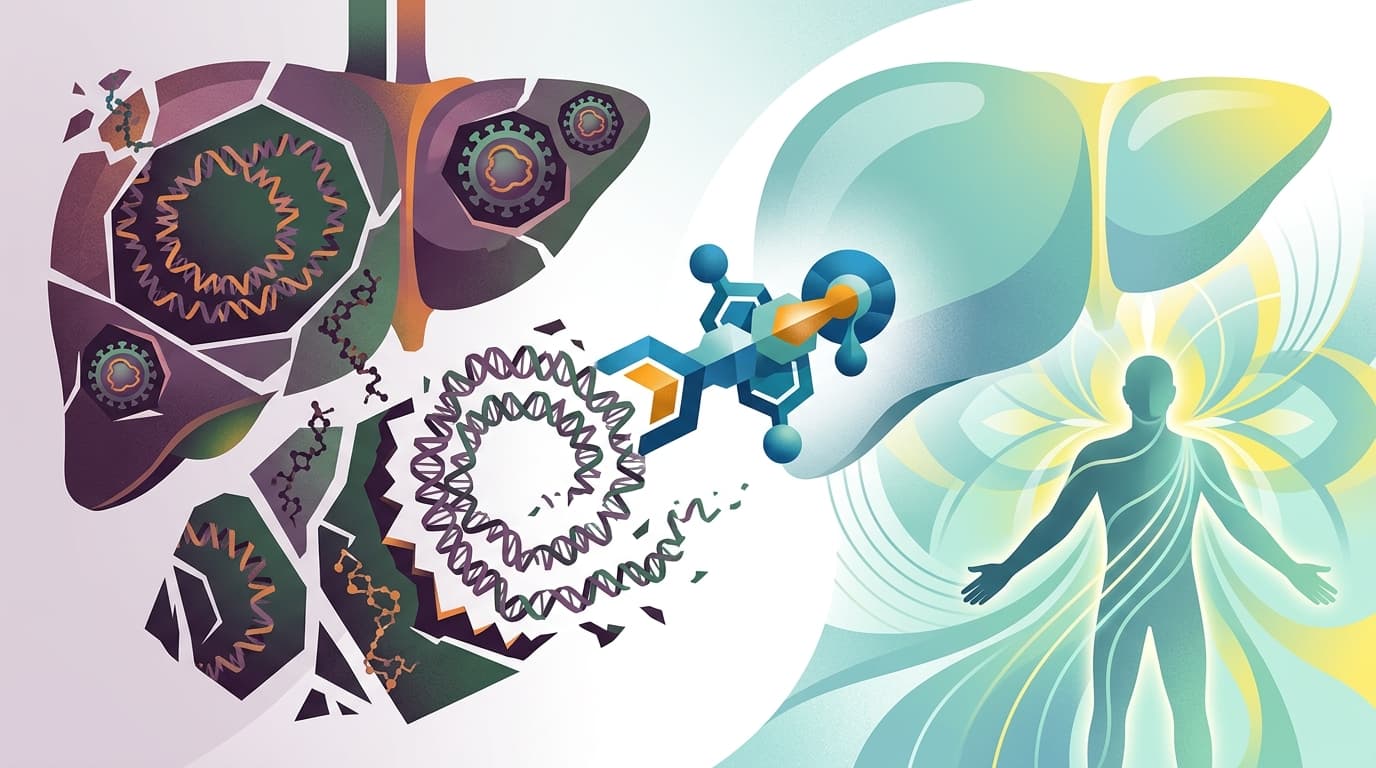
Hibsago is an antisense oligonucleotide, which sounds intimidating but is actually an elegant concept. Think of it as a molecular sticky note. The drug binds to the virus's RNA (its genetic instruction manual) and blocks the cell from reading it. That shuts down production of viral proteins, lowers HBsAg levels, and gives the immune system a chance to wake up and fight back.
It's a fundamentally different approach from just suppressing viral replication. Instead of keeping the virus quiet, bepirovirsen helps the body clear the evidence of infection altogether.
Chronic hepatitis B is one of the world's most overlooked health crises. Roughly 240 million people are living with the disease globally, concentrated heavily in the Western Pacific and African regions. It kills about 1.1 million people per year, mostly from cirrhosis and liver cancer.
And the treatment gap is staggering. Fewer than 5% of those 240 million are actually receiving therapy. Only about 27% have even been diagnosed. For comparison, hepatitis C was largely solved with short-course antiviral treatments that cure around 95% of patients. Hepatitis B has been waiting for its equivalent breakthrough.
Hibsago isn't a universal cure (yet), but it's the first real step toward closing that gap.
The Japanese approval is just the opening act. GSK has bepirovirsen under priority review in the United States, with regulatory decisions also pending in Europe and China. The company expects European and Chinese decisions around Q3 2026, with the U.S. FDA PDUFA date set for October 2026.
On the commercial side, GSK isn't going it alone. In May 2026, the company signed an exclusive deal with SBP Group/CTTQ for mainland China, covering importation, distribution, and hospital access. GSK keeps control of regulatory and medical strategy, while CTTQ handles the ground game in the world's largest hepatitis B market.
The revenue projections reflect serious ambition. GSK has guided to over £2 billion in peak annual sales for bepirovirsen, folding it into the company's broader target of more than £40 billion in annual revenue by 2031.
GSK isn't treating Hibsago as a standalone product. The company is building a combination strategy around it, pairing bepirovirsen with siRNA-based drugs (a different type of gene-silencing therapy) in sequential treatment regimens. The logic: if one drug can achieve a 19% cure rate, stacking complementary mechanisms might push that number significantly higher.
GSK acquired rights to an Arrowhead-originated program (originally developed through Janssen) and is running trials combining those assets with bepirovirsen. It's a portfolio play designed to own the functional cure space before competitors can catch up.
And there are competitors. Assembly Biosciences and Arbutus Biopharma are both pursuing their own cure-oriented approaches. But GSK's advantage is straightforward: it has the first approved product on the market, regulatory momentum in multiple countries, and a commercialization partner locked in for China.
Analyst consensus on GSK currently sits at "Hold," with around 20 analysts tracking the stock and an average price target about 12.7% above recent levels. The Japan approval is being treated as a pipeline de-risking event, a proof point that bepirovirsen can clear regulatory hurdles.
The tone is positive but measured. Investors want to see uptake numbers and U.S. approval before fully pricing in the opportunity. The data has been called "transformative" for the hepatitis B treatment landscape, but Wall Street, as always, wants receipts before writing the check.
For 240 million people living with chronic hepatitis B, treatment has meant a lifetime commitment to pills that manage the virus without ever truly beating it. Hibsago doesn't cure everyone, and it won't reach most patients overnight. But it proves something that was theoretical until this week: functional cure is possible.
The lawn might finally be getting pulled up by its roots.
The FDA just authorized the first-ever robotic blood-draw device in the U.S., and it nails hard-to-find veins better than most humans. Vitestro's Aletta could reshape everything from clinical trials to your next lab visit.