
The FDA rejected a rare cancer cell therapy in January despite its own reviewers recommending approval. Three months later, with no new data, the agency says it will reconsider. What changed, and what does it mean for the future of rare disease drug approvals?
Imagine getting dumped, then getting a text three months later: "Hey, I think I made a mistake. Can we talk?"
That's essentially what just happened between the FDA and a rare cancer treatment called Ebvallo. On Thursday, Pierre Fabre Pharmaceuticals and Atara Biotherapeutics announced that the FDA has agreed to reconsider the drug it flatly rejected back in January. The agency now says the existing clinical trial data is sufficient to support a review and potential approval.
This isn't a minor policy tweak. It's a full reversal. And it's raising big questions about what's really driving decisions at the FDA these days.
Ebvallo is a cell therapy designed for one of the rarest and deadliest cancers you've probably never heard of: EBV-positive post-transplant lymphoproliferative disorder, or PTLD. In plain English, it's an aggressive blood cancer that can strike people after they've received a stem cell or organ transplant. Their weakened immune systems can't keep the Epstein-Barr virus in check, and tumors form.
About 500 patients in the U.S. get diagnosed with this each year. Many are children. Without treatment, they typically have weeks or months to live. The options are brutally limited.
Ebvallo works by giving patients donor-derived T-cells (immune cells) that specifically target the virus-driven cancer. Think of it like calling in a specialist when your own security team is overwhelmed.
When the FDA rejected Ebvallo in January 2026, it caught nearly everyone off guard. The agency claimed the single-arm clinical trial was "flawed" and the data "insufficient" to support approval.
But here's what made the rejection genuinely shocking: according to a STAT News report, a former FDA employee stated that internal reviewers had deemed the clinical data sufficient for approval. The people who actually reviewed the data said yes. Then the answer came back no.
That former FDA employee described the situation to STAT News as a "complete reversal," attributing the pivot to new leadership at CBER. The implication was uncomfortable but clear: science didn't change between the internal recommendation and the final decision. Something else did.

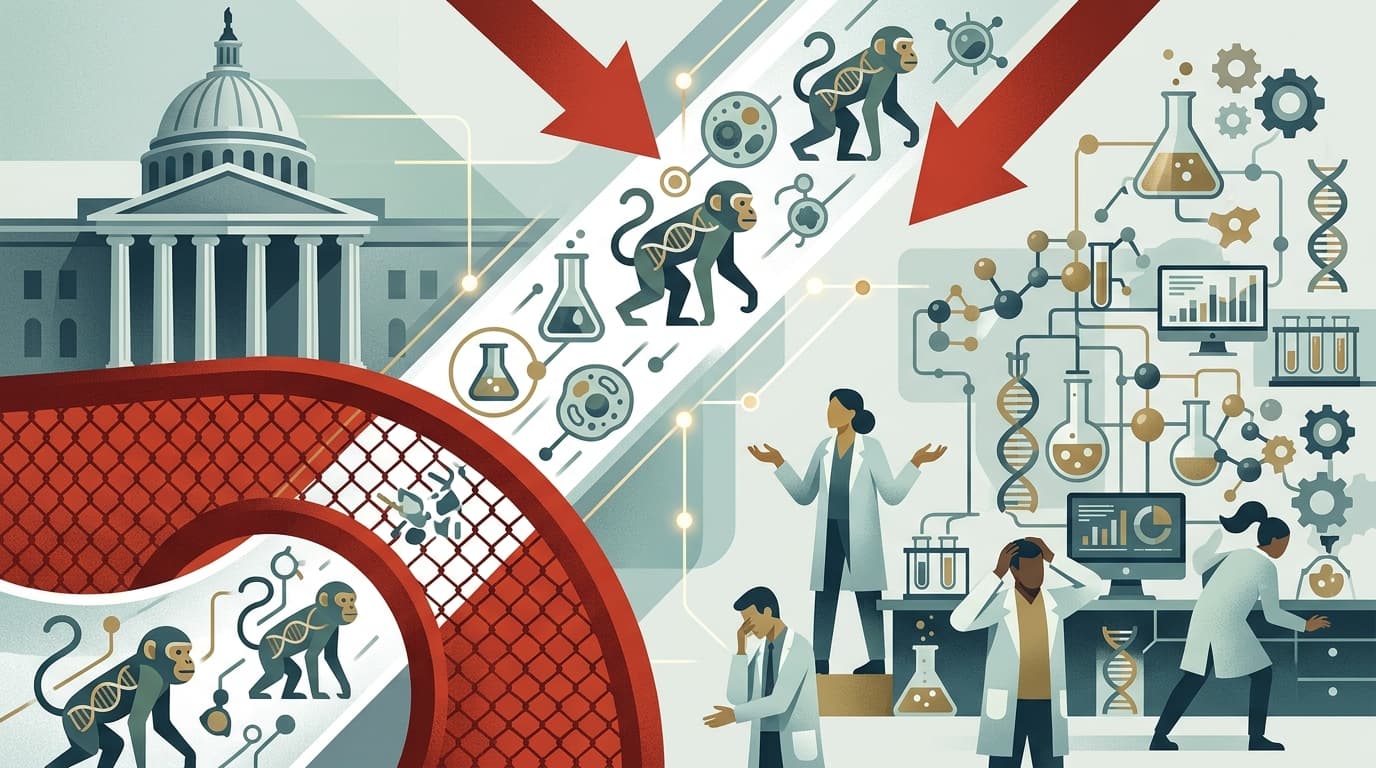
A bipartisan bill would ban all nonhuman primate imports into the U.S., threatening the supply chain for preclinical drug testing. With 20,000+ monkeys imported annually for research, the legislation could force an industry-wide scramble toward alternative testing methods.


Join thousands of biotech professionals who start their day with our free, daily briefing.

After a meeting in late April with FDA officials, the companies got word that the agency would revisit its January position. On May 7, they went public with the news.
The critical shift: the FDA now agrees that the already-completed, single-arm trial is sufficient for review. That's the same trial it previously called flawed. The companies plan to resubmit leveraging updated ALLELE data and supportive data from the broader program and European post-marketing experience. The study design didn't change; the FDA's interpretation of it did.
For a 500-patient-per-year disease where patients are dying within months, running a large randomized controlled trial (the gold standard where patients are randomly assigned to treatment or placebo) isn't just difficult. It borders on impossible. You simply can't recruit enough patients fast enough when the disease is that rare and that lethal.
Ebvallo's rejection wasn't an isolated incident. Since 2025, the FDA has issued at least 23 Complete Response Letters (formal rejections) for rare disease therapies. Many of those rejections came despite prior agreements between companies and the agency on trial designs.
The pattern has been consistent: companies design studies based on FDA guidance, spend years and hundreds of millions executing them, then get told at the finish line that the rules changed. It's like training for a marathon, crossing the line first, and being told you were actually supposed to run a triathlon.
Patient advocates have been vocal. Annie Kennedy of the EveryLife Foundation testified before the Senate that patients are "living in fear" because of regulatory inconsistency. At a February 2026 Senate Aging Committee hearing, bipartisan lawmakers (including Senators Rick Scott, Kirsten Gillibrand, and Ron Johnson) hammered the agency on its shifting standards.
FDA Commissioner Martin Makary has publicly promised more flexible pathways for rare diseases. In February 2026, the agency even issued draft guidance for a "plausible mechanism" pathway that would lower evidence requirements when traditional trials aren't feasible. The words have been encouraging. The actions, until now, haven't matched.
The Ebvallo reversal matters beyond one drug and one disease. It sends a signal that pressure works: that patient advocates, physicians, and lawmakers pushing back on questionable rejections can actually move the needle.
But it also raises a troubling question. If the FDA can reject a drug its own reviewers recommended, then reverse that rejection three months later without any new data, what exactly is the standard? Regulatory agencies derive their authority from consistency. When the answer depends on who's in charge that week, companies can't plan, investors can't assess risk, and patients can't know what to expect.
For the broader rare disease biotech space, this could serve as a template. Companies sitting on rejections they believe were unjustified now have a playbook: engage, advocate, bring political pressure, and request another meeting. Whether that's healthy for drug regulation is a separate debate.
The 500 families affected by PTLD each year aren't thinking about regulatory precedent or biotech stock prices. They're thinking about survival. For them, the FDA's willingness to take another look at Ebvallo isn't a policy story. It's the difference between hope and hospice.
The agency hasn't approved the drug yet (a formal decision date hasn't been announced). But agreeing that the existing data deserves another review is a meaningful step. It acknowledges that sometimes, in ultra-rare diseases, perfect data isn't possible, and waiting for it means watching patients die.
The FDA blinked. Now we'll see if it follows through.
The FDA is letting Amgen and AstraZeneca stream clinical trial data to regulators in real time, ditching the decades-old "run the study, then submit everything" model. If it works, drug development timelines could compress by months, and the entire industry will want in.