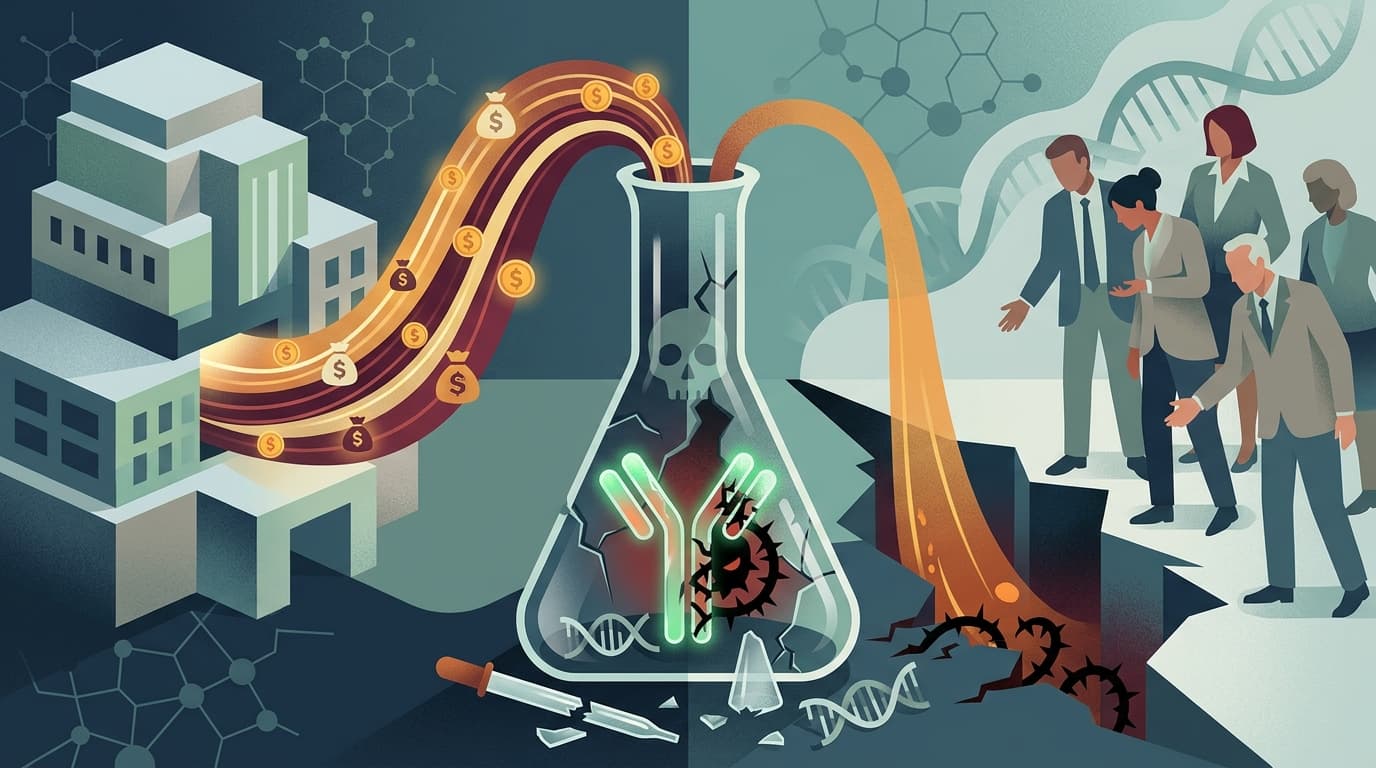

Crossbow Therapeutics just banked $77 million from Taiho Ventures, Pfizer, and Eli Lilly for antibodies that can see inside cancer cells. Their Phase 1 is already running, and the data readout is months away.
Most antibodies in cancer therapy go after proteins sitting on the surface of tumor cells. It's like trying to identify a criminal by what they're wearing. Crossbow Therapeutics thinks that's the wrong approach entirely. Their bet: look inside the cell instead.
That bet just got $77 million richer.
Crossbow's Series B round, announced on March 18, closed with some serious names at the table. Taiho Ventures and Arkin Bio Capital co-led the financing, joined by new investors like Sixty Degree Capital, Hamilton Square Partners, and LifeLink Ventures. Existing backers including Pfizer Ventures, Eli Lilly, and BVF Partners all came back for seconds.
That's a notable lineup. Taiho Ventures alone manages a $400 million fund focused almost exclusively on early-stage oncology. Arkin Bio Capital just closed a fresh $100 million fund in January targeting precisely this kind of company: late preclinical or early clinical, biology-led, strong data. When both of them co-lead a round, it signals more than generic optimism.
So what's the technology that opened their wallets?
Inside every cell, proteins get chopped into tiny fragments called peptides. Those fragments get displayed on the cell surface by molecules called HLA (think of HLA as a tiny display case on the outside of the cell). Normally, your immune system's T-cells scan these display cases to find anything suspicious, like fragments from mutated cancer proteins.
The problem: most antibody drugs can't read those display cases. They only recognize whole proteins stuck on the cell surface. That limits the number of targets they can hit.
Crossbow built what they call the T-Bolt™ platform. It creates antibodies that mimic T-cell receptors, meaning they can read those peptide display cases just like your immune system does. Then Crossbow formats these antibodies as (TCEs), which essentially grab a cancer cell with one hand and a T-cell with the other, forcing the kill.

For decades, patients with primary biliary cholangitis had treatments for their failing livers but nothing approved for the relentless itch that ruined their sleep and quality of life. The FDA just changed that with a first-of-its-kind approval that validates an entirely new mechanism of action.


Join thousands of biotech professionals who start their day with our free, daily briefing.
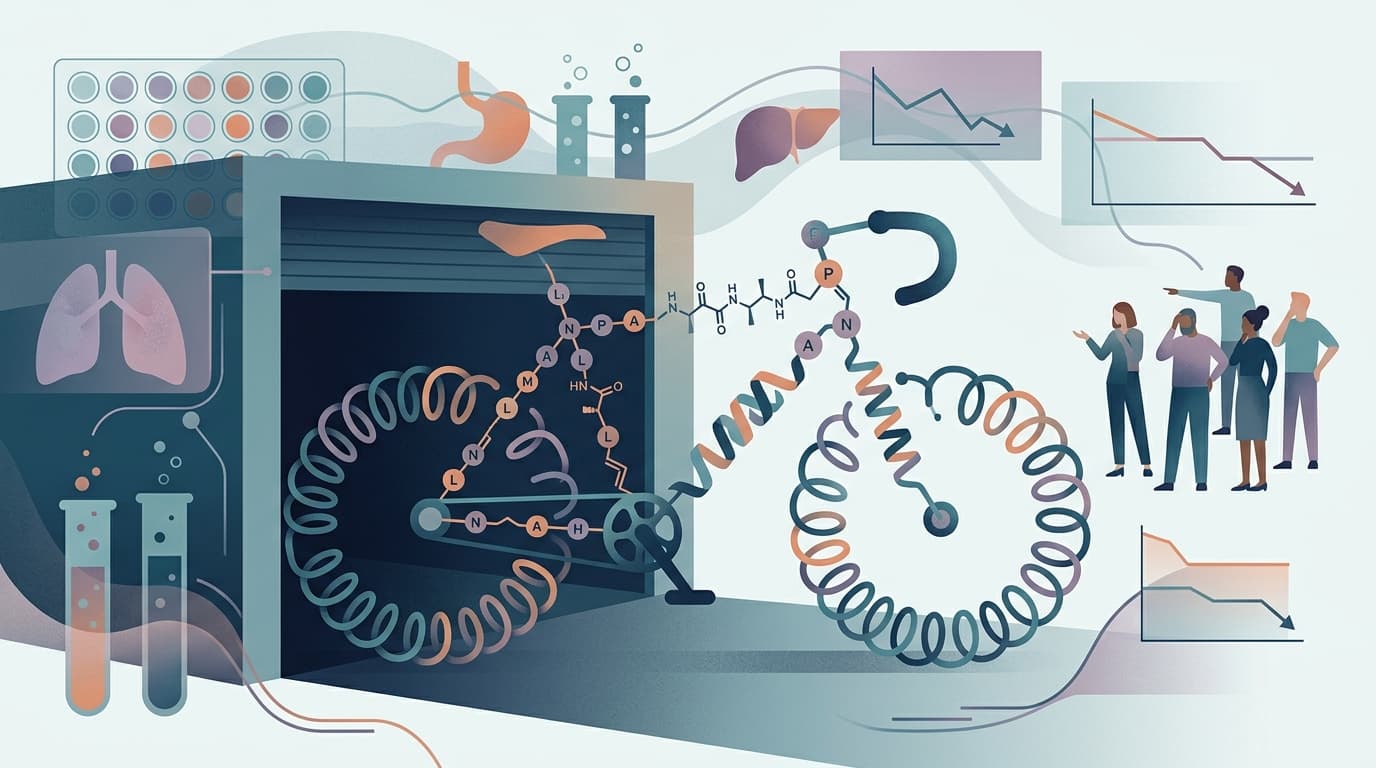
If traditional antibodies are like snipers who can only shoot targets standing in windows, Crossbow's T-Bolt antibodies can see through the walls.
Crossbow isn't sitting on a pile of preclinical slides and a dream. Their lead candidate, CBX-250, is already in a Phase 1 trial called CROSSCHECK-001. The drug targets a specific peptide-HLA combination found on myeloid cancer cells, making it relevant to patients with relapsed or refractory AML, CML, MDS, and CMML (all blood cancers that are notoriously hard to treat when they come back).
The first patient was dosed in the fall of 2025. Initial data from that trial is expected by the end of 2026. That's the big milestone this money needs to hit.
But there's a second act. Crossbow's pipeline includes CBX-663, which targets a peptide derived from telomerase (TERT), an enzyme that's overactive in a wide range of cancers, both blood and solid tumors. The company plans to file its IND and start a Phase 1 trial for CBX-663 in Q3 2026. If CBX-250 proves the platform works in one cancer, CBX-663 could blow the doors open across many.
Let's zoom out. Biotech Series B rounds in 2025 and early 2026 have been a study in natural selection. Fewer companies are getting funded, but the ones that do are raising big. Mirador Therapeutics pulled in $250 million. ILiAD Biotechnologies grabbed $115 million. EpiBiologics closed $107 million.
Crossbow's $77 million fits squarely in this trend: investors are concentrating capital on companies with clinical-stage assets and differentiated platforms. The spray-and-pray era of biotech VC is over. Money is flowing toward companies that can show, not just tell.
What makes Crossbow's round stand out is the strategic angle. Taiho Ventures isn't just writing checks for returns. Taiho Pharmaceutical uses its venture arm to get early access to drug candidates and forge business alliances. Its past investments have directly fed Taiho's pipeline, most notably with Cullinan Pearl, which Taiho spun out in 2019 and then reacquired in 2022, bringing zipalertinib (now in Phase 3 for lung cancer) back in-house.
When Taiho co-leads your round, that's not passive investing. That's a relationship with a longer runway.
Crossbow emerged from stealth in July 2023 with an $80 million Series A, which means the company has now raised $157 million total in under three years. It was co-founded by Patrick Baeuerle, Todd Foley, and Geraldine Paulus, and incubated at MPM BioImpact.
But the person running the show is CEO Briggs Morrison, M.D., who previously served as AstraZeneca's Chief Medical Officer. That kind of resume doesn't guarantee success, but it does signal that the company has leadership that's navigated large-scale drug development before.
Preclinical data on both CBX-250 and CBX-663 will be presented at the AACR Annual Meeting in San Diego this April. For investors and competitors watching Crossbow, that conference will be the first real public look at the science behind the hype.
Crossbow is making a bold claim: that the future of cancer immunotherapy lies in targeting what's inside the cell, not just what's sitting on its surface. If T-Bolt works as advertised, it could unlock a universe of cancer targets that current antibodies simply can't reach.
The $77 million buys them roughly a year to prove it. Phase 1 data from CBX-250 by year's end, a second candidate entering the clinic in Q3, and preclinical updates at AACR next month. That's a packed schedule for a company still in its early chapters.
But with Taiho, Pfizer, Lilly, and Arkin all at the table, the smart money clearly thinks Crossbow is aiming at the right target. Now they just have to hit it.
Gossamer Bio's lead PAH drug missed its Phase 3 goal by the thinnest statistical margin imaginable. Now 77 employees are out, the stock is down 80%, and the company is fighting for survival with $137 million and a prayer.