Zealand Just Bet $1.2 Billion That AI Can Design the Next Obesity Drug
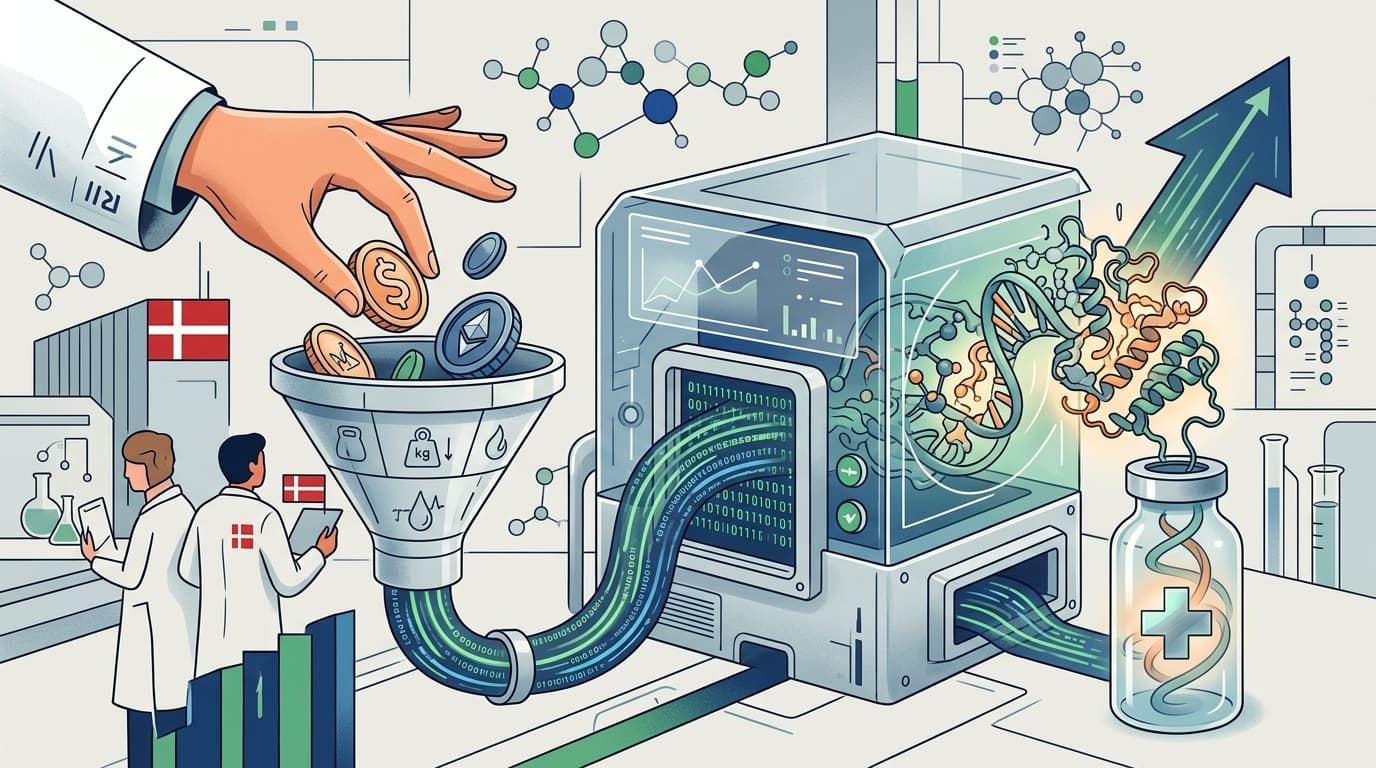
Zealand Pharma is paying up to $1.2 billion to let AI design entirely new obesity proteins that nature never imagined. It's either the future of weight-loss drugs or the most expensive science experiment in metabolic disease.
The Obesity Arms Race Just Got Weirder
Forget everything you know about weight-loss drugs being glorified appetite suppressants. Zealand Pharma just signed a deal worth up to $1.2 billion with Generate Biomedicines to let artificial intelligence design entirely new proteins for obesity. Not discover them. Not optimize them. Design them from scratch.
That's like hiring an architect who's never seen a building before but has memorized every law of physics. It sounds either brilliant or insane. Possibly both.
What's Actually in the Deal
The collaboration covers two initial programs targeting obesity and other metabolic diseases, with an option to add a third. Generate Biomedicines pockets $30 million upfront, plus up to $35 million in early preclinical milestones. The rest of that eye-catching $1.2 billion figure comes from development, regulatory, and commercial milestones, along with tiered royalties on any future sales.
The division of labor is clean. Generate leads the research phase through lead-candidate selection, using its generative AI platform to conjure up novel multispecific protein therapeutics (proteins engineered to hit more than one biological target at once). Once Generate hands over promising candidates, Zealand takes the wheel on clinical trials, regulatory filings, and worldwide commercialization.
Think of it like a relay race. Generate sprints the first leg with AI-powered design. Zealand runs the longer, more grueling stretch of getting a drug through human testing and onto pharmacy shelves.
Why "Multispecific" Is the Magic Word
The obesity drug market right now is dominated by GLP-1 drugs like semaglutide. They work, and they work well. But the entire field knows that single-target biology has a ceiling. The next generation of obesity treatments is being built around molecules that can pull multiple biological levers at once.
Picture your metabolism like a soundboard in a recording studio. GLP-1 drugs turn down one dial: appetite. That's powerful on its own. But what if you could also turn up energy expenditure, improve how your body handles fat, and reduce meal size, all with a single molecule?
Get tomorrow's biotech intelligence before your competitors.
Join thousands of biotech professionals who start their day with our free, daily briefing.
That's the promise of multispecific proteins. The leading approaches in 2026 combine GLP-1 signaling with pathways like GIP (which helps with insulin and nutrient processing), glucagon (which boosts energy burn and fat oxidation), and amylin (which reduces meal size through a completely different hormonal route). Triple agonists like retatrutide are already in late-stage development, trying to coordinate all three levers: eat less, burn more, store less fat.
Zealand and Generate aren't just joining this race. They're trying to skip ahead by letting AI design proteins that nature never thought of.
Generate's Secret Sauce
Generate Biomedicines isn't your typical biotech. Its platform learns the deep rules connecting protein sequences to their shapes and functions, then uses that knowledge to generate entirely novel proteins through a continuous loop of generate, build, measure, learn.
The range of what it can design is genuinely broad: antibodies, peptides, enzymes, receptors, cytokines, T-cell engagers, and more. For this deal, the key capability is programmable binding design. Generate has shown it can tune how tightly a protein grips its target, make binding conditional (only activating at certain pH levels, for example), and create binders to pre-specified spots on target proteins.
That's critical for multispecific work. Designing a protein that binds two or three different targets with the right affinity for each is fiendishly hard using traditional methods. It's the kind of problem that AI, trained on massive protein datasets, might actually be better at solving than humans.
Generate has previously partnered with Novartis on a multi-target collaboration and worked with MD Anderson Cancer Center and Roswell Park in oncology. But this Zealand deal is arguably its biggest validation in metabolic disease, and it comes with a marquee partner that knows the space cold.
Zealand's Metabolic Frontier
Zealand isn't gambling on AI out of desperation. The Danish company already has a stacked metabolic pipeline, anchored by petrelintide (a long-acting amylin analog partnered with Roche) and survodutide (a GLP-1/glucagon dual agonist in Phase 3 with Boehringer Ingelheim). It also has GIP agonists, GLP-2 programs, and a December 2025 deal with OTR Therapeutics for oral small-molecule metabolic drugs.
The company's stated ambition, called "Metabolic Frontier 2030," targets five launches and more than 10 clinical programs by the end of the decade. The Generate deal slots into that strategy as a bet on the frontier: computationally designed biologics that could leapfrog what's possible with traditional peptide chemistry.
The Bigger Picture: AI Meets the Obesity Gold Rush
This deal doesn't exist in a vacuum. The obesity therapeutics market is attracting AI-driven companies from every direction. AI Proteins is advancing miniprotein therapeutics for metabolic disease. Academic groups have used machine learning to design long-acting GLP-1-like candidates that match semaglutide's efficacy in animal models. And on the small-molecule side, companies like Insilico Medicine and the Lilly/Nimbus partnership are using AI to develop oral obesity drugs that could compete on convenience alone.
The competitive pressure is real. Injectable proteins, no matter how cleverly designed, will face questions about whether patients would rather just swallow a pill. Zealand and Generate are betting that multispecific biologics can deliver something oral drugs can't: the ability to precisely coordinate multiple metabolic pathways in ways that small molecules struggle to replicate.
So, Will It Work?
Investors seem to be reading this deal as a platform play, not a near-term revenue story. The milestone-heavy structure means Generate gets paid as programs advance, and the real payday only comes if candidates reach the clinic and eventually the market. That's years away.
But the strategic logic is sound. Zealand gets access to a protein design engine that could produce candidates no medicinal chemist would dream up. Generate gets a well-funded metabolic disease partner with deep clinical and regulatory experience. And the obesity market, projected to be one of the largest therapeutic categories in history, is big enough to reward multiple winners.
The question isn't whether AI-designed proteins will eventually play a role in obesity treatment. It's whether Generate's platform can deliver candidates that are meaningfully better than what human-guided design produces. The next thing to watch: whether these programs move from AI-generated designs to nominated drug candidates and, eventually, into human trials.
For now, the machines are drawing blueprints. The biology will have the final word.
4 min read
Novartis Just Bet $7.8 Billion That Your Body Can Build Its Own Medicine
Novartis just paid $575 million upfront for access to Abogen's RNA technology, in a deal worth up to $7.8 billion. The bet: that your own cells can be programmed to build medicines from scratch, starting with a clever new approach to autoimmune disease.