
Keytruda rakes in over $31 billion a year, making it the best-selling drug on the planet. Now a German-Indian partnership just became the first to get an FDA review for a biosimilar challenger, and a dozen more competitors are lining up behind them.
Keytruda isn't just a blockbuster drug. It's the blockbuster drug. Merck's cancer immunotherapy pulled in $31.7 billion in global sales in 2025, making it the single best-selling medicine on the planet. To put that in perspective, that's more annual revenue than the entire GDP of Iceland.
So when a pair of relatively unknown companies announced that the FDA had accepted the first-ever biosimilar challenge to Keytruda for review, the oncology world took notice. This is the opening shot in what could become the most consequential biosimilar battle in pharmaceutical history.
On October 13, 2026, Germany's Formycon AG and India's Zydus Lifesciences revealed that the FDA accepted their Biologics License Application (BLA) for FYB206, a proposed copycat version of Keytruda (pembrolizumab). The application was filed in Q3 2026, and under the standard biosimilar review clock, a decision is expected in Q3 2027.
FYB206 is the first publicly disclosed Keytruda biosimilar to reach FDA review. Think of it as the first runner crossing mile 25 in a marathon: still not at the finish line, but clearly ahead of the pack. Zydus also submitted a regulatory dossier to Health Canada, signaling global ambitions beyond the U.S.
If you've ever bought store-brand cereal, you understand the concept. A biosimilar is essentially a near-identical copy of an existing biologic drug. It's not a perfect clone (biologics are made by living cells, so exact replication is impossible), but it's close enough that regulators consider it interchangeable with the original.
Biosimilars already exist for drugs like Humira and Avastin. They typically launch at 15–30% discounts compared to the branded product, and in competitive markets, prices can eventually drop by as much as 70%. The whole point is to do what generics did for pills: drive down costs and widen access.

Gilead just paid $1.9 billion for access to Vir's cancer drugs that wear molecular disguises, only waking up when they reach a tumor. It's the biggest signal yet that masked T-cell engagers are pharma's next obsession.

Join thousands of biotech professionals who start their day with our free, daily briefing.
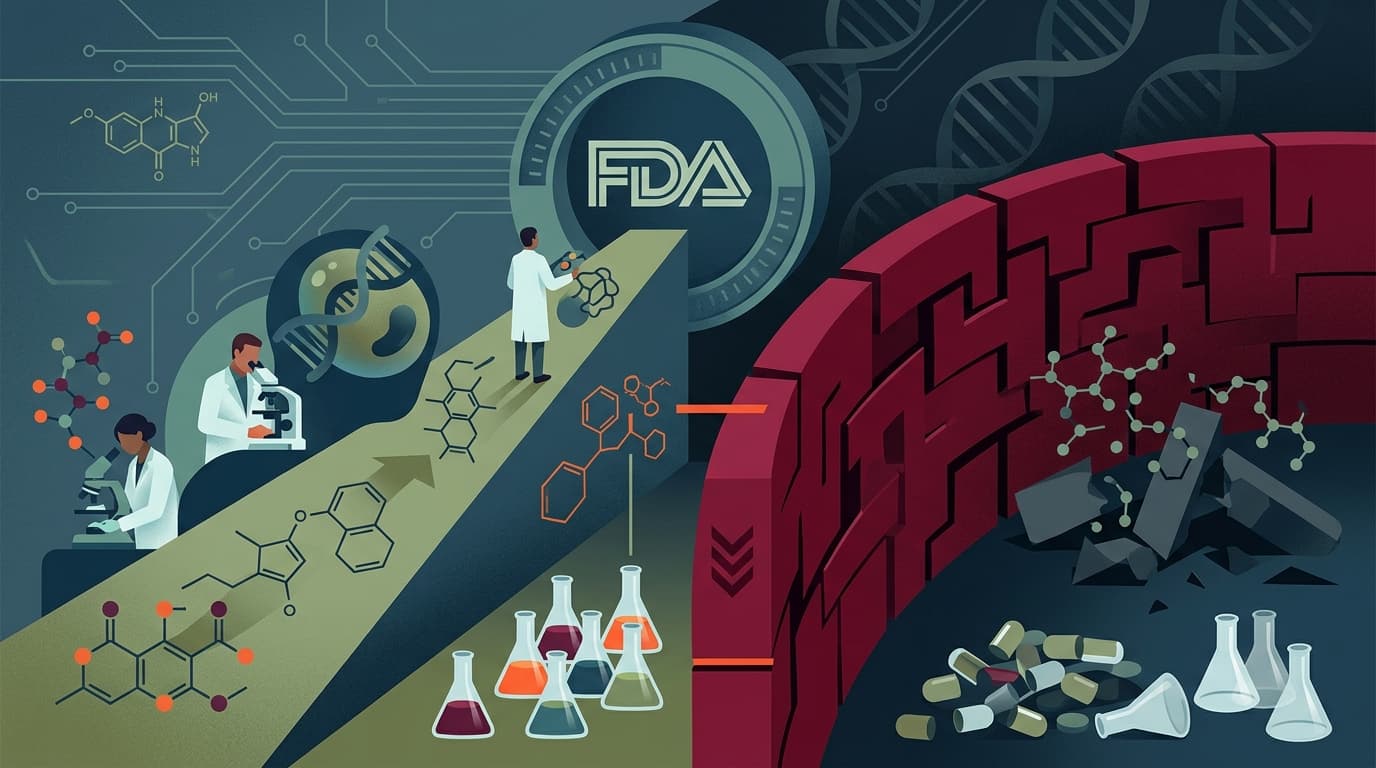
Formycon and Zydus didn't just walk into the FDA's office and ask nicely. FYB206 went through a pivotal clinical study called DAHLIA, a randomized, double-blind, multicenter trial that demonstrated pharmacokinetic equivalence to Keytruda. In plain English: the drug gets into your body and behaves the same way the original does.
The analytical comparability work (basically a molecular side-by-side comparison) found FYB206 to be highly similar to Keytruda, with only minor physicochemical differences that were judged not clinically relevant. Interestingly, Formycon originally planned a second trial called LOTUS to test efficacy in lung cancer patients, but regulators agreed it wasn't necessary. That's a meaningful signal; the FDA essentially said the existing data package was strong enough to skip an expensive Phase III efficacy study.
FYB206 may be first to reach FDA review, but it won't be alone for long. The Keytruda biosimilar race has attracted a who's-who of biosimilar heavyweights:
By most counts, at least a dozen companies are chasing a Keytruda biosimilar. That level of competition isn't surprising when you consider the prize: a slice of a drug franchise that generated $16.4 billion in the first half of 2026 alone.
Before biosimilar bulls pop the champagne, there's a massive asterisk here. Merck has built an extensive patent portfolio around Keytruda, and the company has every incentive (read: $30+ billion per year in incentive) to defend it aggressively.
One U.S. Senate letter cited analyst expectations that IV Keytruda biosimilar competition could be delayed until 2036 because of Merck's patent strategy and litigation playbook. That's the Humira model: AbbVie famously used a wall of patents to delay biosimilar competition in the U.S. for years, even as European patients already had access to cheaper alternatives.
The practical biosimilar launch window, based on current reporting, appears to be late 2020s to around 2030, depending on how patent battles shake out. Getting FDA approval is one thing; getting to market is another game entirely.
The financial stakes are obvious, but the human stakes might be even bigger. Keytruda has become a backbone of modern oncology. And it's expensive enough that access remains a real barrier, particularly in lower-income countries.
The real-world evidence is compelling. When a Keytruda biosimilar launched in Argentina, the government's price offer dropped by 56%, and government purchases surged by more than 1,300%. More patients got treated because the drug got cheaper. That's the biosimilar promise in action.
In the U.S., the numbers are even more striking. Health benefits company Evernorth estimated that delays in biosimilar access could cost commercially insured Americans up to $45.3 billion in lost savings. Every year that biosimilars are kept off the market is a year that patients and payers absorb the full branded price.
FYB206's acceptance for FDA review is a milestone, not a finish line. Formycon and Zydus are first through the door, but a dozen competitors are right behind them, and Merck's patent lawyers are standing in the hallway.
Still, the significance is hard to overstate. This is the beginning of the end of Keytruda's monopoly, even if the end itself is still years away. For Merck, the clock is now officially ticking. For cancer patients worldwide, the promise is straightforward: the same life-saving treatment, eventually at a fraction of the cost.
The biggest drug in the world just got its first real challenger. The next 12 months will tell us how seriously to take it.
Novartis just paid $575 million upfront for access to Abogen's RNA technology, in a deal worth up to $7.8 billion. The bet: that your own cells can be programmed to build medicines from scratch, starting with a clever new approach to autoimmune disease.