
Novartis just paid $575 million upfront for access to Abogen's RNA technology, in a deal worth up to $7.8 billion. The bet: that your own cells can be programmed to build medicines from scratch, starting with a clever new approach to autoimmune disease.
Imagine paying $575 million for a recipe before you've even tasted the dish. That's roughly what Novartis just did. The Swiss pharma giant agreed to pay $575 million upfront to license RNA technology from Abogen Biosciences, a Chinese biotech that most people outside the industry have never heard of. The total deal could be worth up to $7.8 billion if everything goes right.
That's a massive check for a company founded just seven years ago in Suzhou, China. But Novartis isn't buying a single drug. It's buying a platform, and the difference matters.
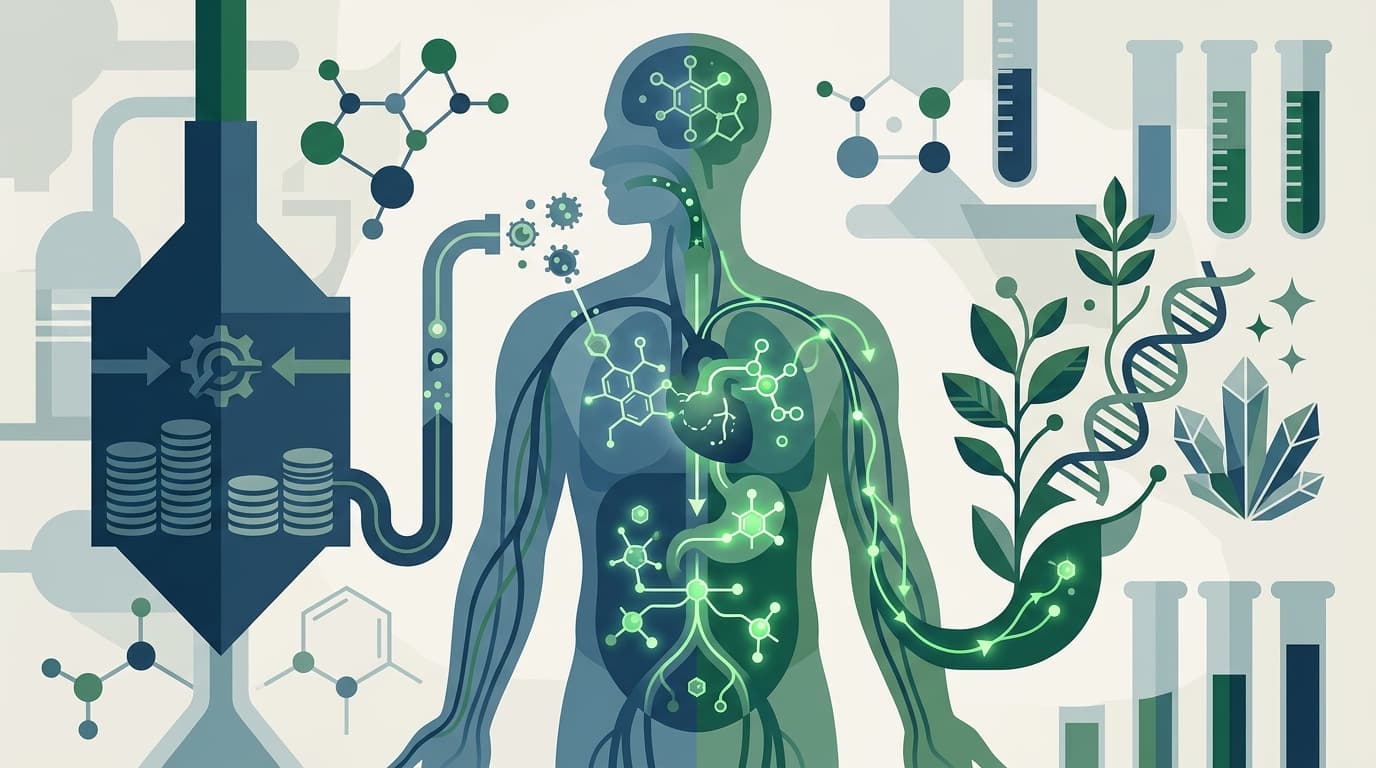
Abogen's lead program, ABO2203, does something genuinely clever. Instead of manufacturing a protein drug in a lab and injecting it into patients, it delivers mRNA instructions wrapped in a tiny fat bubble called a lipid nanoparticle (LNP). Your cells read those instructions and build the drug themselves.
If that concept sounds familiar, it should. It's the same basic idea behind COVID mRNA vaccines. But this time, the payload isn't a viral spike protein. It's a bispecific T-cell engager: a molecule that grabs a T cell (your immune system's assassin) with one hand and a B cell (sometimes the villain in autoimmune disease) with the other, then forces an introduction.
Think of it like a bouncer at a nightclub who spots a troublemaker and personally walks over the security guard. The T cell does the rest.
The potential advantage over traditional protein-based versions of these drugs? Because the body produces the engager gradually rather than getting hit with a big dose all at once, Abogen believes it can reduce the risk of cytokine release syndrome, a dangerous inflammatory overreaction that has plagued older T-cell engager therapies.
The deal structure tells you a lot about how Big Pharma thinks about risk in 2026. Of that $7.8 billion headline number, only the $575 million upfront is guaranteed. The remaining comes in the form of development, regulatory, and commercial milestones that Abogen earns only if the science works out. Abogen also gets royalties on any future product sales.

Gilead just paid $1.9 billion for access to Vir's cancer drugs that wear molecular disguises, only waking up when they reach a tumor. It's the biggest signal yet that masked T-cell engagers are pharma's next obsession.

Join thousands of biotech professionals who start their day with our free, daily briefing.
Specifically, Novartis picks up:
Point Capital Navigator analyst Gillian Hollenstein told Reuters the deal has a "better risk profile" precisely because Novartis is paying a relatively modest upfront to secure those rights. Translation: Novartis gets to peek at the cards before going all in.
The Abogen deal doesn't exist in a vacuum. Novartis has been on an RNA shopping spree that would make a Black Friday shopper blush.
In January 2024, the company paid $185 million to license two RNA interference candidates from Argo Biopharma for cardiovascular disease. Later that year, it teamed up with Versant to launch Borealis Biosciences, committing up to $100 million upfront to develop RNA therapeutics for kidney disease. Novartis has publicly declared "xRNA" (its umbrella term for RNA-based medicines) as one of three priority advanced technology platforms, alongside radioligand therapy and gene/cell therapy.
But the Abogen deal represents a new chapter. Previous RNA bets focused on siRNA and antisense approaches, which silence genes. mRNA is fundamentally different: it tells cells to make something. By adding mRNA to its toolkit, Novartis is essentially expanding from offense (shutting bad genes down) to manufacturing (building therapeutic proteins on demand).
To gauge the price, look at comparable transactions from the recent RNA dealmaking frenzy.
Sarepta and Arrowhead set the high-water mark in 2024 with a platform deal worth $500 million in cash plus $325 million in equity upfront. AstraZeneca paid Moderna $240 million for access to up to 40 mRNA drug products. CSL paid Arcturus $200 million for self-amplifying mRNA vaccine technology.
At $575 million upfront, Novartis is paying more than any of those individual transactions. That signals real conviction, not a casual flirtation. But it also reflects how competitive the RNA space has become. When multiple pharma giants are circling the same technology, prices go up. Simple supply and demand.
The bull case is straightforward: if mRNA-encoded T-cell engagers work as well as early data suggests (Abogen has reported B-cell depletion in peripheral blood and bone marrow with a favorable safety profile for ABO2203), Novartis could own a differentiated autoimmune franchise that traditional protein drugs can't easily replicate.
The bear case? ABO2203 is still in clinical development. Early signals are encouraging, but "encouraging" and "approved" are separated by years of trials, regulatory scrutiny, and the ever-present possibility that biology simply doesn't cooperate. Analysts have been clear on this point: the deal is high-upside, not de-risked.
There's a bigger storyline worth tracking here. Abogen raised over $1 billion in private funding between 2020 and 2021, including a $700 million Series C that was described as the biggest equity round in history for a China-based biopharma at the time. The company originally made its name with an mRNA COVID vaccine that became the first mRNA vaccine approved for clinical trials in China back in June 2020.
Now it's signing a deal that could be worth nearly $8 billion with one of the world's largest pharma companies. Industry commentators framed the transaction as part of a broader trend: Big Pharma increasingly looking to Chinese biotech for capital-efficient innovation. It's not just about cheaper manufacturing anymore. It's about genuinely novel science.
Novartis is making a calculated bet that the future of medicine looks less like a syringe full of manufactured protein and more like a set of molecular instructions your body can read. The $575 million upfront is real money, but it's a fraction of the potential payoff.
Whether this deal looks brilliant or expensive in five years depends entirely on one thing: can ABO2203 prove itself in larger trials? The platform is elegant. The science is promising. The check has been written.
Now comes the hard part.
Keytruda rakes in over $31 billion a year, making it the best-selling drug on the planet. Now a German-Indian partnership just became the first to get an FDA review for a biosimilar challenger, and a dozen more competitors are lining up behind them.