Shionogi Just Bet $2 Billion on a Disease Most People Have Never Heard Of
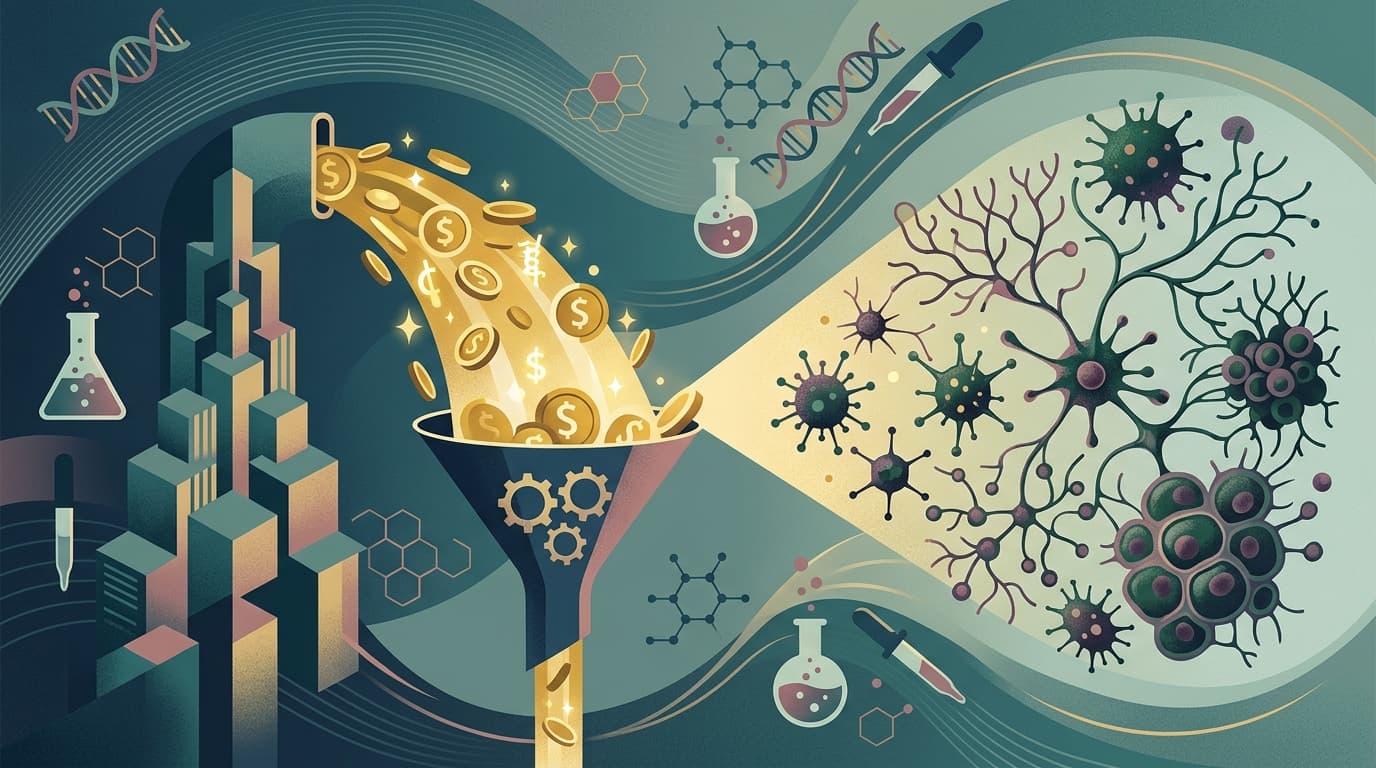
Shionogi, a Japanese pharma giant known for fighting infections, just dropped $2 billion in cash on a rare disease company most people have never heard of. The deal for IntraBio and its twice-approved drug Aqneursa signals a massive strategic pivot, and Wall Street can't decide if it's brilliant or reckless.
An Infectious Disease Giant Walks Into a Neurology Clinic
Shionogi has spent decades as the company you call when you've got an infection. HIV, antibiotics, antivirals: that's been the playbook. So when the Japanese pharma giant dropped $2 billion in cash on a small rare disease company most people couldn't pick out of a lineup, the biotech world did a collective double-take.
The target is IntraBio, an Austin-based outfit that started life in 2015 at the University of Oxford. The prize is a drug called Aqneursa (levacetylleucine), which treats neurological symptoms of diseases so rare that your doctor has probably never seen a case. The price tag? It's one of the biggest orphan drug deals of the year, and it signals something important about where pharma's money is flowing.
What IntraBio Actually Does
To understand why Shionogi wrote a ten-figure check, you need to know about Niemann-Pick disease type C (NPC). It's a genetic disorder where cells can't properly move cholesterol, leading to progressive neurological damage. Think of it like a recycling plant where the conveyor belts have jammed: toxic material builds up, and the brain pays the price. It affects roughly one in 100,000 people. There is no cure.
Aqneursa won FDA approval in September 2024 for NPC's neurological symptoms in adults and kids weighing at least 15 kg. That alone was a milestone. But IntraBio wasn't done. In September 2026, the FDA gave Aqneursa a second approval, this time for ataxia (loss of muscle coordination) in ataxia-telangiectasia, another devastating rare condition.
Two FDA-approved indications in two years, with a pipeline stretching into Pompe disease, Fragile X syndrome, and Jordan's syndrome. For a company that was valued at over $1 billion when it relocated from Oxford to Austin in 2024, the trajectory was steep.
Why Shionogi Is Reinventing Itself
This deal didn't come out of nowhere. Shionogi has been quietly building a rare disease franchise all year.
Get tomorrow's biotech intelligence before your competitors.
Join thousands of biotech professionals who start their day with our free, daily briefing.
Back in April 2026, the company scooped up global rights to edaravone for ALS, marketed as Radicava/Radicut. That gave Shionogi commercial infrastructure in rare neurology, essentially the plumbing you need before you can turn on the water. The IntraBio acquisition, announced on October 5, 2026, is the next logical step: now they have the water, too.
The strategic logic is straightforward. Infectious disease remains Shionogi's core business, the steady paycheck that keeps the lights on. But rare disease is the growth engine. Orphan drugs (treatments for diseases affecting fewer than 200,000 Americans) come with juicy perks: longer market exclusivity, smaller clinical trials, premium pricing, and less competition. For a company looking to diversify beyond antibiotics in an era of antimicrobial resistance headaches, rare disease is the escape hatch.
Is $2 Billion a Fair Price?
This is where it gets interesting. Jefferies reportedly called the price "reasonable or slightly undervalued," pointing to potential peak sales of about $1 billion globally for Aqneursa. If that estimate holds, Shionogi is paying roughly 2x peak revenue, which in orphan drug land is almost a bargain.
For context, Amgen paid $28.3 billion (including debt) for Horizon Therapeutics. AstraZeneca shelled out up to $1.05 billion for Amolyt Pharma, which was still in late-stage development. IntraBio, by comparison, already has two approved indications and a growing pipeline. The math isn't crazy.
But there's a catch. Shionogi's own earnings are forecast to decline by about 3.5% annually over the next three years. Adding a $2 billion acquisition on top of a shrinking earnings base creates real pressure. Integration isn't free, and commercializing rare disease drugs requires specialized sales forces, patient identification programs, and reimbursement expertise that Shionogi is still building.
Wall Street's Verdict: A Shrug, Then a Nod
The market's initial reaction was lukewarm. That's the stock market equivalent of flinching at a loud noise and then pretending nothing happened.
Analyst sentiment landed in a familiar zone: bullish on strategy, cautious on execution. The bull case writes itself. Aqneursa is already FDA-approved (twice), the rare disease market is growing, and Shionogi gets global rights to the drug plus a pipeline of additional indications. If even one more indication pans out, the deal starts looking like a steal.
The bear case is equally straightforward. Integration costs could be heavy. The rare disease commercial model is specialized and expensive. And Shionogi is essentially asking investors to trust that a company built on fighting infections can pivot into neurodegenerative disease. That's like asking a sushi chef to make croissants: the underlying skills might transfer, but the learning curve is real.
The Bigger Picture
Zoom out and this deal tells a story that goes beyond one company. Pharma's appetite for rare disease assets has been voracious, and the premiums keep climbing. Approved orphan drugs command the highest valuations because they're de-risked; the FDA has already said yes, so the buyer is paying for commercial execution rather than scientific uncertainty.
Shionogi's bet is that the rare disease playbook works better than the infectious disease treadmill, where generic competition and antibiotic stewardship programs constantly erode margins. In orphan drugs, patient populations are small but pricing power is enormous, and competitors are scarce. Once you own the market for a rare disease, you often own it for a long time.
The deal is expected to close between November and December 2026, pending regulatory clearances. IntraBio will become a wholly owned subsidiary of Shionogi Inc., the company's New Jersey-based U.S. arm.
What to Watch
Three things will determine whether this acquisition was genius or overpay. First, can Shionogi hit that $1 billion peak sales target for Aqneursa? The drug treats ultra-rare diseases, so every patient matters. Second, how quickly can the pipeline deliver? Additional indications like Pompe disease and Fragile X would expand the addressable market significantly. Third, can Shionogi actually integrate a rare disease company without the culture clash that derails so many pharma acquisitions?
For IntraBio, this is the ultimate validation: a small company born in an Oxford lab, now worth $2 billion and backed by a global pharma company with deep pockets. For Shionogi, it's a declaration that the future isn't just about fighting infections. It's about fighting diseases no one else wants to touch.
And in biotech, that's usually where the biggest returns are hiding.
Clinical & Regulatory
4 min read
Gilead Just Crashed the Biggest Party in Gastroenterology
Gilead's ulcerative colitis pill posted mid-stage results that beat Wall Street expectations, with remission rates nearly four times higher than placebo. The HIV giant just served notice to AbbVie, Takeda, and every other player in the $25 billion IBD market.