Why the U.S. Government Is Paying a Japanese Company to Make Antibiotics in America
The U.S. can't domestically produce basic antibiotics like penicillin, with over 70% of active ingredients sourced from China. Now the federal government is paying Shionogi up to $482 million to change that, and the reasons go way beyond hospital infections.
The United States can't make penicillin. Let that sink in for a moment.
The country that put a man on the moon, built the internet, and mass-produces enough chicken nuggets to circle the globe several times over has outsourced production of basic, life-saving antibiotics to factories thousands of miles away. A majority of the active pharmaceutical ingredients (APIs) used in American antibiotics now come from China. India supplies nearly a third of the finished pills and vials.
So when the federal government hands a Japanese drugmaker $119 million to build an antibiotic factory on U.S. soil, it's not just a business deal. It's an admission that America's medicine cabinet has a serious vulnerability.
The Deal Behind the Deal
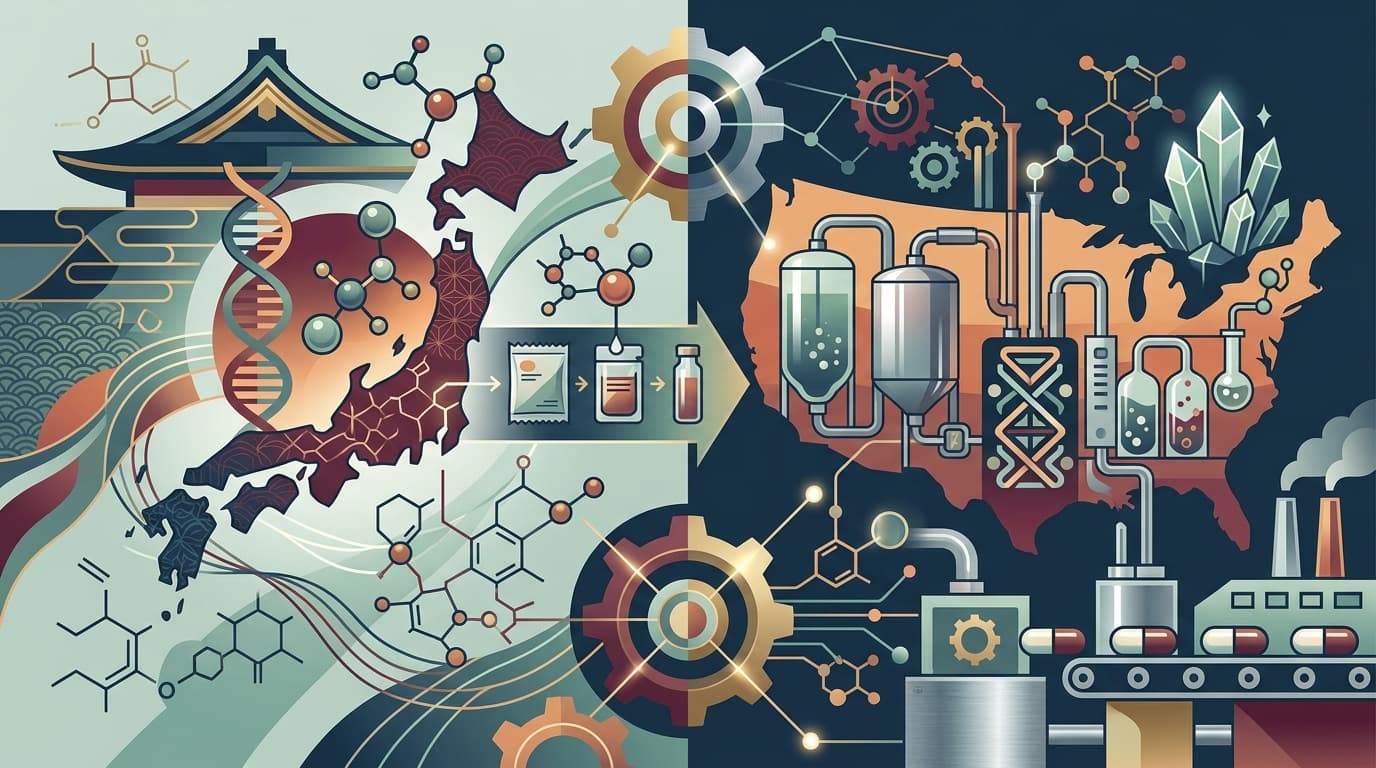
On April 8, Shionogi Inc. (the U.S. arm of Japan's Shionogi & Co.) landed a contract from BARDA, the Biomedical Advanced Research and Development Authority. Think of BARDA as the government's emergency shopper for health threats: bioterror agents, pandemics, drug-resistant superbugs. When something scary is on the horizon, BARDA writes the checks.
The initial award is $119 million, but the contract includes multiyear options that could push the total to $482 million. That's serious money, and it's earmarked for a specific mission: build a dedicated U.S. manufacturing site for Fetroja (cefiderocol), Shionogi's antibiotic designed to fight the nastiest gram-negative bacteria on the planet.
Fetroja isn't your standard Z-pack. It's a siderophore cephalosporin, which is a fancy way of saying it tricks resistant bacteria into swallowing their own poison. The drug disguises itself as iron (something bacteria desperately need), sneaks through their defenses, and then destroys them from the inside. It's like a Trojan horse, except the horse is made of iron and the city is a superbug.
Why Fetroja, and Why Now?
Fetroja already treats complicated urinary tract infections and hospital-acquired pneumonia. The FDA approved it back in 2019. But BARDA isn't funding domestic production just because the drug is useful in hospitals.
Get tomorrow's biotech intelligence before your competitors.
Join thousands of biotech professionals who start their day with our free, daily briefing.
The contract also covers development of Fetroja against biothreat pathogens: Burkholderia pseudomallei (the bacteria behind melioidosis) and Yersinia pestis (yes, that's plague). These are the kinds of organisms that keep biodefense officials up at night. Having a domestic supply of an effective antibiotic isn't optional when your threat model includes engineered pathogens.
There's a pediatric angle too. Part of the funding supports an FDA supplemental application to expand Fetroja's use to children with hospital-acquired pneumonia. Right now, kids don't have great options when resistant infections hit.
America's Antibiotic Dependency Problem
To understand why Washington is willing to spend nearly half a billion dollars on a single drug's manufacturing, you need to zoom out.
In 1992, Europe produced about 75% of the APIs used in American drugs. Today, that share has flipped almost entirely to Asia. Antibiotic imports have exploded: finished dosage form volumes rose a staggering 2,595% over recent decades, with annual spending hitting $4.1 billion by 2019.
The problem isn't just volume; it's concentration. If a single geopolitical crisis disrupts Chinese API exports (a trade war escalation, a Taiwan Strait incident, a pandemic-driven lockdown), the U.S. could face catastrophic shortages of drugs people need to survive surgery, fight infections, and recover from cancer treatment. By early 2025, more than 270 prescription drugs were already in shortage.
It's the pharmaceutical equivalent of putting all your eggs in one basket, then handing that basket to someone who might not always want to give it back.
Shionogi's Long Game on Superbugs
Shionogi isn't a newcomer to antibiotics. The company has been at this for over 140 years, founded in 1878 as a drug wholesaler in Osaka. It launched its first in-house antibiotic (Shinomin) in 1959 and introduced the world's first oxacephem antibiotic in 1982. In 2026, it ranked #2 in the Access to Medicine AMR Benchmark, which tracks how pharma companies are addressing antimicrobial resistance globally.
But making antibiotics is a terrible business. Doctors (rightly) try to use new antibiotics sparingly to prevent resistance, which means sales stay low even for breakthrough drugs. Several biotech companies have gone bankrupt after successfully developing new antibiotics because they couldn't sell enough to stay afloat. It's like inventing the world's best fire extinguisher that everyone agrees should only be used in true emergencies; great for society, horrible for quarterly revenue.
That's where pull incentives come in. The PASTEUR Act, a U.S. legislative proposal, would create subscription-style payments: the government pays a fixed amount for access to critical antibiotics regardless of how many doses are actually used. Think of it like a Netflix model for drugs. Shionogi has built its entire AMR strategy around the hope that governments will eventually make this kind of economics work.
The BARDA contract, with its government procurement component, is a concrete step in that direction. It guarantees the government will actually buy Fetroja, not just fund the factory. For a company betting its future on antibiotics, that's the difference between a promise and a paycheck.
Execution Risks Are Real
None of this is a sure thing. Building a pharmaceutical manufacturing facility from scratch is capital-intensive, slow, and riddled with regulatory hurdles. The exact location hasn't even been announced yet. Construction timelines in pharma routinely slip, and FDA inspections add another layer of uncertainty.
There's also the competitive landscape. Other government programs are pouring money into domestic drug manufacturing. BARDA recently issued a request for proposals worth approximately $200 million to boost U.S. production of essential medicines, with antimicrobials as a top priority. Shionogi is well-positioned, but it's not the only player trying to capture these dollars.
One analyst assessment described the deal as "a concrete, near-term cash infusion with a clear purpose" and "a targeted manufacturing and procurement catalyst," while flagging facility construction and market competition as key risks.
The Bigger Picture
This deal sits at the intersection of three powerful forces: national security concerns about pharmaceutical supply chains, the growing threat of antimicrobial resistance (which kills over a million people globally each year), and a political appetite for onshoring that spans both sides of the aisle.
For Shionogi, it's validation. For BARDA, it's preparedness. And for the broader antibiotic ecosystem, it's a signal that the U.S. government is willing to put real money behind the idea that making critical drugs at home isn't a luxury. It's a necessity.
Whether $482 million is enough to meaningfully change a supply chain that took decades to offshore is another question entirely. But at least someone is finally building the factory.
Deals & M&A
5 min read
Gilead's $45M Bet on a Drug That Destroys Cancer Proteins
Gilead just paid $45 million to license a cancer drug that doesn't block bad proteins; it destroys them entirely. The Kymera Therapeutics deal could be worth up to $750 million, and it's part of a much bigger bet on protein degradation reshaping oncology.