Roche Just Took a $1 Billion 'Leap of Faith' on a Cancer-Killing Trick
Roche just committed over $1 billion in potential milestones to co-develop cancer-killing "guided missiles" with C4 Therapeutics. The same week, Gilead made its own protein degradation bet. When two pharma giants pile into the same modality within 24 hours, it's worth paying attention.
A Decade of Trust, and Then the Big Bet
Roche's own executive called it a "leap of faith." That's not language you hear often from one of the world's largest pharma companies. But on April 8, Barbara Lueckel, Roche's global head of research technologies, used exactly those words to describe the company's latest deal with C4 Therapeutics.
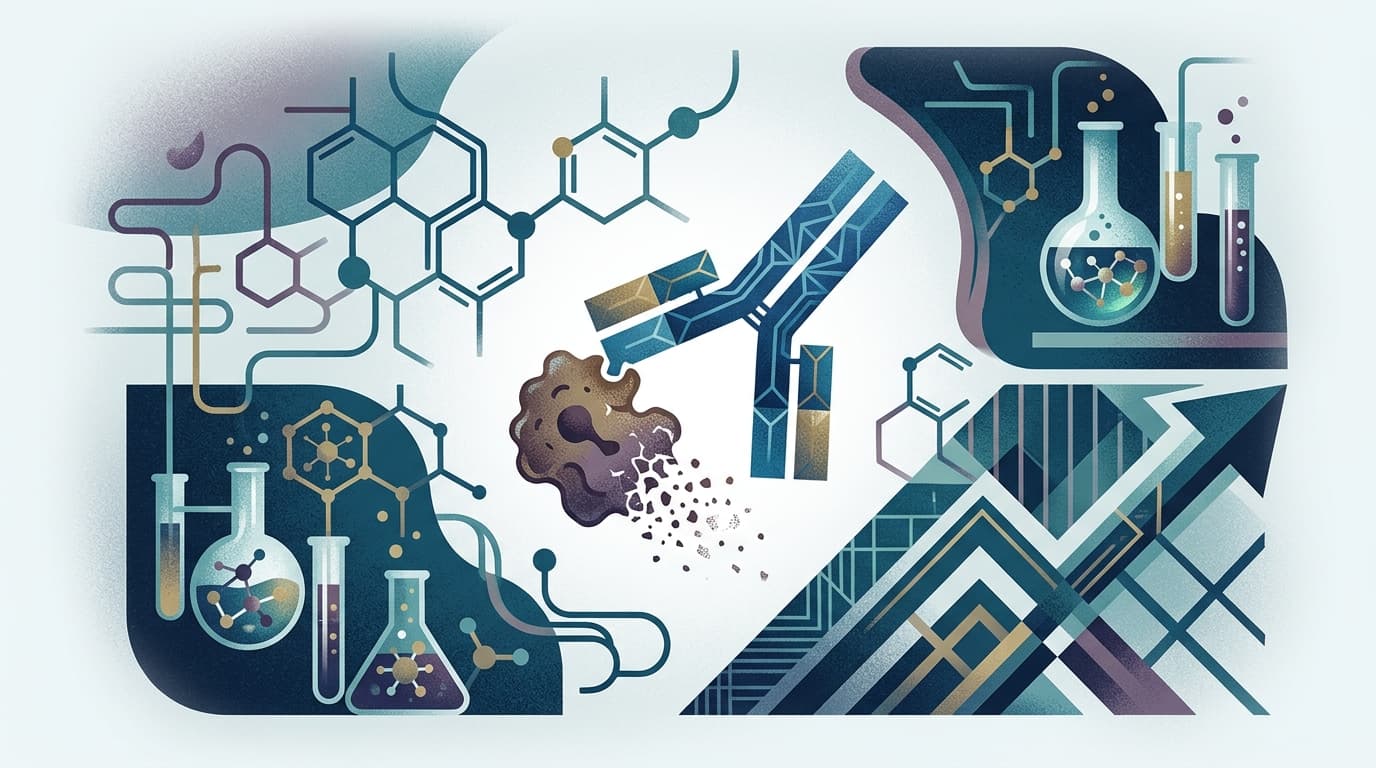
The agreement: Roche pays C4T $20 million upfront and commits to over $1 billion in milestone payments to co-develop a new class of cancer therapy called degrader-antibody conjugates, or DACs. Think of them as guided missiles that don't just block a cancer protein; they destroy it entirely. Two undisclosed oncology targets are in the crosshairs, with an option to add a third.
What makes this more than a standard licensing deal is the backstory. Roche and C4T have been working together for a full decade. Boris Zaïtra, Roche's head of corporate business development, put it plainly: "Our relationship with C4 Therapeutics is built on a decade of trust and shared scientific ambition." This isn't a first date. It's a proposal.
Wait, What Are Protein Degraders?
Most cancer drugs work like bouncers: they stand in front of a troublemaking protein and try to block it from causing damage. Protein degraders take a completely different approach. They're more like calling a tow truck. Instead of blocking the protein, they tag it for destruction, handing it over to the cell's own recycling system (the proteasome) to be shredded.
The clever part? Each degrader molecule can tag and destroy multiple copies of the target protein. Traditional drugs work one-to-one; one drug molecule blocks one protein. Degraders are catalytic, cycling through target after target. It's the difference between a bouncer who tackles one person and a bouncer who keeps throwing people out all night.
C4T's platform for designing these molecules is called TORPEDO (Target Oriented Protein Degrader Optimizer). It combines computational modeling, chemistry, and structural biology to engineer degraders that are both potent and selective. The company can make two flavors: simple "molecular glue" degraders (MonoDACs) and more complex two-part degraders (BiDACs) that physically bridge the target protein to the cell's destruction machinery.
Get tomorrow's biotech intelligence before your competitors.
Join thousands of biotech professionals who start their day with our free, daily briefing.
The DAC Twist: Adding a Guidance System
Degrader-antibody conjugates are where things get really interesting. C4T designs the protein-destroying payload using TORPEDO. Roche takes those payloads and attaches them to antibodies, which act like homing devices that deliver the degrader directly to cancer cells.
This matters because targeted delivery solves one of the biggest headaches in oncology: toxicity. If your drug is a grenade, you'd rather throw it into the right room than toss it through the front door and hope for the best.
Lueckel highlighted exactly this advantage, noting that DACs kill cancer cells through targeted protein degradation rather than the broad cytotoxicity of traditional antibody-drug conjugate (ADC) payloads. Translation: less collateral damage to healthy tissue, and potentially less drug resistance over time.
C4T CEO Andrew Hirsch framed the antibody component as pulling double duty. The antibody doesn't just deliver the degrader; it can also drive therapeutic effects by engaging receptors on the cell surface. Two jobs, one molecule.
Big Pharma Is Piling In
Roche wasn't the only pharma giant making protein degradation moves this week. On the same day, Gilead exercised its option on KT-200, a preclinical oral CDK2 molecular glue degrader from Kymera Therapeutics. Gilead paid $45 million for global rights, on top of the $40 million it paid for the option last June. That's $85 million committed so far, with up to $750 million in milestones on the table.
Gilead plans to file an IND (the application to start human trials) by 2027.
Zoom out further and the pattern is unmistakable. Arvinas and Pfizer have been advancing vepdegestrant, a PROTAC estrogen receptor degrader, through late-stage trials. Monte Rosa and Novartis signed their second molecular glue collaboration in September 2025. Amgen acquired Dark Blue Therapeutics to add a degrader for acute myeloid leukemia. The market for targeted protein degradation, estimated at roughly $500 million to $650 million in 2025, is projected to balloon to as much as $9.85 billion by the mid-2030s.
The first PROTAC approval is expected in 2026, which would mark a watershed moment for the entire field.
The Risk Nobody's Ignoring
Before you get swept up in the enthusiasm, there's a cautionary tale baked into C4T's own recent history. In 2023, Merck paid C4T $10 million to collaborate on degraders, with hopes pinned on $600 million in milestones.
That's the nature of early-stage biotech partnerships. The billion-dollar headline numbers are theoretical ceilings, not checks in the mail. Most milestone payments depend on clearing discovery, development, regulatory, and commercial hurdles that can take a decade or more to play out. Roche can walk away with just 90 days' notice if things go sideways.
C4T's pipeline offers reasons for cautious optimism beyond this Roche deal, though. Its IRAK4 degrader (BIIB142), partnered with Biogen for autoimmune diseases, had its IND accepted by the FDA in September 2025. And its lung cancer degrader, CFT8919, was expected to generate Phase 1 data by the end of Q1 2026.
Why This Deal Is Worth Watching
The Roche-C4T deal is interesting not because of the $20 million upfront (that's pocket change for Roche). It's interesting because of what it signals about where oncology is heading.
For years, antibody-drug conjugates have been one of cancer therapy's hottest categories. But traditional ADC payloads are blunt instruments; they kill cells through raw cytotoxicity, which limits how aggressively you can dose them. DACs represent a fundamentally different payload strategy: precision destruction instead of chemical carpet-bombing.
Roche is essentially betting that protein degradation is mature enough to serve as the warhead on its next generation of targeted cancer therapies. Gilead is making a parallel bet on oral degraders. Both deals landing in the same week isn't a coincidence; it's a signal.
The "leap of faith" label is honest. DACs are unproven in the clinic, and the path from preclinical collaboration to approved drug is long and littered with failures. But when two of the world's biggest pharma companies jump into the same modality in the same week, the message is clear: the era of targeted protein degradation is no longer theoretical. It's investable.
Now we wait to see if the science delivers.
Deals & M&A
5 min read
Gilead's $45M Bet on a Drug That Destroys Cancer Proteins
Gilead just paid $45 million to license a cancer drug that doesn't block bad proteins; it destroys them entirely. The Kymera Therapeutics deal could be worth up to $750 million, and it's part of a much bigger bet on protein degradation reshaping oncology.