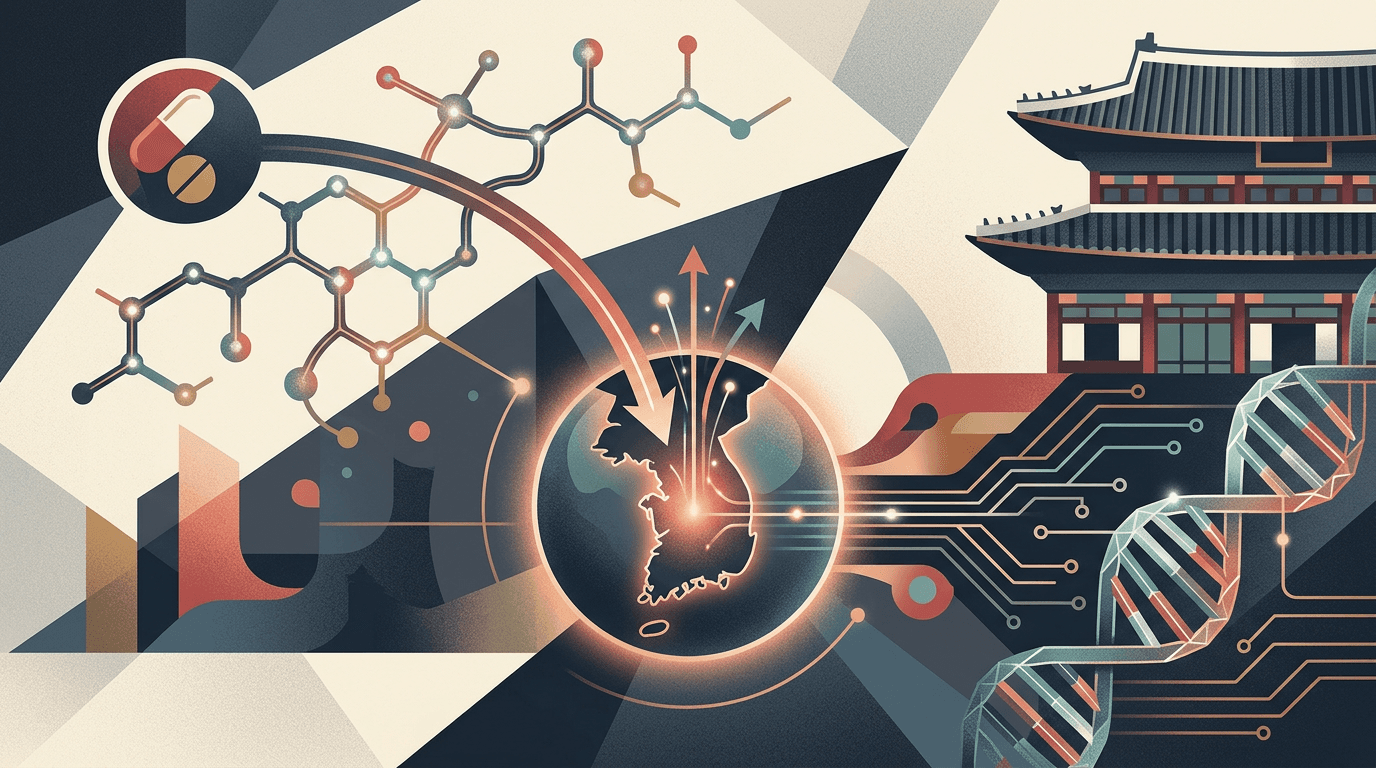

Roche is pouring up to $520 million into South Korea, but not to build factories. The Swiss pharma giant wants to turn the country into its Asian clinical trial hub, and the reasons why reveal something bigger about where the drug industry is headed.
South Korea isn't building the next great drug factory. It's building something potentially more valuable: the place where the world's biggest pharma companies go to prove their drugs actually work.
Roche just signed a memorandum of understanding with South Korea's Ministry of Health and Welfare, committing 710 billion won (roughly $480 to $520 million, depending on the exchange rate) over the next five years. And here's what makes the deal interesting: the money isn't flowing into shiny new manufacturing plants. It's going toward clinical trials, R&D talent, and partnerships with local biotech companies.
That distinction matters more than you think.
Clinical trials are the most expensive, time-consuming bottleneck in drug development. Finding enough patients, collecting reliable data, keeping costs under control: it's like trying to organize a wedding for 10,000 people across 30 countries, except the stakes are life and death.
South Korea has quietly become one of the best places on earth to run these trials. The country has experienced physicians, sophisticated hospital networks, and research nurses who know the drill. Patients can be recruited fast. Data quality is high. And the whole thing costs 30 to 40% less than running trials in the U.S. or Japan.
Those advantages aren't theoretical. Global pharma spending on Korean clinical research surged 74% between 2020 and 2024, climbing from 596 billion won to over 1 trillion won. Roche saw those numbers and decided to go all in.
The MOU lays out a plan to establish South Korea as Roche's Asian hub for global clinical trials. The focus areas include high-prevalence diseases, intractable conditions, and advanced biopharmaceuticals.
But the deal goes deeper than just running studies. Roche plans to train local R&D talent, launch joint research programs with Korean biotech firms, and run open innovation programs to scout promising companies for collaboration or licensing. Think of it as Roche planting a flag and saying: "We want first dibs on what comes out of this ecosystem."

Eli Lilly has $1.5 billion in pills stockpiled and an April 10 FDA decision date for orforglipron, an oral obesity drug that could blow open a market where 98% of eligible patients still aren't being treated. The needle era might be ending sooner than you think.


Join thousands of biotech professionals who start their day with our free, daily briefing.
According to Korean media outlets, Roche initiated the partnership after evaluating Korea's clinical strengths. Health Minister Cho Eun-kyung said the deal will "elevate trial competitiveness" and catalyze broader biohealth expansion.
Roche's bet doesn't exist in a vacuum. South Korea has been on a remarkable run in biopharma, and the government is pouring fuel on the fire.
In January 2025, Seoul launched the National Bio Committee to coordinate a public-private push with ambitious goals: slash costs in half and rank as the world's third-leading nation for clinical trials by 2030. The government allocated 2.12 trillion won ($1.5 billion) for advanced biotech R&D in 2025 alone, a 19.1% increase over the previous year.
The tax incentives are generous, too. Companies can get R&D tax credits of up to 40% for investments in national strategic technologies like advanced biotech.
All of this is attracting serious attention. And the licensing numbers tell their own story: South Korean biotech licensing deals hit $7.86 to $8 billion in value through early 2025, representing 113% growth over 2024's total.
While Roche's deal focuses on clinical trials, South Korea's manufacturing side is booming independently. Samsung Biologics pulled in $3.3 billion in annual contract orders in 2024, with a fifth plant launching in April 2025 that will bring total capacity to 784,000 liters.
On the biosimilar front (lower-cost versions of complex biologic drugs), Korea is second only to the U.S. in FDA-approved biosimilars originating from its companies. Samsung Bioepis generated $1.1 billion in 2024 revenue.
The manufacturing hub is concentrated in one place: Songdo International City ranks among the top globally for biopharmaceutical production capacity. It's like if you took the entire U.S. biotech manufacturing sector and compressed it into a single metro area.
Roche has been on a capital spending spree globally. The company announced a jaw-dropping $50 billion investment in U.S. facilities over five years, including a $700 million plant in North Carolina for obesity and metabolic medicines, a $550 million expansion in Indiana for diagnostics, and a new gene therapy facility in Pennsylvania.
The South Korea deal is smaller in dollar terms but strategically distinct. The U.S. investments are about manufacturing scale and tariff protection. The Korea investment is about speed, efficiency, and ecosystem access. Roche wants to run trials faster, cheaper, and closer to Asian patient populations, while simultaneously building relationships with Korean biotechs that might produce the next blockbuster.
It's a two-pronged approach: build the factories in America, run the trials in Korea.
South Korea's pharma market is large and growing rapidly. The country is no longer just a place where Samsung makes your phone and K-pop conquers the world. It's becoming a critical node in the global drug development supply chain.
Roche's $480 million commitment is a signal to the rest of the industry. When one of the world's largest pharmaceutical companies decides that a country is where it wants to test its most important drugs, others tend to follow. The question isn't whether more Big Pharma money will flow into South Korea. It's how much and how fast.
For Korean biotechs, the timing couldn't be better. Out-licensing of Korean drugs to international companies surged 180% to $5 billion in early 2025. With Roche's open innovation programs actively scouting for partners, the country's smaller players now have a direct pipeline to one of pharma's biggest checkbooks.
South Korea spent decades building the infrastructure. Now the world's biggest drug companies are showing up to use it.
Lonza sold its personalized medicine business back to the company that built it. Eight years after acquiring the Cocoon Platform from Octane Medical Group, the Swiss CDMO giant is handing back the keys, and the reasons say a lot about where biotech manufacturing is headed.