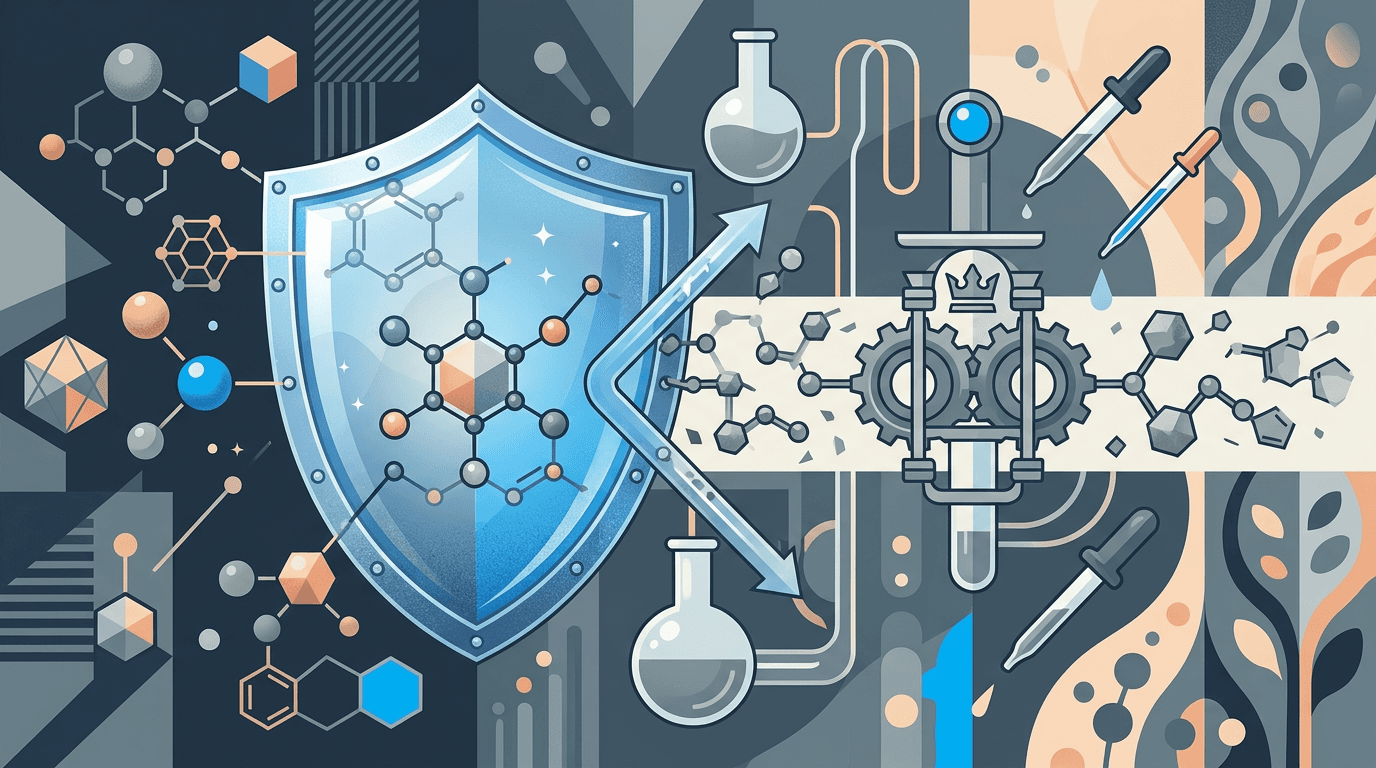
The FDA Just Gave Old Drugs a New Shield Against Generics
The FDA just released a draft guidance explaining how drugmakers can earn three years of generic-free protection for already-approved drugs. It's one of pharma's most powerful (and most confusing) tools, and the new rules finally make it readable.
If you've ever wondered why a drug that's been on the market for decades can suddenly become untouchable by generics, you're about to get your answer.
On March 4, the FDA dropped a draft guidance document that spells out exactly how pharmaceutical companies can earn three years of extra market protection for drugs that are already approved. It's called 3-year clinical investigation exclusivity, and it's one of the most quietly powerful tools in pharma's playbook. The new guidance doesn't change the rules, but it finally explains them in plain English. Well, plain-ish English. That's where we come in.
The Pharma Equivalent of a Home Renovation Permit
Think of it like real estate. You buy a house (get a drug approved). Five years later, you renovate the kitchen (run a new clinical trial for a different use). The government gives you a special permit that prevents anyone from copying your kitchen design for three years.
That's essentially what 3-year exclusivity does. When a company runs new clinical studies on an already-approved drug and gets FDA approval for a new use, formulation, or dosing regimen, the FDA blocks generic competitors from piggybacking on those specific results for three years. Generics can still sell the drug for its original uses, but they can't touch the new stuff.
This is different from the more famous 5-year new chemical entity (NCE) exclusivity, which protects entirely new molecules. NCE exclusivity is a fortress around a brand-new compound. Three-year exclusivity is more like a fence around one specific room in the house.
What the Guidance Actually Says
The document, titled "New Clinical Investigation Exclusivity (3-Year Exclusivity) for Drug Products: Questions and Answers," covers 18 questions organized across topics like eligibility, what counts as a qualifying study, and how to file a claim. It's designed for companies submitting NDAs (new drug applications) or supplements under the 505(b)(1) or 505(b)(2) pathways.
Get tomorrow's biotech intelligence before your competitors.
Join thousands of biotech professionals who start their day with our free, daily briefing.
It can't be a simple bioavailability study (those routine tests that show your body absorbs the drug properly).
It must be essential to approval, meaning the FDA literally could not have said yes without the data.
The company applying must have conducted or sponsored the research.
The "essential" part is key. Applicants have to submit a literature search proving that no previously published data would have been sufficient for approval. You can't just run a confirmatory study and call it essential. The investigation has to fill a genuine gap.
One interesting wrinkle: safety studies can sometimes qualify, not just efficacy trials. If a study proves a drug is safer than previously thought and that enables broader use (like Rapamune's 2003 approval for cyclosporine withdrawal procedures in kidney transplant patients), the FDA may grant exclusivity. But a study that simply identifies new risks? That won't cut it.
The Real-World Scoreboard
This exclusivity provision has already produced some notable showdowns. Indivior's Sublocade (a long-acting buprenorphine injection for opioid use disorder) earned 3-year exclusivity that successfully blocked approval of a competitor called Brixadi, because both products shared the same active ingredient.
Meanwhile, Otsuka's Abilify Maintena (a long-acting aripiprazole injection) got the same protection but couldn't block Aristada from entering the market. Why? Aristada uses aripiprazole lauroxil as its active ingredient, a prodrug of aripiprazole, but both share the same active moiety—aripiprazole. Nevertheless, the FDA treated them differently for exclusivity purposes, so Aristada fell outside the exclusivity's scope.
That distinction has sparked real legal battles. In Braeburn v. FDA, the agency clarified that exclusivity covers "clinically meaningful" changes to a drug's conditions of use. And in Otsuka v. Price (2017), the D.C. Circuit upheld the FDA's narrow interpretation: you don't get blanket protection, just protection for your specific innovation.
Why This Matters Right Now
The Hatch-Waxman Act created these exclusivity provisions back in 1984, and the FDA codified its regulations in 1994. So why is the agency publishing a guidance document more than 40 years later?
Because the rules have been genuinely confusing. The FDA Law Blog has called the exclusivity framework's intricacies exactly that: confusing.
For pharma companies, this clarity changes the calculus on post-approval development. If you're a mid-size company sitting on an approved drug and considering whether to invest tens of millions in a new indication trial, knowing exactly how to secure three years of generic-free revenue makes that decision a lot easier.
For generic companies, the guidance is a roadmap of what they're up against. Understanding the precise scope of exclusivity (limited to the protected conditions of approval, not the entire product) helps them plan their own timelines and carve-out strategies.
The Fine Print That Sponsors Need to Know
The procedural requirements aren't trivial. Companies must file their exclusivity claims through the FDA's Electronic Submissions Gateway (ESG) as a "314.50(j) Exclusivity Claim" in a specific subfolder (Module 1.3.5.3, for the regulation nerds). They need to include template language from the guidance, a literature search certification, and a justification of their exclusive rights to the study data.
The FDA makes its exclusivity determination at the time of approval and records it in the Orange Book, that famous database that generic companies obsessively monitor to know when they can enter a market.
One detail worth highlighting: separate cohorts or treatment arms within a larger clinical trial can independently qualify for exclusivity, as long as they were prespecified and evaluated distinct populations or products. That's a meaningful carve-out. It means a well-designed Phase 3 trial could potentially generate multiple exclusivity claims from a single study.
So What's the Verdict?
This guidance doesn't create new rights. It clarifies existing ones. But in regulatory strategy, clarity is currency. Companies that understand these rules can structure their clinical programs to maximize protection. Those that don't will leave money on the table.
The draft is open for public comment, and the FDA has signaled it plans to add more Q&As in future updates. For now, the message is clear: if you're going to invest in new clinical research for an old drug, the FDA wants you to know exactly what you'll get in return.
Whether that's good for innovation or just another delay tactic keeping generics off the shelves depends on where you sit. Pharma will call it an incentive. Generic companies will call it a barrier. The FDA, characteristically, is trying to play referee. At least now, everyone can read the rulebook.
4 min read
Lonza Just Gave Back the Tech It Bought Eight Years Ago
Lonza sold its personalized medicine business back to the company that built it. Eight years after acquiring the Cocoon Platform from Octane Medical Group, the Swiss CDMO giant is handing back the keys, and the reasons say a lot about where biotech manufacturing is headed.