Eli Lilly has $1.5 billion in pills stockpiled and an April 10 FDA decision date for orforglipron, an oral obesity drug that could blow open a market where 98% of eligible patients still aren't being treated. The needle era might be ending sooner than you think.
Imagine telling 100 million Americans with obesity that they need a weekly shot to lose weight. Now imagine telling them they can just take a pill instead. That's the difference between where the obesity drug market is today and where it's about to go.
Eli Lilly's orforglipron, an oral obesity drug taken once daily, is closing in on a March 25, 2026 FDA decision date. If approved, Lilly plans to ship the drug within a week. They've already stockpiled $1.5 billion in inventory, negotiated with pharmacy benefit managers, and essentially set the table for a Q2 2026 launch. This isn't a maybe. This is a company betting billions that the needle era for obesity is winding down.
Why a Pill Changes Everything
Right now, the biggest names in obesity treatment (Wegovy, Zepbound, Mounjaro) all require subcutaneous injections. That means needles, refrigeration, and the kind of medical infrastructure that doesn't exist in large parts of the world. It also means millions of patients simply saying "no thanks."
A pill eliminates all of that. No needles. No cold storage. No specialized distribution. Think of it like the difference between streaming a movie and driving to a Blockbuster: the product is similar, but the access is wildly different.
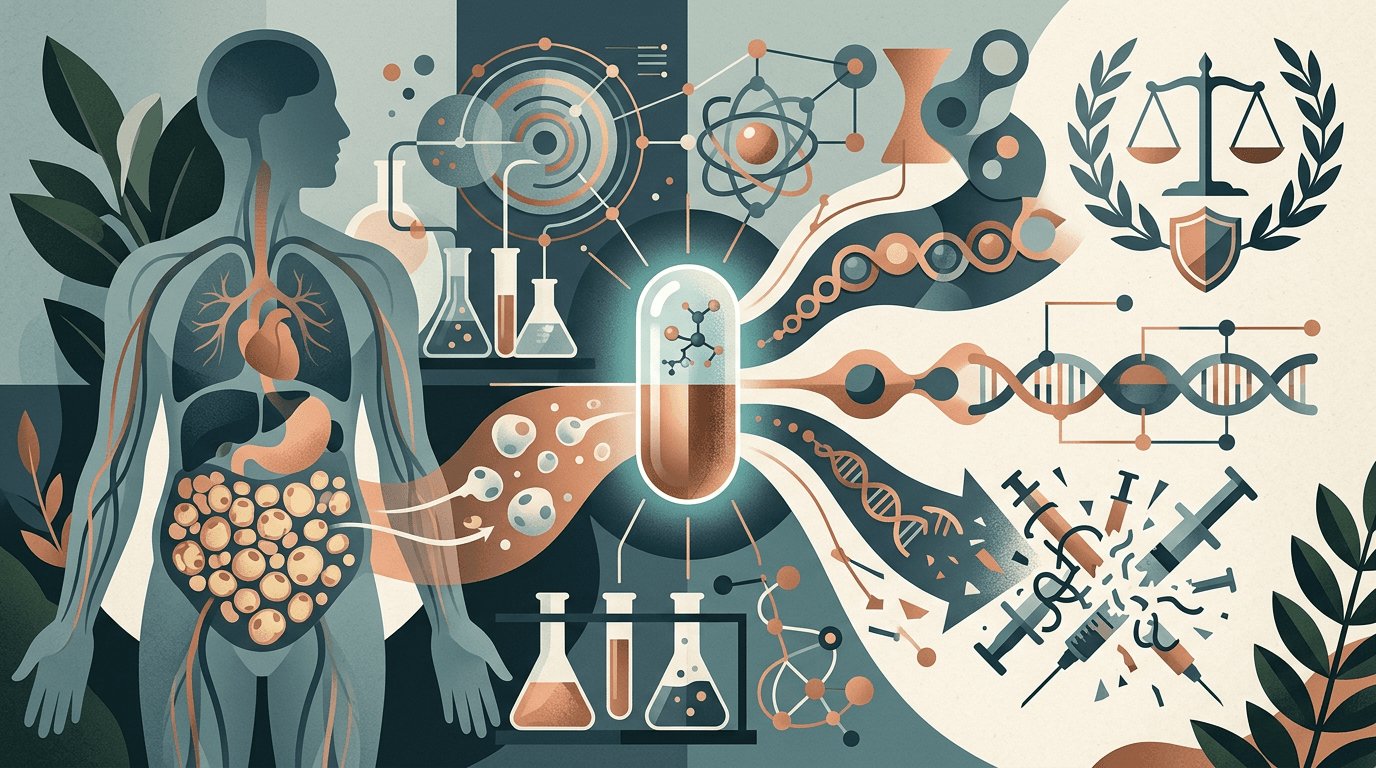
Orforglipron is a non-peptide small molecule, which is a fancy way of saying it's built like a traditional pill rather than a biologic protein. Injectable GLP-1 drugs like semaglutide are peptides, complex biological molecules that get destroyed by stomach acid if you try to swallow them. Orforglipron sidesteps that problem entirely because it's a different kind of chemical structure. It resists the enzymes that chew up peptides, stays stable at room temperature, and can be manufactured at scale using conventional pill-making processes.
That last point matters more than it sounds. The obesity drug market has been plagued by supply shortages for years. Scaling up production of injectable biologics is expensive and slow. Scaling up pill production? Pharmaceutical companies have been doing that for a century.
Get tomorrow's biotech intelligence before your competitors.
Join thousands of biotech professionals who start their day with our free, daily briefing.
The Numbers Behind the Hype
In the ATTAIN-1 trial, Lilly's flagship Phase 3 study, 3,127 adults with obesity or overweight (without diabetes) took orforglipron daily for 72 weeks. The highest dose, 36 mg, delivered an average weight loss of 27.3 pounds compared to just 2.2 pounds on placebo.
Nearly 60% of patients on the top dose lost at least 10% of their body weight, and about 40% hit the 15% threshold. Those are meaningful numbers in obesity medicine. The drug also improved cardiovascular risk markers: lower triglycerides, reduced non-HDL cholesterol, and drops in systolic blood pressure.
Now, a reality check. Injectable GLP-1 drugs often push weight loss above 15% on average, so orforglipron's roughly 12% average loss at the highest dose is a step behind the best injections. But that comparison misses the point. A pill that millions more people will actually take could have a bigger public health impact than a shot that produces slightly better results in a smaller population.
The Diabetes Angle
Orforglipron isn't just chasing obesity. Lilly ran the ACHIEVE program of trials in patients with type 2 diabetes, and the results were striking.
In ACHIEVE-3, an open-label head-to-head study against oral semaglutide (Novo Nordisk's existing diabetes pill), the 36 mg dose of orforglipron cut A1C by 2.2% compared to 1.4% for semaglutide 14 mg. That's a decisive win. A1C is the gold-standard measure of blood sugar control over time, and beating the market leader by that margin gets endocrinologists' attention.
Lilly plans to file for a type 2 diabetes approval in 2026 as well, setting up orforglipron as a two-front assault.
A Crowded Pill Bottle
Lilly won't have the oral obesity market to itself. Novo Nordisk launched its oral version of Wegovy (semaglutide) in January 2026, making it the first approved oral GLP-1 for obesity. So by the time orforglipron arrives, Novo will already have a head start.
But Lilly has a structural advantage. Orforglipron is a small molecule; Novo's oral semaglutide is still a peptide crammed into a pill with special absorption-enhancing technology. That distinction matters for manufacturing cost, supply chain simplicity, and potentially for pricing. Lilly's pill doesn't need the biological complexity that Novo's does.
The pipeline behind them is filling up too. Novo is developing amycretin, a dual-agonist targeting both GLP-1 and amylin pathways, available in both subcutaneous and oral formulations, with an early oral trial showing 13.1% weight loss at 12 weeks. Structure Therapeutics and Viking Therapeutics are working on differentiated oral approaches. China's Hengrui has a GLP-1/GIP dual agonist posting positive Phase 3 data. The oral obesity space is turning into a full-blown arms race.
Pfizer, notably, is sitting on the sidelines. Its oral candidate danuglipron hit development snags and hasn't resurfaced as a serious competitor. Sometimes knowing when to fold matters as much as knowing when to bet.
The Money Machine Behind It All
To understand why Lilly is pushing so hard on orforglipron, look at what its injectable obesity franchise is already doing. Zepbound (tirzepatide for obesity) went from $4.9 billion in 2024 sales and is growing rapidly.
Tirzepatide became the world's best-selling drug, period. Lilly's total 2025 revenue from Mounjaro and Zepbound together reached $36.5 billion, more than half the company's entire revenue.
Adding orforglipron on top of that is like a restaurant with the most popular dish in town deciding to also offer delivery. The food (metabolic benefits) is comparable; you're just reaching all the customers who wouldn't come in and sit down. Truist Securities analysts have modeled scenarios where the combined tirzepatide/orforglipron franchise could reach peak sales of $101 billion. That number sounds absurd until you remember that obesity affects over 40% of American adults.
Lilly's 2026 company-wide revenue guidance sits at $80 to $83 billion, a 25% jump from the prior year. Analysts at Leerink see a path to $94.3 billion by 2027 if orforglipron launches on schedule and retatrutide (Lilly's next-gen triple agonist) delivers strong Phase 3 data.
What Could Go Wrong
The side effect profile is the obvious concern. Like all GLP-1 drugs, orforglipron causes gastrointestinal issues: nausea, diarrhea, vomiting, and constipation. Lilly uses a gradual dose escalation (bumping up every four weeks) to help patients adjust, and allows one step back down if side effects get rough. The problems were generally mild to moderate in trials, but real-world experience often looks different than clinical trial data.
Then there's the efficacy gap. If doctors and patients compare orforglipron's ~12% average weight loss directly against tirzepatide's 15%+ results, the pill might feel like a compromise. Lilly will need to frame the convenience story carefully: good enough results in a format that dramatically more people will use.
Pricing is another wildcard. Lilly will need to be competitive without undercutting its own Zepbound franchise. That's a delicate dance.
The Bigger Picture
Oral drugs are how you reach the vast majority of people with obesity who remain untreated. Not everyone has access to a doctor who can prescribe injectables. Not everyone lives near a pharmacy with cold storage. Not everyone is willing to give themselves a shot every week. But almost everyone can swallow a pill.
Lilly's bet is straightforward: the future of obesity treatment looks like your morning vitamin, not your flu shot. If the FDA agrees on March 25, that future arrives fast. And Lilly, with $1.5 billion in pills already sitting in warehouses, is ready to deliver it before the ink on the approval letter is dry.
Clinical & Regulatory
4 min read
The FDA Just Gave Old Drugs a New Shield Against Generics
The FDA just released a draft guidance explaining how drugmakers can earn three years of generic-free protection for already-approved drugs. It's one of pharma's most powerful (and most confusing) tools, and the new rules finally make it readable.