
Pfizer just handed a shelved Seagen cancer drug to a company that was a shell corp three years ago. The deal starts at $12 million but could top $1 billion, and the question everyone's asking is whether Medicus Pharma can actually pull it off.
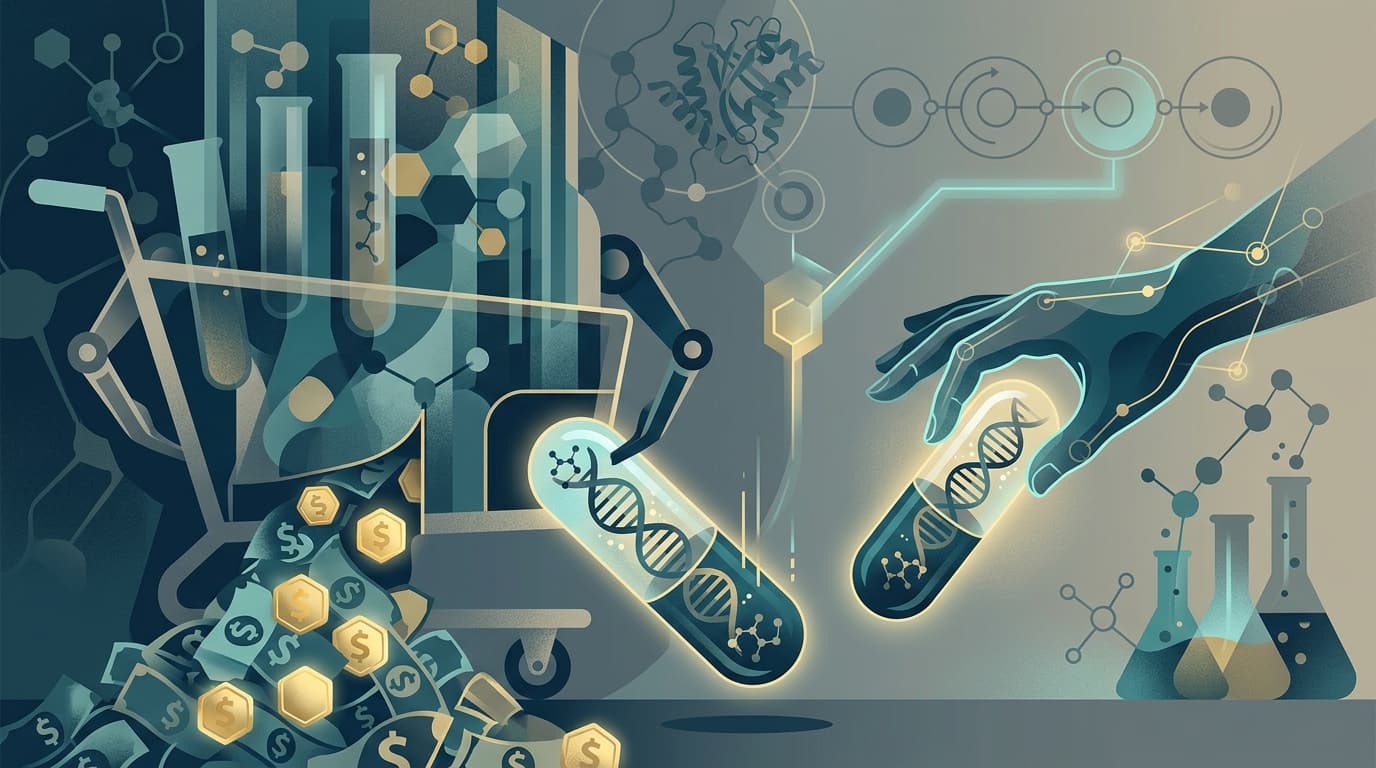
Imagine spending $43 billion at Costco. You fill your cart with everything: the giant teddy bear, the industrial-size mayo, the flatscreen TV. You get home, realize you can't use the mayo, and sell it to your neighbor for $12 and a promise of more later.
That's roughly what Pfizer just did with one of the cancer drug programs it inherited from its blockbuster Seagen acquisition. And the neighbor? A tiny clinical-stage company most people have never heard of.
Pfizer transferred PF-08046031, an antibody-drug conjugate (ADC) originally developed by Seagen, to Medicus Pharma in a deal announced September 2, 2026. ADCs are essentially guided missiles for cancer: an antibody finds the tumor cell, locks on, and delivers a toxic payload directly to it, sparing healthy tissue.
This particular ADC targets a protein called melanotransferrin (CD228), which shows up on advanced solid tumors like melanoma, lung cancer, and head-and-neck cancers. It was in early Phase 1 testing before Pfizer shelved it.
The upfront price? Just $12 million, with another $15 million due on the first anniversary. Pfizer even kicked in $2 million to help Medicus get started on development. That's pocket change for a company of Pfizer's size. But the back end of the deal tells a different story: Pfizer is eligible for more than $1 billion in development, regulatory, and sales milestones if this drug eventually works.
Plus tiered royalties in the low double digits on any future sales. In other words, Pfizer handed over the keys but kept a very comfortable seat in the back.
If you're thinking "never heard of them," you're not alone. Medicus Pharma Ltd. started life as Interactive Capital Partners Corporation, a shell company incorporated in Ontario back in 2008.
It became a real biotech company in September 2023 through a reverse takeover with a firm called SkinJect, raising about in a concurrent financing. The company is now headquartered in West Conshohocken, Pennsylvania, and led by CEO .

Novo Nordisk killed two cardiovascular trials of ziltivekimab after an independent committee said they were unlikely to succeed. The $2.1 billion Corvidia acquisition now looks like one of the most expensive dead ends in recent pharma history, and it leaves Novo scrambling to diversify beyond its GLP-1 empire.


Join thousands of biotech professionals who start their day with our free, daily briefing.
Before this Pfizer deal, Medicus's pipeline had two assets: a dissolving microneedle treatment for basal cell carcinoma (skin cancer) in Phase 2, and a prostate cancer drug called Teverelix. Not exactly a powerhouse roster. Adding a Seagen-pedigreed ADC to that lineup is like a minor league baseball team suddenly acquiring a former first-round draft pick.
The catch? Medicus is now on the hook for all development, manufacturing, regulatory, and commercialization costs. And at least one market observer has flagged the company's ongoing "going concern" issues, which is accounting-speak for "we're not sure they have enough cash to keep the lights on."
Pfizer closed the Seagen deal in December 2023, financing it with roughly $31 billion in new debt. The thesis was simple: become the dominant force in cancer drug development by absorbing Seagen's industry-leading ADC technology. Pfizer created a dedicated oncology division, reorganized its commercial structure, and projected nearly $1 billion in cost efficiencies by the third full year.
But when you buy an entire company for $43 billion, you don't love every single asset equally. Some programs get the spotlight. Others get the storage closet. PF-08046031 ended up in the closet.
Rather than letting it gather dust forever, Pfizer structured a deal that shifts all the risk and expense to Medicus while preserving a massive upside if the drug pans out. It's a classic big pharma playbook: keep the patents, collect the royalties, let someone else do the hard (and expensive) work. Pfizer even retained the right to review and comment on Medicus's development plans, plus an option to co-fund the program after a pivotal trial begins.
It's less of a sale and more of a franchise agreement.
This deal doesn't exist in a vacuum. The ADC market in 2025 and 2026 is one of the hottest spaces in oncology. The top five companies (Daiichi Sankyo/AstraZeneca, Pfizer/Seagen, Roche, Gilead, and AbbVie) still control roughly 70 to 75% of ADC revenues. But the pipeline is exploding: over 150 companies are now developing ADCs.
China has become the most prolific geography for ADC patent filings, putting pressure on Western incumbents to defend their franchises through label expansions and combination regimens rather than first-mover advantage alone.
For smaller biotechs like Medicus, there's a real window of opportunity in novel targets and payloads. But the bar is rising fast. Any new ADC entrant needs to show clear advantages in safety, efficacy, or manufacturing to stand out from the crowd.
Can Medicus Pharma, a company that was a shell corp three years ago, actually develop a Seagen-originated cancer drug through clinical trials and into patients' hands? The honest answer is: we have no idea.
The bull case writes itself. The drug has a legitimate scientific pedigree from one of the best ADC shops ever built. Medicus got it at a bargain basement price. And the target (melanotransferrin) is expressed across several tough-to-treat solid tumors, which means a large potential market if the science holds up.
The bear case is equally straightforward. Medicus has limited cash, limited experience running oncology trials, and a pipeline that looks like it was assembled from a clearance rack. Pfizer shelved this program for a reason; maybe the early clinical data wasn't compelling enough to justify further investment. And the milestone payments north of $1 billion only matter if the drug actually works, which is a very big "if" for any Phase 1 oncology asset.
For Pfizer, the math is simple. They spent $12 million (plus $2 million in development support) and kept a call option on a billion-dollar payout. That's the kind of asymmetric bet that any poker player would take.
For Medicus, this is a defining moment. They just went from obscure micro-cap to a company sitting on a Seagen ADC with worldwide rights. Whether that turns into a Cinderella story or an expensive lesson depends entirely on execution, and on whether the biology cooperates.
Novo Nordisk just axed its $1.3 billion chronic kidney disease program after the drug failed in a Phase 3 trial. Combined with the ziltivekimab flop weeks earlier, the company's attempts to build beyond obesity and diabetes are looking increasingly shaky.