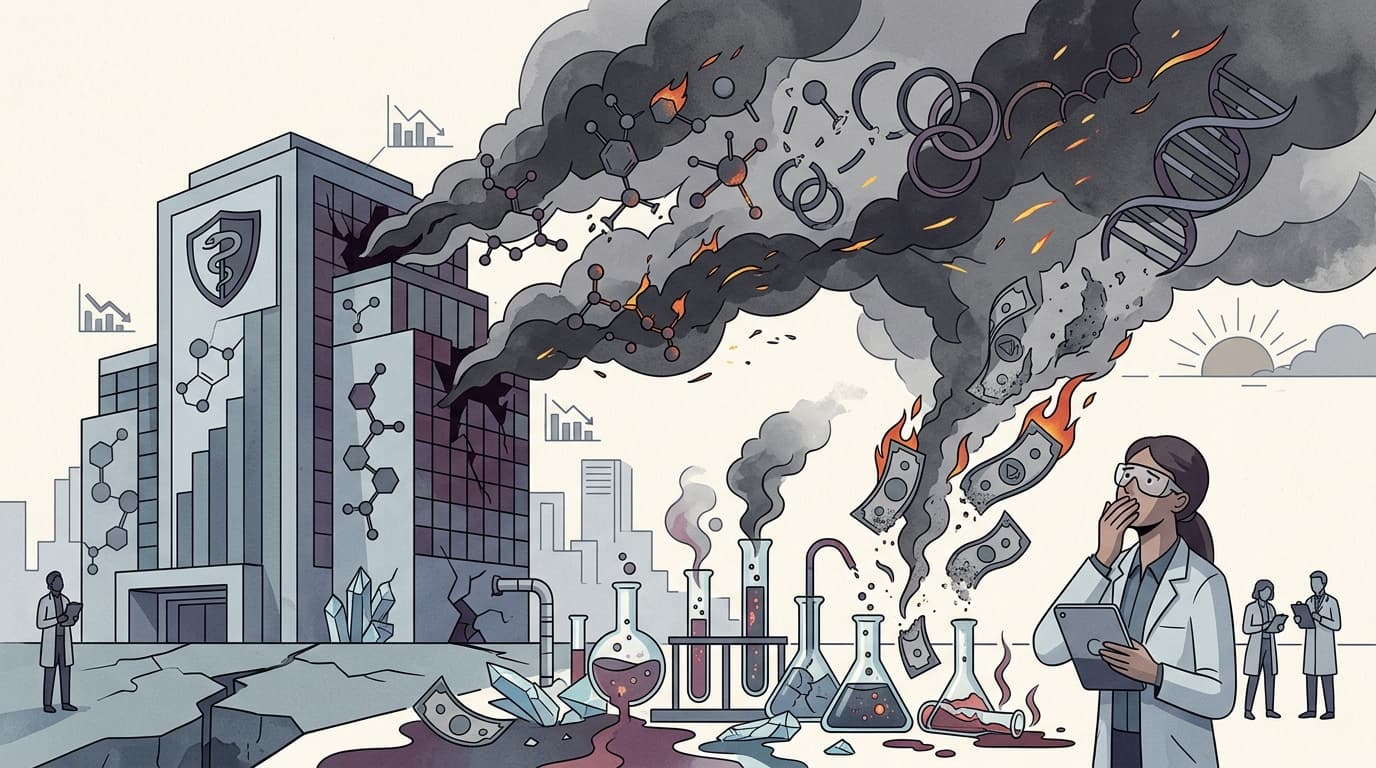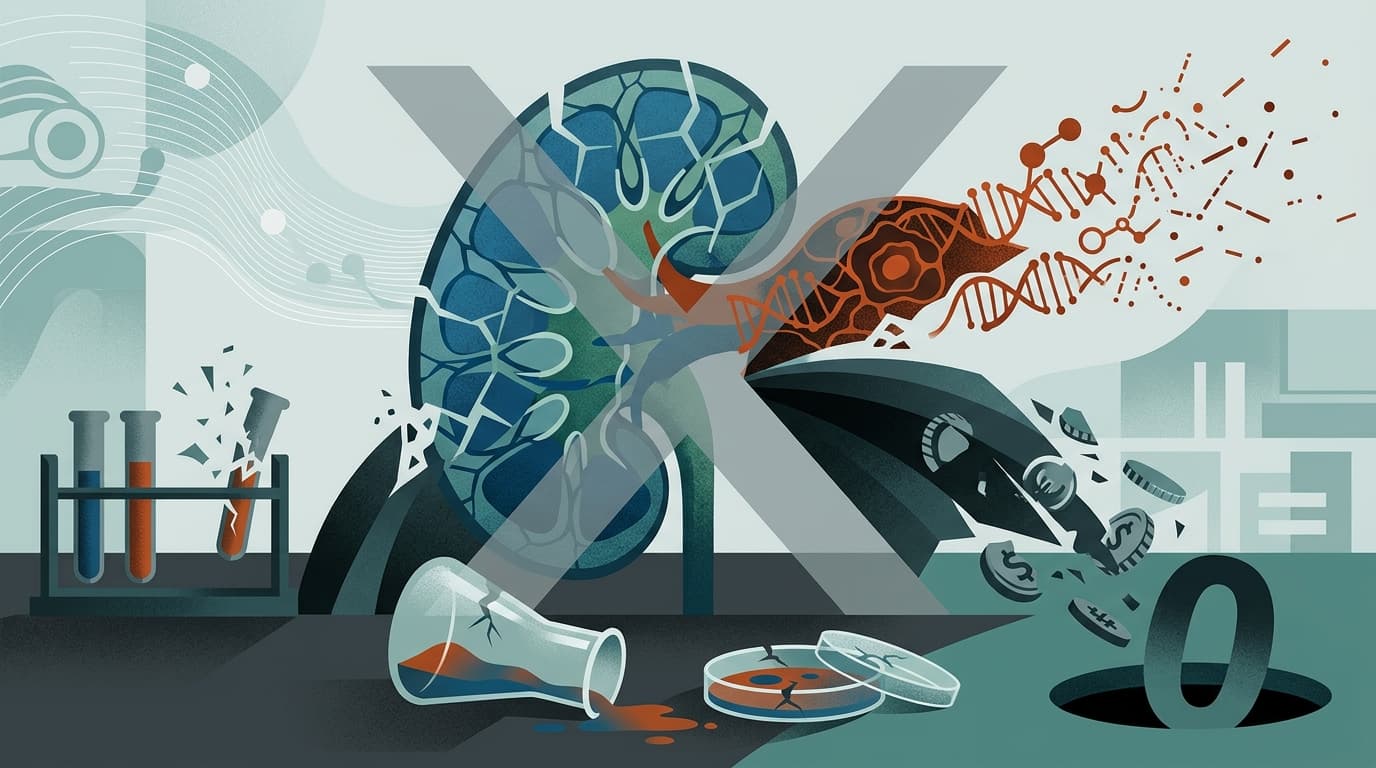

Novo Nordisk just axed its $1.3 billion chronic kidney disease program after the drug failed in a Phase 3 trial. Combined with the ziltivekimab flop weeks earlier, the company's attempts to build beyond obesity and diabetes are looking increasingly shaky.
Novo Nordisk just killed its second major pipeline program in a matter of months. And this time, the price tag stings.
The company pulled the plug on its Phase 3 program for ocedurenone, a drug it acquired from KBP Biosciences in a deal worth up to $1.3 billion. The reason? A prespecified interim analysis of the CLARION-CKD trial found that the drug simply didn't work. It missed its primary endpoint, which was lowering systolic blood pressure in patients with uncontrolled hypertension and advanced kidney disease.
Not a safety scare. Not a regulatory curveball. The drug just didn't do the one thing it was supposed to do.
After reviewing the data, Novo didn't try to salvage a subgroup or pivot to a different endpoint. They terminated the entire program. That's the biotech equivalent of not just losing the game, but forfeiting the rest of the season.
This cancellation doesn't exist in a vacuum. It lands just weeks after Novo's other big pipeline hope, ziltivekimab, delivered a gut-punch of a readout in its ZEUS cardiovascular outcomes trial.
Ziltivekimab was designed to reduce major heart events (known as MACE) in patients with heart disease, CKD, and chronic inflammation. The drug lowered inflammatory markers exactly as expected. But when it came to the thing that actually matters, preventing heart attacks and strokes, the hazard ratio came back at 0.99. For the non-stats crowd: that means it performed essentially identically to a sugar pill.
Novo hasn't fully abandoned ziltivekimab yet. Two other trials, HERMES (heart failure) and ARTEMIS (post-heart attack), are still running with readouts expected in the first half of 2027. But the flagship trial flopped, and that casts a long shadow over whatever comes next.
Here's what makes these back-to-back failures so uncomfortable for Novo Nordisk: the company has been trying, loudly and expensively, to prove it's more than just the Ozempic and Wegovy company.

Novo Nordisk killed two cardiovascular trials of ziltivekimab after an independent committee said they were unlikely to succeed. The $2.1 billion Corvidia acquisition now looks like one of the most expensive dead ends in recent pharma history, and it leaves Novo scrambling to diversify beyond its GLP-1 empire.


Join thousands of biotech professionals who start their day with our free, daily briefing.

And on paper, the strategy looks reasonable. Novo has been expanding around its metabolic core with acquisitions, partnerships, and clinical bets in adjacent areas like cardiovascular disease, kidney disease, liver disease, and rare blood disorders. They bought Akero Therapeutics for its MASH (fatty liver disease) drug. They partnered with Amazon Web Services on AI-driven drug discovery. They inked a deal with Vivtex for next-generation oral biologic delivery.
But acquisitions and partnerships are just tickets to the game. You still have to win the trials. And right now, Novo is 0-for-2 in its biggest attempts to build franchises outside obesity and diabetes.
It's like a basketball team with one superstar trying to build a supporting cast through trades, only to watch every new pickup get injured in preseason.
The CKD drug development landscape isn't going to pause while Novo figures things out. If anything, it's accelerating.
Bayer's finerenone already has approval for CKD in diabetic patients and is pushing into non-diabetic kidney disease through new Phase 3 trials. The FDA even granted it Priority Review in 2026 for an expanded indication covering type 1 diabetes and CKD.
AstraZeneca is running multiple late-stage CKD programs that combine its blockbuster SGLT2 inhibitor dapagliflozin with newer agents like zibotentan (targeting the endothelin pathway) and baxdrostat (targeting aldosterone). Boehringer Ingelheim has a large Phase 3 trial pairing its own SGLT2 inhibitor empagliflozin with the aldosterone synthase inhibitor BI 690517. Vertex is going after a genetically defined subset of kidney disease with inaxaplin.
The trend is clear: the field is moving toward combination therapies and genetically targeted approaches. Novo's ocedurenone, a standalone mineralocorticoid receptor antagonist, was already competing in Bayer's backyard. Now it's not competing at all.
Analyst sentiment on Novo Nordisk heading into September 2026 was already lukewarm before this latest cancellation. The consensus rating sits at Hold, with price targets clustered near the current share price rather than pointing to meaningful upside.
The concerns are piling up like dishes in a college apartment sink. Pipeline setbacks with ziltivekimab and CagriSema (Novo's next-gen obesity combo) have dented confidence. Rising competition from Eli Lilly is squeezing market share expectations. U.S. pricing headwinds for obesity drugs are pressuring revenue forecasts.
Multiple analysts now characterize Novo as a "wait-for-catalysts" story rather than a recovery trade. Nobody's predicting a collapse, but nobody's pounding the table either. The stock is stuck in a credibility gap: investors need to see wins, and the pipeline keeps delivering losses.
Novo isn't out of cards to play. The company still has several potentially important readouts ahead.
Its MASH program (via the Akero acquisition of efruxifermin) is in Phase 3 and represents a genuine diversification opportunity in metabolic liver disease. The two remaining ziltivekimab trials could still deliver positive data, though expectations are appropriately tempered after ZEUS. And Novo's core obesity and diabetes pipeline, including amycretin and oral semaglutide formulations, continues to advance.
The hemophilia A drug denecimig (Mim8) is currently under FDA review, and coramitug is in Phase 3 for a form of heart disease called ATTR cardiomyopathy. These aren't blockbuster-scale bets on their own, but they contribute to the narrative that Novo can win outside its comfort zone.
Two failed trials don't make a company a failure. Novo Nordisk still sits on one of the most valuable franchises in pharmaceutical history with its GLP-1 portfolio. Semaglutide isn't going anywhere.
But the ocedurenone cancellation, coming on the heels of the ziltivekimab disappointment, crystallizes a question that investors have been asking with increasing urgency: can Novo Nordisk build its next act, or is it a one-franchise company riding a very expensive wave?
The next 12 months of data readouts will go a long way toward answering that. For now, the scoreboard outside of obesity and diabetes reads: Novo 0, Clinical Reality 2.
The FDA just approved a weekly injection that could replace regular blood-draining procedures for patients with a rare blood cancer. Rusfertide's Phase 3 data crushed placebo, and the broad label has analysts buzzing about Protagonist Therapeutics' peptide platform.