
Pfizer's first new drug from its $43 billion Seagen acquisition just failed a Phase 3 lung cancer trial. The result raises uncomfortable questions about whether the biggest pharma deal in years can actually deliver on its post-COVID growth promises.
Imagine buying the most expensive house on the block, telling all your neighbors it'll be worth double in a few years, and then watching the roof leak on day one. That's roughly where Pfizer finds itself this week.
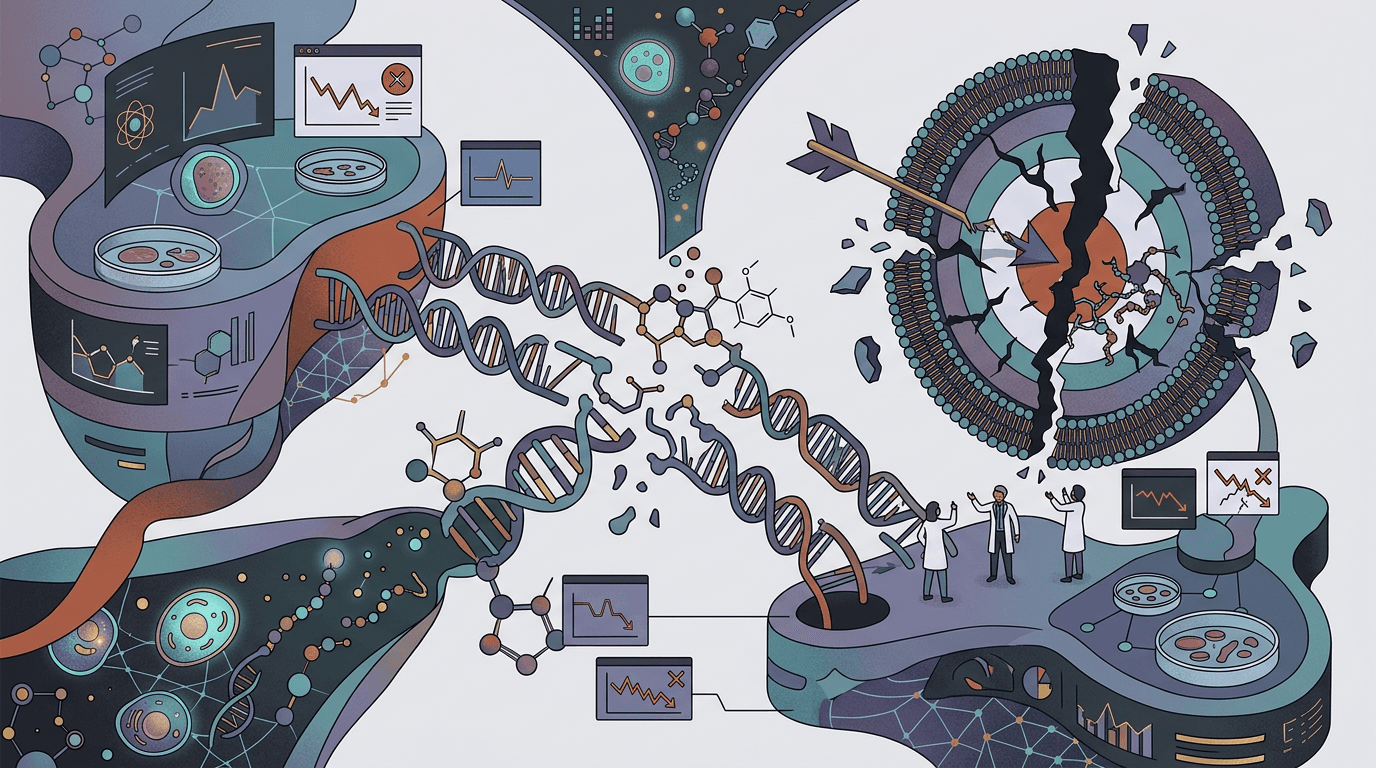
The company's first major new drug from its $43 billion Seagen acquisition just failed a Phase 3 trial in lung cancer. The drug, called sigvotatug vedotin, didn't help patients live longer than standard chemotherapy. For a company that bet its entire post-COVID future on becoming an oncology powerhouse, this is an uncomfortable moment.
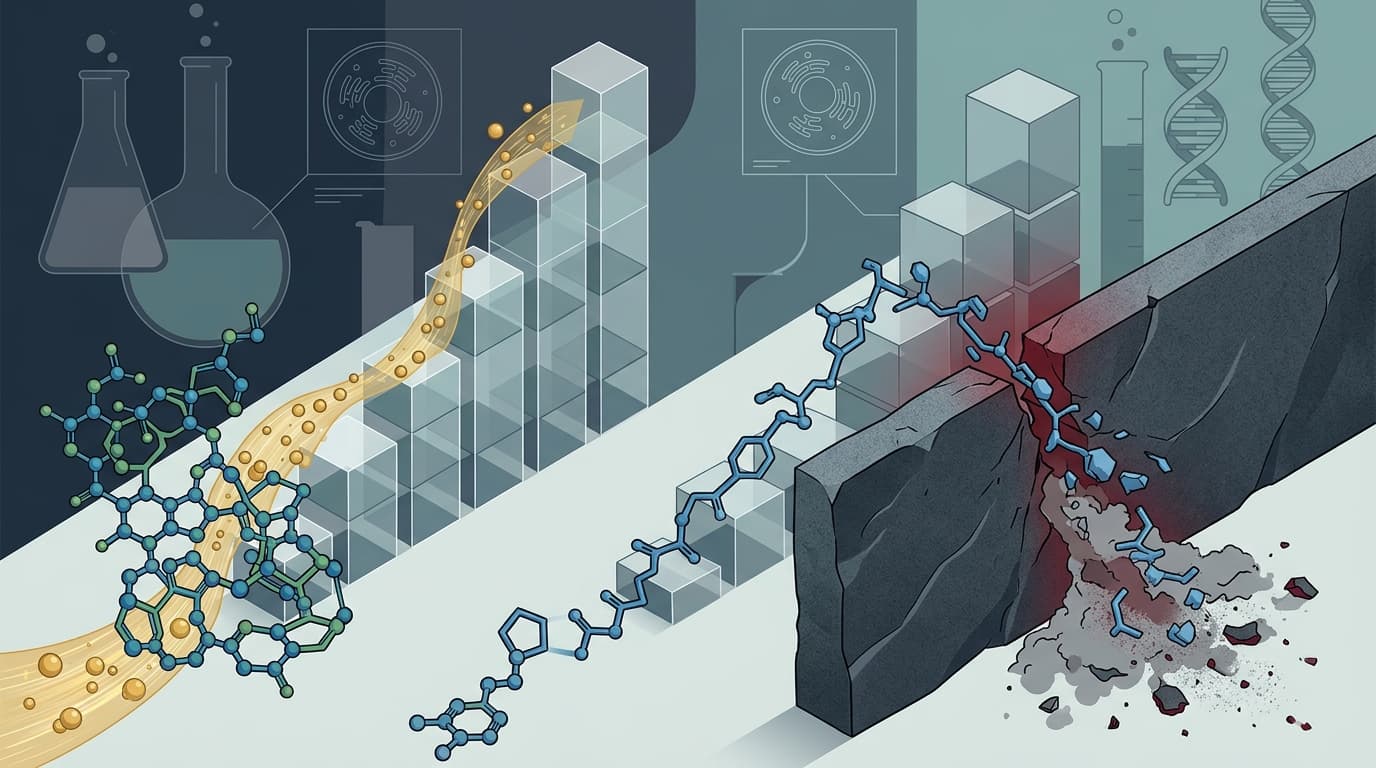
Sigvotatug vedotin is an antibody-drug conjugate (ADC): think of it as a guided missile that locks onto cancer cells and delivers a toxic payload directly to the tumor. The target here is a protein called integrin β6, which shows up on a majority of non-small cell lung cancer tumors but is barely detectable in healthy tissue. On paper, it's a sniper rifle.
In practice? The sniper missed.
The Phase 3 trial, called SigVie-002, enrolled 703 patients with previously treated metastatic lung cancer. Half got sigvotatug vedotin; half got docetaxel, the old-school chemo that serves as the control arm in these studies. The primary goal was simple: does the new drug help people live longer?
The answer was no. Not in a statistically significant way across the full patient population, at least.
Pfizer is pointing to a subgroup of patients who had only received one prior line of therapy (roughly two-thirds of the trial). In that group, there were "stronger trends" toward improved survival. But trends aren't proof. Pfizer hasn't released hazard ratios, p-values, or median survival numbers for this subgroup. Just vibes.
This is a well-worn playbook in pharma: when the overall trial fails, dig through subgroups looking for a lifeline. Sometimes it works; sometimes it's like finding a parking spot in a flood and calling it dry land. Without hard numbers, it's impossible to know which scenario applies here.

HHS says biotech companies have been submitting mountains of manufacturing data that FDA never actually required for Phase 1 trials. Operation TrialBlazer aims to cut 6–12 months off first-in-human timelines, and the implications for cash-strapped startups are massive.


Join thousands of biotech professionals who start their day with our free, daily briefing.
Pfizer didn't buy Seagen on a whim. The acquisition, completed in December 2023, was designed to transform the company from a COVID-era cash machine into a long-term oncology leader. The pitch to investors was clear: Seagen's ADC technology would generate more than $10 billion in risk-adjusted revenue by 2030. The deal was supposed to start paying for itself around 2026, with projected cost synergies of about $1 billion kicking in by the third year.
We're now in that window. And the first new asset out of the Seagen pipeline to reach a pivotal readout has stumbled.
To be fair, Pfizer's Seagen bet isn't riding on a single horse. The company inherited four already-approved drugs (including Padcev for bladder cancer, which grew 39% in Q1 2026 to about $591 million in sales). It also has 12 ADCs in its pipeline spanning different targets and tumor types. One failure doesn't sink the ship.
But it does make investors nervous about the rest of the fleet.
Pfizer shares dropped about 1.5% to 2% in after-hours trading. Not a catastrophe, but not nothing. Analysts characterized the miss as a setback rather than a thesis-killer. The general read: Pfizer's stock wasn't priced for perfection going in, so the downside was contained.
The bigger issue is psychological. Investors were already asking hard questions about whether Pfizer could execute its post-COVID transformation. The company's total oncology revenue grew 7% in Q1 2026 to $3.8 billion, which sounds decent until you remember they spent $43 billion and took on $31 billion in new debt to get here. Every pipeline stumble raises the bar for what comes next.
Lung cancer ADCs are one of the hottest spaces in oncology right now. Daiichi Sankyo and its partners are pushing multiple ADC candidates through late-stage trials, targeting proteins like TROP2, HER3, and B7-H3. AbbVie has a c-MET-targeting ADC with accelerated approval. Chinese biotechs are flooding the field with their own TROP2 programs.
Pfizer's integrin β6 approach was supposed to be differentiated: a target found on a majority of lung tumors but absent from healthy tissue. That differentiation means nothing if the drug doesn't extend lives.
Pfizer says the safety profile was "manageable" and the trial is still ongoing for secondary endpoints. The subgroup data will presumably get a full airing at a future oncology conference. If the one-prior-line population shows a genuinely robust survival benefit with clean statistics, there might be a path to a narrower regulatory filing.
But the broader narrative has shifted. Pfizer's story used to be: "We bought the best ADC company in the world, and their technology will power our growth for the next decade." Now it's: "We bought the best ADC company in the world, and we still need to prove that translates into drugs that actually work in new settings."
The difference between those two stories is about $43 billion worth of confidence. Pfizer has a big regulatory decision coming in August 2026 for Padcev in muscle-invasive bladder cancer, and more pipeline readouts queued up across breast, GI, and hematologic cancers. Those events will determine whether this lung cancer miss is remembered as a speed bump or a warning sign.
For now, Pfizer's most expensive shopping spree has produced its first receipt that reads "no refunds."
Exelixis' next-generation drug zanzalintinib missed a key survival endpoint in colorectal cancer, sending shares down 10-12%. With Cabometyx still driving 90% of revenue, the pressure to prove the successor can carry the franchise just got a lot more intense.