
Regeneron's cemdisiran just earned FDA Priority Review for myasthenia gravis, promising patients a single subcutaneous shot every three months instead of IV infusions. The RNA-based drug silences complement protein production at the source, and its Phase 3 data suggest less immune suppression might actually work better.
Imagine managing a serious autoimmune disease with just four injections per year. No IV infusions. No weekly pills. Just a subcutaneous shot every three months, and your immune system stops attacking your own muscles.
That's the pitch behind cemdisiran, Regeneron's RNA-based drug that just earned Priority Review from the FDA for generalized myasthenia gravis (gMG). The target action date: November 2026. If approved, it would be the first siRNA therapy to treat this debilitating neuromuscular condition.
But can a drug that only partially blocks its target really compete in a rapidly growing market?
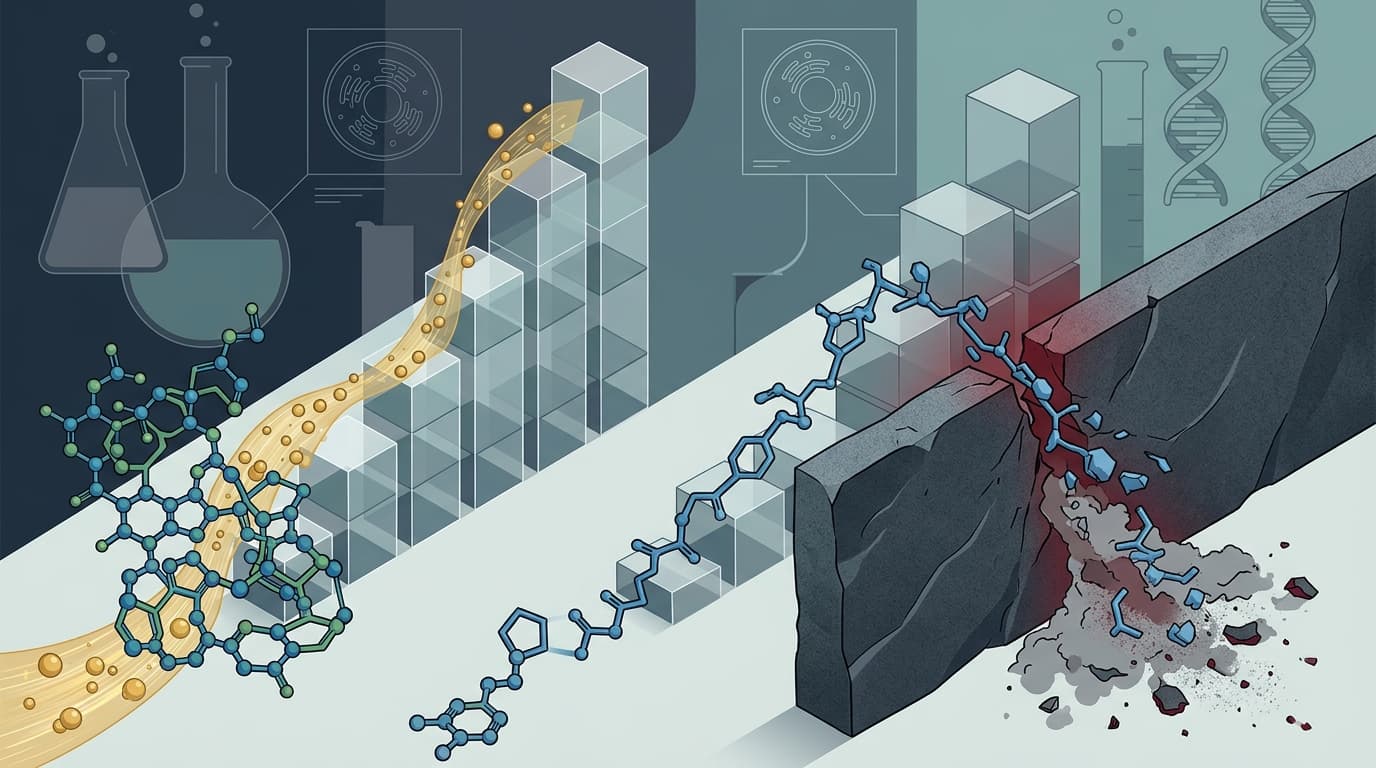
Most drugs in this space work like bouncers: they stand in the bloodstream and physically block a troublesome protein called C5 from causing damage. Cemdisiran takes a completely different approach. It's more like erasing the recipe.
Cemdisiran is an siRNA (small interfering RNA) that travels to the liver and tells hepatocytes to stop making C5 in the first place. Think of it as intercepting a FedEx package before it ever leaves the warehouse, rather than trying to grab it off a moving delivery truck. The result: circulating C5 drops, and the downstream inflammatory cascade that damages nerve-muscle junctions in gMG patients quiets down.
The drug carries a GalNAc tag (a sugar molecule that acts like a zip code for liver cells), gets absorbed subcutaneously, and produces sustained C5 suppression that lasts months after a single dose. Peak drug levels hit within about an hour, but the biological effect persists far longer because you've silenced the mRNA blueprint.
Regenerons's Phase 3 NIMBLE study was one of the largest interventional trials ever run in gMG, and the results were published in The Lancet. The study tested cemdisiran monotherapy (600 mg subcutaneously every 12 weeks) against placebo in adults who were positive for anti-acetylcholine receptor antibodies.
The primary endpoint was the MG-ADL score, which measures how much the disease interferes with daily activities like eating, talking, and breathing. Higher scores mean worse impairment.

HHS says biotech companies have been submitting mountains of manufacturing data that FDA never actually required for Phase 1 trials. Operation TrialBlazer aims to cut 6–12 months off first-in-human timelines, and the implications for cash-strapped startups are massive.


Join thousands of biotech professionals who start their day with our free, daily briefing.

At week 24, cemdisiran patients improved by 4.5 points versus 2.2 points for placebo. That placebo-adjusted difference of 2.3 points hit statistical significance at p<0.001. More impressively, 76.6% of cemdisiran patients achieved a clinically meaningful response (at least a 3-point improvement), compared to just 44.1% on placebo.
The secondary endpoint told the same story. The QMG score (a physician-assessed measure of muscle weakness) improved by 4.2 points with cemdisiran versus 1.5 with placebo. Nearly half of cemdisiran patients hit the 5-point QMG threshold; only 19% of placebo patients did.
Perhaps most notable: improvements showed up within two weeks and held steady through week 24, with no sign of the drug wearing off between quarterly doses.
Complement inhibitors carry an inherent worry: if you suppress part of the immune system's rapid-response team, are you inviting serious infections? In NIMBLE, the answer was reassuring. Cemdisiran patients actually reported fewer adverse events than the placebo group (69% versus 77%). There were no serious infections, no meningococcal events, and no deaths during the blinded treatment period. The most common side effect was upper respiratory tract infections at 12%, essentially matching placebo's 11%.
This safety profile matters because cemdisiran only achieves about 74% complement inhibition, not the near-complete blockade you'd get with an antibody. In gMG, that partial suppression turns out to be a feature rather than a bug: enough to treat the disease, not so much that you're leaving patients immunologically exposed.
Regeneron actually tested two approaches in NIMBLE: cemdisiran alone (partial C5 blockade) and cemdisiran combined with pozelimab, their anti-C5 antibody (near-complete blockade). The counterintuitive finding? Monotherapy performed numerically better than the combination. The Lancet publication confirmed both were effective, but the simpler, less aggressive approach won on the scoreboard.
This insight shapes Regeneron's entire complement strategy. For gMG, they're filing cemdisiran as a monotherapy. For paroxysmal nocturnal hemoglobinuria (PNH), where red blood cells are actively destroyed and you need every last bit of C5 neutralized, they'll use the full cemdisiran-plus-pozelimab combination. Phase 3 PNH data are expected in late 2026, potentially giving Regeneron two complement approvals from the same modular platform.
The gMG market is no sleepy backwater. Soliris (eculizumab) and Ultomiris (ravulizumab) dominate the C5 inhibitor class but require IV infusions. Zilbrysq (zilucoplan) offers daily subcutaneous C5 inhibition. And then there's Vyvgart, an FcRn inhibitor from argenx that isn't even a complement drug but keeps stealing patients from the C5 camp because it works well and is convenient.
Cemdisiran's differentiator is pure simplicity: one shot, every three months, at home. No infusion centers. No daily injections. No IV lines.
Analysts are split on whether that's enough. Truist Securities said cemdisiran "surpassed our expectations" based on historical anti-C5 performance and argued its dosing schedule could help it "capture a significant share of the C5 gMG market." But Leerink's David Risinger was more cautious, noting that cemdisiran's efficacy appears to "fall short" of some FcRn-blocking therapies.
The FDA's Priority Review designation (Regeneron used a Priority Review Voucher to secure it) compresses the review timeline and signals that the agency sees potential for meaningful therapeutic advancement. An approval in November 2026 would give Regeneron a commercial launch window into a market that's growing fast but fragmenting faster.
The EMA has also accepted Regeneron's application, with a European decision expected in the second half of 2027.
For patients with gMG who currently sit in infusion chairs every few weeks, or self-inject daily, or cycle through immunosuppressants with inconsistent results, a quarterly shot that works within two weeks and maintains its effect between doses sounds less like incremental progress and more like a genuinely different treatment experience.
Whether Wall Street rewards "different" or demands "best" will determine how this story ends. But the FDA, at least, is interested enough to fast-track the answer.
Exelixis' next-generation drug zanzalintinib missed a key survival endpoint in colorectal cancer, sending shares down 10-12%. With Cabometyx still driving 90% of revenue, the pressure to prove the successor can carry the franchise just got a lot more intense.