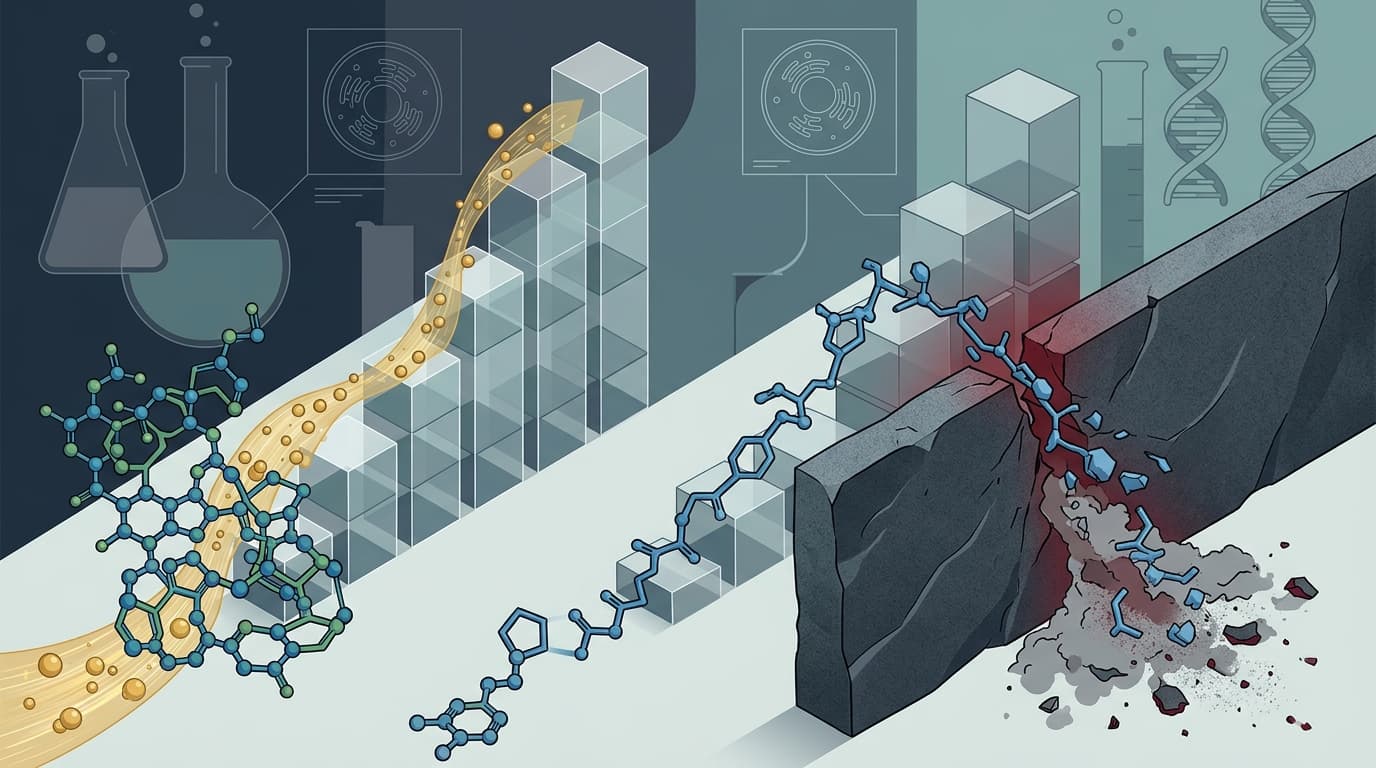

HHS says biotech companies have been submitting mountains of manufacturing data that FDA never actually required for Phase 1 trials. Operation TrialBlazer aims to cut 6–12 months off first-in-human timelines, and the implications for cash-strapped startups are massive.
Imagine you've discovered a promising cancer drug. You've run the lab work. You've got the safety data. You're ready to test it in a human being for the very first time. How long until you can actually do that in the United States?
The answer, for most biotech companies, has been depressingly long. The FDA's 30-day review window sounds fast on paper, but the full gauntlet of IND preparation, manufacturing documentation, site activation, and IRB approvals typically stretches 24 to 30 months from protocol finalization to Phase 1 readout. That's two and a half years before you know if your drug even works in people.
On Monday, HHS announced it found a way to cut 6 to 12 months off that timeline. Not by lowering safety standards, but by admitting something the industry has whispered for years: companies were doing way too much homework that nobody asked for.
The initiative is called Operation TrialBlazer, and it's HHS's department-wide attempt to stop early-stage clinical trials from bleeding out on the launchpad. The core insight is almost embarrassingly simple: sponsors have been submitting mountains of manufacturing and quality data that FDA never required for Phase 1. They just thought they had to.
FDA is now clarifying, in blunt terms, exactly what CMC data (chemistry, manufacturing, and controls; basically the paperwork proving your drug is made correctly) is actually needed for a first-in-human trial. Everything else can wait until later phases. According to HHS officials, this single change could save sponsors 6 to 12 months of unnecessary preparation time.
But the plan goes deeper than a FAQ update. Here's the full toolkit:
An Expedited IND Pilot Program. Sponsors can partner with "Qualified Research Institutions" (think academic medical centers, experienced CROs, and regulatory advisors) to prepare their IND applications using a rolling submission platform. The goal: fewer clinical holds, less back-and-forth, faster green lights.

Exelixis' next-generation drug zanzalintinib missed a key survival endpoint in colorectal cancer, sending shares down 10-12%. With Cabometyx still driving 90% of revenue, the pressure to prove the successor can carry the franchise just got a lot more intense.


Join thousands of biotech professionals who start their day with our free, daily briefing.
A Phase 1 IND Navigator. A centralized website and dedicated contact center where small biotechs can get real-time answers about what they actually need to file. Think of it as a regulatory GPS for companies that can't afford a $500/hour consultant.
New guidance on computer modeling for dose selection. Instead of relying solely on animal studies to pick a starting dose, FDA is formally blessing advanced computational models (quantitative systems pharmacology) as acceptable alternatives. This could shorten or replace certain preclinical studies entirely.
IRB reform. NIH is seeking public comment on streamlining Institutional Review Board requirements, which currently add weeks or months of administrative drag before a single patient can be enrolled.
This isn't just about paperwork efficiency. It's about geography.
The UK's MHRA offers a 14-day Phase 1 assessment route. Australia has long been the go-to for first-in-human studies because of lighter regulatory front-loading. China has pulled Phase 1 work away from the U.S. with faster timelines and lower costs.
American biotechs, sitting on American science funded by American investors, have been flying overseas to dose their first patient. HHS is explicitly framing TrialBlazer as a reshoring play: make the U.S. competitive again for early-phase trials.
For a typical early-stage biotech, the full cost of getting from IND filing to Phase 1 readout runs $40 to $55 million for a small molecule and $55 to $80 million for a biologic. Those numbers include everything: toxicology, manufacturing, regulatory work, and the trial itself.
Now imagine shaving a year off that timeline. For a Phase 1-stage company burning $0.7 to $2 million per month, that's significant extended runway. Or, looked at differently, it's the difference between reaching proof-of-concept before your Series B runs dry and having to do a brutal down-round just to keep the lights on.
Investors notice this math immediately. Faster Phase 1 entry effectively raises the value of every preclinical asset in a company's pipeline, because the probability of reaching a value-creating milestone before running out of cash goes up.
The expedited IND pathway starts as a pilot program, not a permanent fixture. Pilots can die quiet deaths when political winds shift.
There's also the staffing question. FDA's new Phase 1 Contact Center and expedited review process need actual humans to run them. The agency has a track record of launching ambitious programs that bog down when reviewer bandwidth hits a wall.
And the eligibility criteria for the expedited IND pilot remain undefined. Industry is watching closely to see whether oncology, gene therapy, and other high-risk modalities get the same fast lane, or whether FDA draws conservative boundaries around which programs qualify.
Operation TrialBlazer sits within a broader Trump administration push to deregulate FDA under Secretary Robert F. Kennedy Jr. That includes everything from a 10-to-1 rule (rescind ten regulations for every new one) to AI-powered review tools and a roadmap to reduce animal testing.
The Phase 1 acceleration piece is arguably the least controversial part of this agenda. Nobody loves unnecessary paperwork. Nobody thinks sponsors should spend a year preparing documents that FDA didn't need. The question isn't whether this is a good idea; it's whether the execution matches the ambition.
For now, biotech companies should do three things: use the new Phase 1 Navigator, engage with the RFI process to shape permanent rules, and seriously reconsider whether their next first-in-human study needs to leave the country.
The FDA just admitted it was part of the problem. That's worth something.
Regeneron's cemdisiran just earned FDA Priority Review for myasthenia gravis, promising patients a single subcutaneous shot every three months instead of IV infusions. The RNA-based drug silences complement protein production at the source, and its Phase 3 data suggest less immune suppression might actually work better.