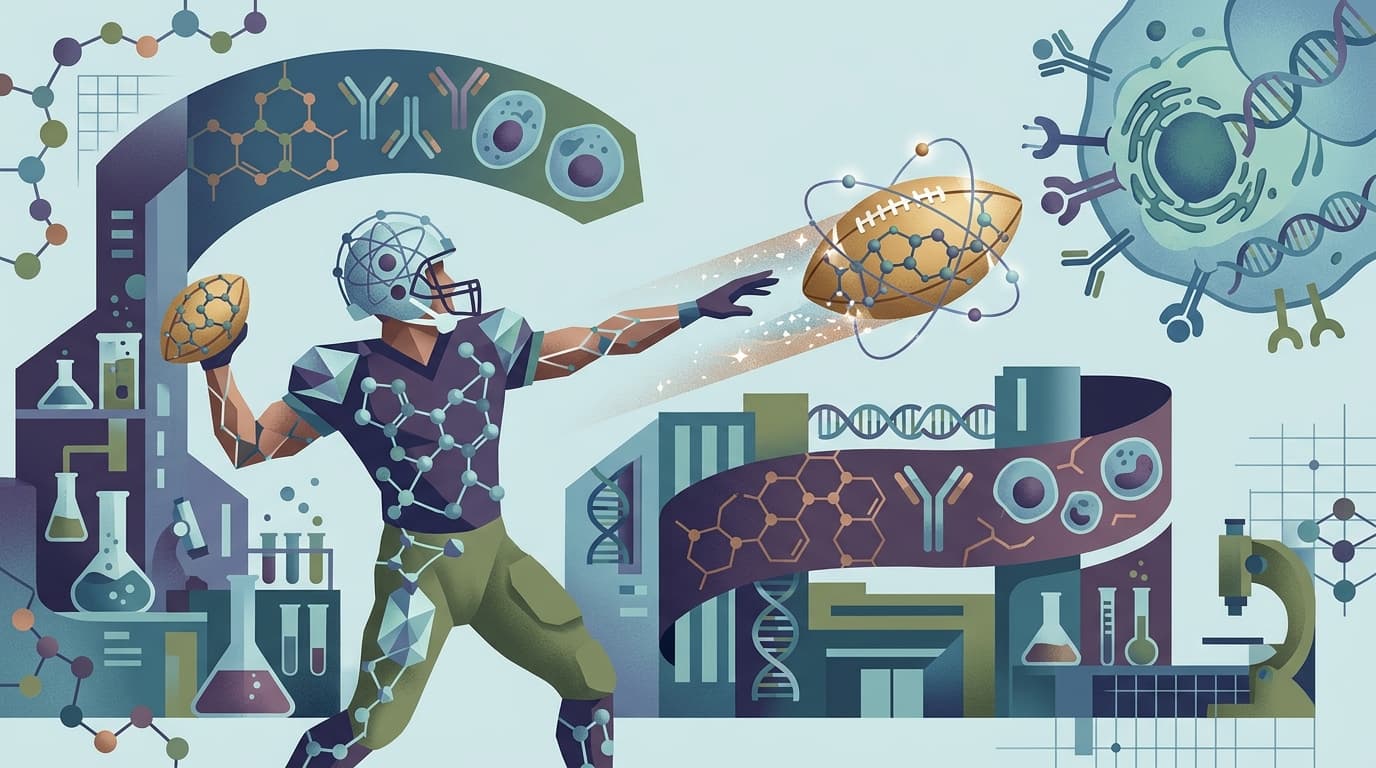

Pfizer tapped NFL Draft prospect Fernando Mendoza as the face of its cancer screening campaign, and it's not just a feel-good play. Behind the football metaphors is a $43 billion oncology strategy that needs a bigger funnel.
Somewhere in a conference room at Pfizer headquarters, someone pitched an idea: let's make a 22-year-old quarterback who hasn't played a single NFL snap the face of our cancer screening campaign. And everyone in the room said yes.
That's exactly what happened. Days before the 2026 NFL Draft, Pfizer unveiled Fernando Mendoza as the spokesperson for its "Every Breakthrough Matters" cancer screening initiative. Two commercials dropped on April 23, timed perfectly to ride the draft hype wave. The message? Get screened at PfizerForAll.com. The metaphor? Cancer is a game of inches, and every inch matters.
It sounds like a Super Bowl ad concept scribbled on a napkin. But it's actually part of something much bigger.
Mendoza isn't just a famous face cashing a check. The guy has personal stakes in this fight.
His mother lives with multiple sclerosis. His father has a medical background. For a pharma company looking to connect with younger audiences on a topic most people avoid thinking about, Mendoza is almost suspiciously perfect casting.
The campaign leans heavily into football language, which makes sense when your spokesperson is about to hear his name called on draft night. "Like football, the fight against cancer is a game of inches" is the core tagline, urging people to "move the fight forward" by booking screenings. Pfizer even created an activation called "Every Inch Matters" to capitalize on the draft buzz.
And the partnership won't stop at cancer. Sources indicate Pfizer plans to expand the collaboration to other health issues, potentially including MS (a natural fit given Mendoza's family connection).
Pfizer isn't inventing a new strategy here. It's perfecting one.
The pharmaceutical industry has been on a celebrity spokesperson binge, especially for cancer awareness. Novartis kicked the trend into overdrive with its 2025 Super Bowl ad featuring Wanda Sykes and Hailee Steinfeld promoting breast cancer screenings. That spot reached an estimated during Super Bowl LIX. Novartis came back for Super Bowl LX in February 2026, this time targeting prostate cancer with a cheeky campaign called "Relax Your Tight End."

Regeneron was the 17th and final major drugmaker to cut a pricing deal with the White House's Most Favored Nation initiative. The agreement includes a 58% price cut on Praluent, a free gene therapy for rare childhood deafness, and nearly $10 billion in domestic manufacturing pledges. With 86% of the branded drug market now covered, the real question is what these deals actually mean for patients at the pharmacy counter.


Join thousands of biotech professionals who start their day with our free, daily briefing.
Pfizer, meanwhile, recruited actress Lucy Liu for a separate cancer screening push and ran a 90-second spot on World Cancer Day earlier this year. The numbers driving all of this urgency are sobering: 2.1 million new cancer cases are expected in the U.S. in 2026, and roughly 40% of them are considered preventable.
But there's a key difference with the Mendoza play. Instead of targeting older demographics through morning talk shows and primetime dramas, Pfizer is going after a younger, sports-obsessed audience that doesn't typically think about cancer screenings. It's a bet that the NFL Draft's massive viewership (think tens of millions of 18-to-34-year-olds glued to their screens) can do for health awareness what Super Bowl ads do for soda brands.
Let's zoom out, because this campaign isn't just about warm feelings and early detection. It's a piece of a much larger commercial puzzle.
Pfizer dropped $43 billion to acquire Seagen in 2023, a deal that essentially doubled its overall oncology pipeline. ADCs are a clever class of cancer drugs that work like guided missiles: they attach chemotherapy directly to antibodies that seek out tumor cells, delivering the poison right where it's needed while (mostly) sparing healthy tissue.
That acquisition gave Pfizer blockbusters like Padcev for bladder cancer and positioned the company as a serious contender in the oncology arms race. By April 2025, the broader pipeline hit 108 candidates, with 30 in Phase 3.
The 2026 regulatory calendar alone reads like a greatest hits album. Pfizer is expecting decisions on Padcev expansions into muscle-invasive bladder cancer and a combination of Talzenna plus Xtandi for prostate cancer. Pfizer also plans to discuss HER2CLIMB-05 results for Tukysa with regulatory authorities. New bispecific antibodies (drugs engineered to grab two different targets at once) are also lining up for first-line use in colorectal cancer, lung cancer, and endometrial cancer.
The company is chasing at least eight blockbuster-capable cancer treatments by 2030, with oncology revenues projected to outgrow the rest of the portfolio through that period.
So why spend money on a quarterback telling healthy people to get screened, instead of marketing directly to cancer patients?
Because screenings are the top of the funnel. More screenings mean more early diagnoses. More early diagnoses mean more patients entering treatment earlier, when outcomes are better and when newer, premium-priced drugs (like Pfizer's ADCs) become relevant options. It's the same logic grocery stores use when they put free samples at the end of every aisle: get people in the door, and the rest follows.
Consider this: only about 50% of women get annual breast exams, despite early detection pushing survival rates to 99%. Those gaps in screening represent both a public health crisis and, frankly, a commercial opportunity for companies with growing cancer portfolios.
Pfizer's PfizerForAll platform, which hosts the screening tool, also serves as a direct digital connection to patients. In an industry where reaching consumers traditionally required navigating layers of doctors, insurers, and pharmacy benefit managers, that direct line is gold.
Drafting Fernando Mendoza might seem like a quirky marketing stunt. A rookie QB pitching cancer screenings during draft week? Sure, why not.
But underneath the football metaphors and the catchy taglines, this is a calculated move by a company that spent $43 billion building a cancer empire and now needs to fill the top of its commercial funnel. Pfizer isn't just selling drugs; it's building a brand identity around cancer that starts before a patient ever gets a diagnosis.
Whether Mendoza ends up a franchise quarterback or a career backup, Pfizer is betting his draft-week spotlight can shine on something bigger than football. And with 2.1 million Americans expected to hear the word "cancer" this year, the game of inches has never felt more urgent.
Avalyn Pharma wants $200M+ to prove that two blockbuster lung drugs work better as a mist than a pill. Their IPO lands in a market that's suddenly hungry for exactly this kind of bet.