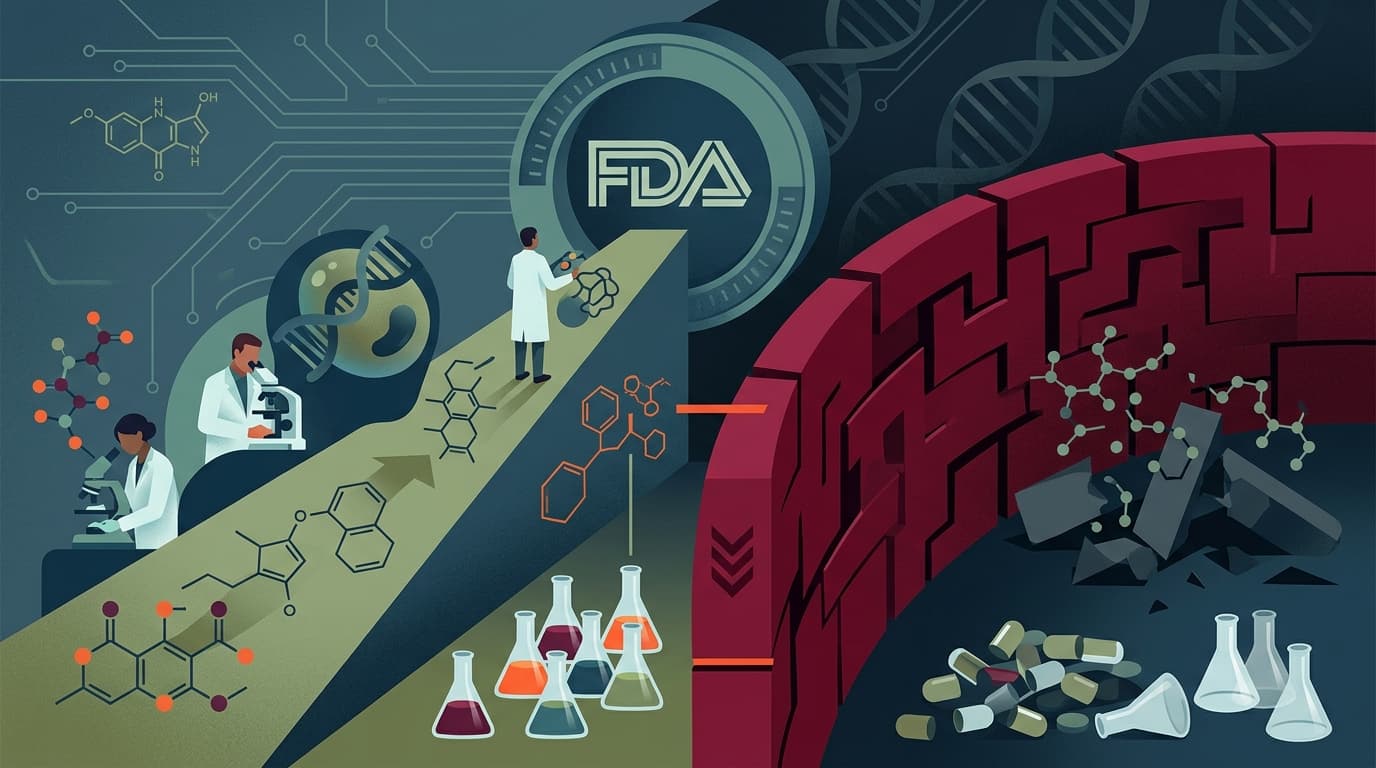
Otsuka's Big Bet on a PTSD Pill Just Hit a Wall at the FDA
FDA reviewers questioned whether Otsuka's Rexulti combination therapy actually works for PTSD, and the advisory committee agreed in devastating fashion. For a patient population that hasn't seen a new approved drug since 2001, the setback stings.
The last time the FDA approved a new drug for PTSD, the iPod didn't exist yet.
Sertraline got the green light in 1999. Paroxetine followed in 2001. Both are SSRIs (antidepressants that boost serotonin levels in the brain). And since then? Nothing. Zero new PTSD medications approved in over two decades. That's not a dry spell; it's a drought.
So when Otsuka brought its atypical antipsychotic Rexulti (brexpiprazole) to the FDA as part of a combination therapy for PTSD, the stakes were enormous. This could have been the first new pharmacotherapy for the condition in a generation. Instead, FDA reviewers looked at the data, raised their eyebrows, and published briefing documents that amount to a polite "we're not convinced."
What Otsuka Was Trying to Do
The pitch was straightforward: pair Rexulti with sertraline and give PTSD patients something better than sertraline alone. Think of it like adding a turbocharger to an engine that's been running on its own for 25 years.
Rexulti isn't a new drug. It's already approved for schizophrenia, as an add-on treatment for major depressive disorder, and for agitation associated with dementia due to Alzheimer's disease. Its pharmacology is interesting: it partially activates certain serotonin and dopamine receptors (5-HT1A and D2) while blocking others (5-HT2A). The theory is that this cocktail of receptor activity could help regulate the fear processing and hyperarousal that define PTSD. But here's the catch: even for its approved uses, the FDA label says the exact mechanism "is unknown." The PTSD application was built on a hypothesis, not a proven pathway.
The specific regimen ramped patients up over two weeks to a maintenance dose of Rexulti 2–3 mg/day plus sertraline 150 mg/day. Otsuka ran three randomized clinical trials to build its case. Then it submitted a supplemental application (sNDA) to the FDA and waited.
The Reviewers Weren't Buying It
Ahead of the advisory committee meeting, FDA staff published briefing documents that questioned whether the efficacy data actually proved the combination worked. This is the regulatory equivalent of your professor handing back your thesis with "needs more evidence" scrawled across the top.
Get tomorrow's biotech intelligence before your competitors.
Join thousands of biotech professionals who start their day with our free, daily briefing.
FDA briefing documents aren't final decisions, but they carry serious weight. They frame the questions the advisory committee will debate, and when the staff is skeptical, the panel tends to follow. Think of it as the judge's instructions to the jury: technically the jury decides, but the framing matters.
For Otsuka, this created a cloud of uncertainty over what was supposed to be a landmark regulatory moment.
A Vote That Said It All
The Psychopharmacologic Drugs Advisory Committee convened to weigh in, and the result was brutal. The panel voted 10 to 1 that Otsuka had not established efficacy for the Rexulti-sertraline combination in adults with PTSD. One lonely vote in favor. Ten against.
To put that in perspective, a 10-1 negative vote at an FDA advisory committee is about as close to a unanimous rejection as you'll see. While advisory committee votes aren't technically binding (the FDA makes its own call), history shows the agency follows its panels roughly 88% of the time. And for near-unanimous negative votes in psychiatry, the follow-through rate is even higher.
The FDA ultimately issued a Complete Response Letter, which is the agency's formal way of saying "application denied." The letter stated that Otsuka's submission did not provide substantial evidence of effectiveness. Three trials, years of development, and the door closed.
But What About Aduhelm?
Savvy biotech watchers will immediately point to the elephant in the room: Biogen's Alzheimer's drug Aduhelm. That advisory committee voted 10 no, 1 uncertain, and 0 yes, but the FDA approved it anyway via accelerated approval. So precedent exists for the agency to override a lopsided negative vote.
The difference? Aduhelm involved a novel biomarker-based pathway and extraordinary public pressure around Alzheimer's disease. The Rexulti situation is more conventional. The FDA staff were skeptical, the panel agreed overwhelmingly, and the Complete Response Letter didn't leave much ambiguity. When both the reviewers and the advisors say the evidence isn't there, the Aduhelm playbook doesn't apply.
Why This Hurts Beyond Otsuka
This isn't just a corporate setback. It's a blow to a patient population that has been waiting for better options since the Clinton administration.
PTSD affects a massive number of people, and the economic and human burden is, by multiple analyses, "staggering." Veterans, survivors of trauma, first responders: they've all been relying on two SSRIs that help some patients but leave many others undertreated. The field has been described as facing a "long-standing crisis in pharmacologic drug development." Otsuka's combination therapy was supposed to break that logjam.
Now the most advanced PTSD pipeline candidate in years is back to square one.
Otsuka's Plan B
To its credit, Otsuka isn't abandoning PTSD entirely. Reports indicate the company has acquired Transcend Therapeutics and its PTSD-focused asset, essentially giving Otsuka "another shot on goal" through a different mechanism. It's the biotech equivalent of losing game one and immediately calling up a different pitcher for game two.
Whether Transcend's approach fares better with the FDA remains to be seen. But the strategic signal is clear: Otsuka still sees PTSD as a massive commercial opportunity, even if the Rexulti path is effectively dead.
The Takeaway for Investors and Patients
The Rexulti PTSD story is a textbook example of why CNS drug development is so treacherous. The unmet need is real. The science was plausible. But "plausible" doesn't survive an advisory committee vote, and three clinical trials apparently weren't enough to move the needle.
For investors watching Otsuka (or Lundbeck, its development partner on brexpiprazole), the Rexulti PTSD label expansion is off the table unless the company generates materially new efficacy evidence. The existing data package has been weighed, measured, and found wanting.
For PTSD patients, the wait for a third FDA-approved medication continues. It's been 25 years and counting.
4 min read
Novartis Just Bet $7.8 Billion That Your Body Can Build Its Own Medicine
Novartis just paid $575 million upfront for access to Abogen's RNA technology, in a deal worth up to $7.8 billion. The bet: that your own cells can be programmed to build medicines from scratch, starting with a clever new approach to autoimmune disease.