
The FDA just fast-tracked Merck's new KRAS G12C inhibitor combined with Keytruda after seeing a 77% response rate in first-line lung cancer patients. After 40 years of being "undruggable," KRAS might finally have met its match.
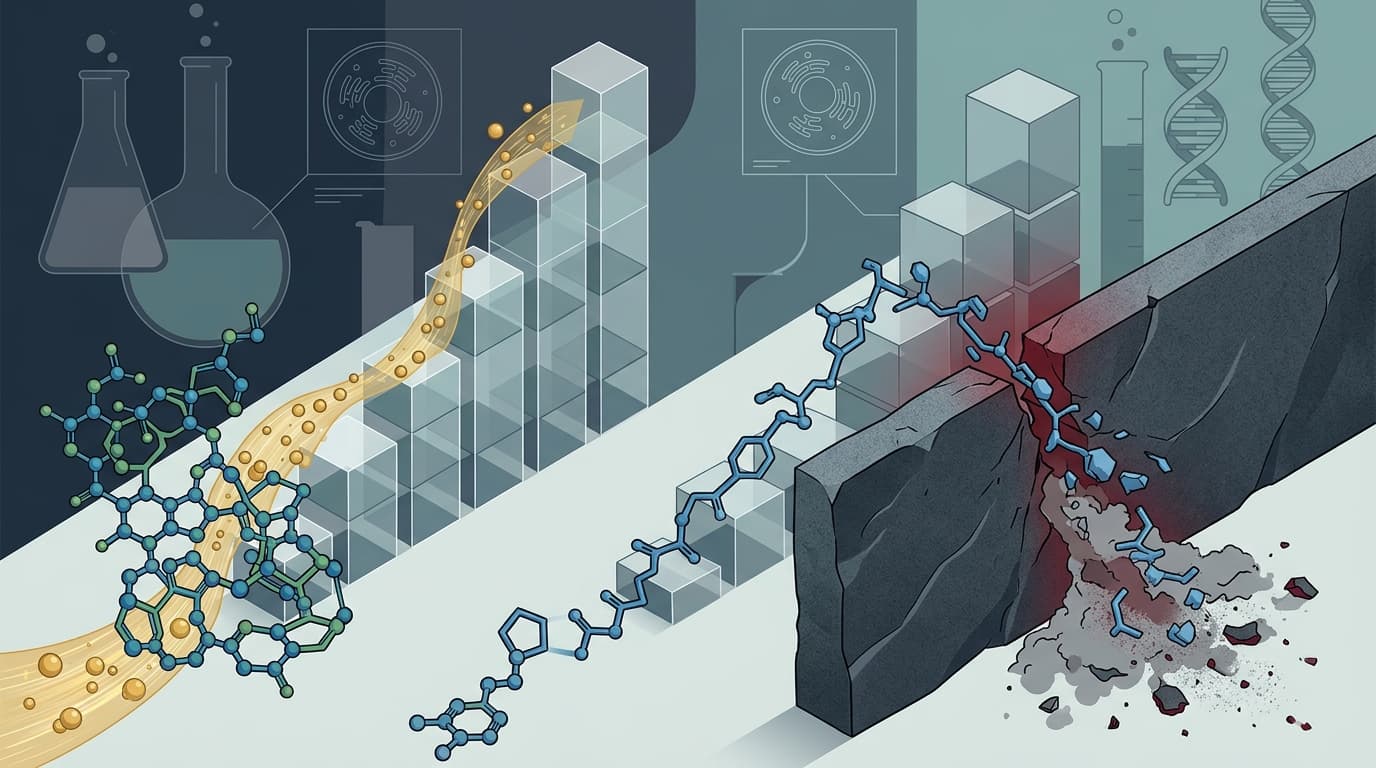
For decades, scientists called KRAS "undruggable." It was the white whale of oncology: a tiny, smooth protein with no obvious place for a drug to grab hold, yet responsible for roughly one in four cancers. Researchers spent 40 years banging their heads against it.
Now Merck thinks it has cracked the code, at least for one version of the mutation. And the FDA just agreed the early results look impressive enough to fast-track the whole thing.
In late May 2026, the agency granted Breakthrough Therapy designation to calderasib (MK-1084), Merck's oral KRAS G12C inhibitor, in combination with Keytruda (pembrolizumab) for first-line treatment of advanced lung cancer carrying that specific mutation. It's the first time calderasib has earned this distinction, and it signals something important: the FDA sees preliminary evidence of a substantial improvement over what patients currently get.
The designation was based on a Phase 1 trial called KANDLELIT-001. The numbers are eye-catching.
Among 69 previously untreated patients whose tumors had both a KRAS G12C mutation and PD-L1 expression of at least 1%, calderasib plus Keytruda produced a confirmed response rate of 77%. That's not a typo. More than three out of four patients saw their tumors shrink meaningfully, with a median follow-up of about 12 months.
For context, Keytruda alone in similar PD-L1-positive lung cancer patients typically produces response rates in the 30-45% range. So adding calderasib roughly doubled the hit rate. The disease control rate (meaning tumors that shrank or at least stopped growing) reached 95%.
Perhaps most intriguing: progression-free survival stretched up to 28.9 months in PD-L1-positive patients. That's nearly two and a half years without the cancer advancing, in a disease where the typical first-line PFS hovers around 8-12 months.
Think of KRAS G12C as a stuck light switch. In healthy cells, KRAS flips on and off to signal growth. The G12C mutation jams it in the "on" position permanently, telling the cell to keep dividing no matter what.

HHS says biotech companies have been submitting mountains of manufacturing data that FDA never actually required for Phase 1 trials. Operation TrialBlazer aims to cut 6–12 months off first-in-human timelines, and the implications for cash-strapped startups are massive.


Join thousands of biotech professionals who start their day with our free, daily briefing.

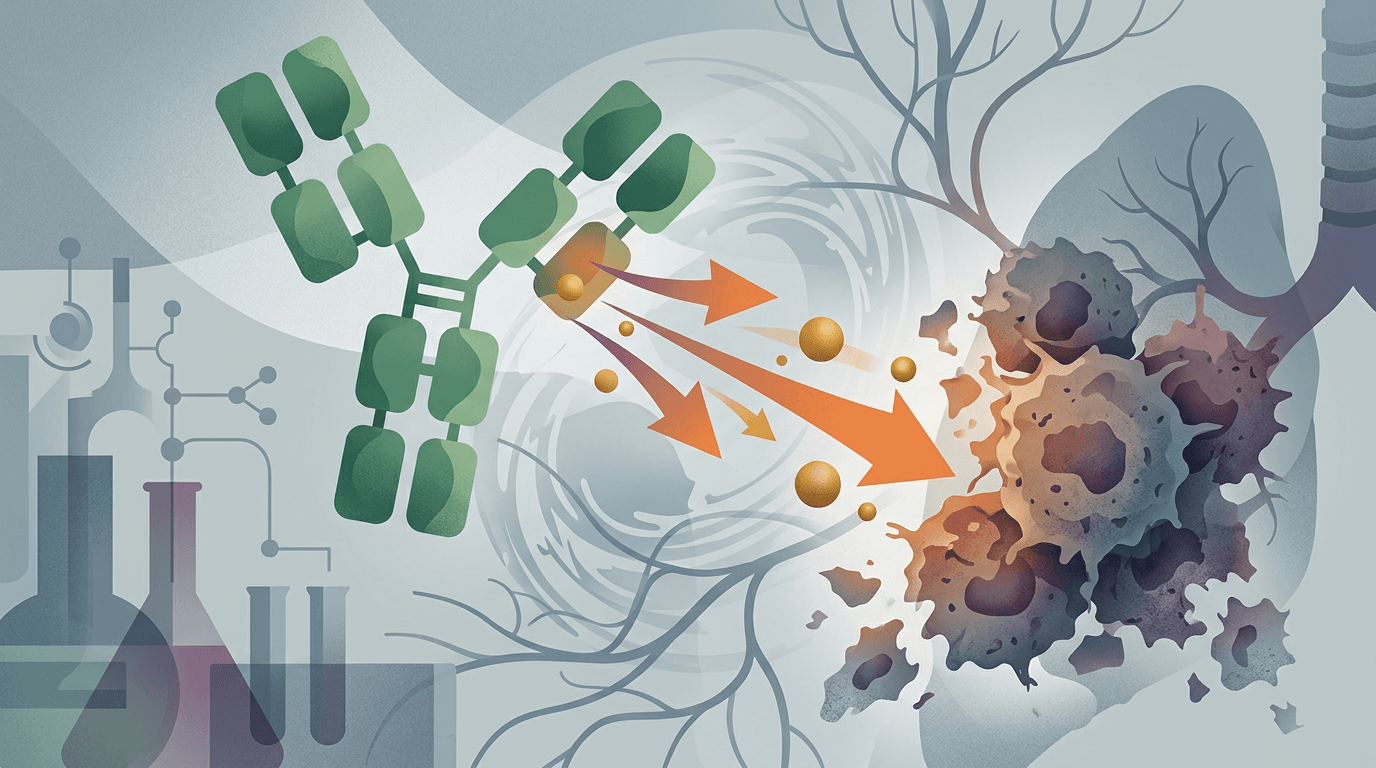
Calderasib is designed to unstick that switch. But here's where the combination logic gets clever: when you shut down the KRAS signal, dying tumor cells release proteins that the immune system can recognize. Keytruda, which removes the "invisibility cloak" that cancers use to hide from immune cells, is perfectly positioned to capitalize on that moment. One drug exposes the tumor; the other unleashes the immune system to finish the job.
The clinical results suggest this isn't just theoretical synergy. It's showing up in actual patients.
Calderasib isn't entering an empty field. Two KRAS G12C inhibitors are already approved for lung cancer: Amgen's sotorasib (Lumakras) and the BMS/Mirati drug adagrasib (Krazati). Both are cleared for second-line use, meaning after other treatments have failed.
But there's a catch with the first-generation drugs. Their benefits tend to be modest and short-lived as monotherapies, with PFS typically under six months. And sotorasib ran into serious toxicity problems when combined with PD-1 inhibitors like Keytruda in early combination studies.
Merck's pitch is that calderasib plays nicer with immunotherapy. In the KANDLELIT-001 trial, grade 3 liver enzyme elevations (the main safety signal) occurred in just 8% of patients on the combination. The overall side effect profile was described as manageable, with low discontinuation rates.
That tolerability advantage could be calderasib's real differentiator. If you can safely combine a KRAS inhibitor with the world's best-selling cancer drug, you potentially leapfrog straight to first-line treatment instead of waiting for patients to fail other therapies first.
KRAS G12C mutations show up in roughly 10-16% of non-squamous lung cancers. In the United States alone, that translates to approximately 25,000 new patients per year. It's not the largest slice of lung cancer, but it's a precisely defined one where targeted therapy can make a dramatic difference.
Currently, these patients receive the same chemo-plus-immunotherapy cocktail as everyone else with advanced lung cancer. There's no approved targeted option in the first-line setting. If Merck's Phase 3 trials succeed, calderasib plus Keytruda would create an entirely new standard of care for this group.
Merck has two major Phase 3 trials already running. KANDLELIT-004 is testing calderasib plus Keytruda against Keytruda alone in patients with very high PD-L1 expression (TPS ≥50%), enrolling roughly 600 patients. KANDLELIT-007 takes a broader swing: calderasib plus subcutaneous Keytruda versus chemo plus Keytruda in all KRAS G12C non-squamous lung cancer patients regardless of PD-L1 status, with about 675 patients enrolled.
The first trial could report results in the next couple of years. The second has a primary completion date of December 2029, so this is a long game.
Analysts are calling this "directionally positive" but not thesis-changing for Merck's stock. The real Merck debate still revolves around Keytruda's patent cliff (looming around 2028 in major markets) and whether the company can build enough new revenue streams to offset it.
Calderasib fits neatly into that narrative. It's one piece of a broader strategy to extend Keytruda's relevance through novel combinations that carry their own intellectual property. If Phase 3 confirms the Phase 1 signal, calderasib could anchor KRAS G12C patients in Merck's ecosystem for years.
But let's be honest: Phase 1 response rates don't always hold up in larger trials. Breakthrough Therapy designation is a regulatory fast pass, not a guarantee of approval. The next two years will determine whether these early numbers were a mirage or a genuine leap forward.
After 40 years of being "undruggable," KRAS is now the target of a crowded race. Merck's entry is late compared to sotorasib and adagrasib, but it might be arriving with the best dance partner in oncology. A 77% response rate in first-line lung cancer, if it holds, would be remarkable by any standard.
The real question isn't whether KRAS inhibitors work. It's whether they work well enough, safely enough, and early enough to change how doctors treat lung cancer from day one. Merck just got a big vote of confidence that the answer might be yes.
Exelixis' next-generation drug zanzalintinib missed a key survival endpoint in colorectal cancer, sending shares down 10-12%. With Cabometyx still driving 90% of revenue, the pressure to prove the successor can carry the franchise just got a lot more intense.