
Eli Lilly unveiled early clinical data at ASCO 2026 for a next-generation Nectin-4 ADC that targets the same protein as Padcev but carries a completely different weapon. With Padcev anchoring a multi-billion-dollar bladder cancer franchise, the stakes couldn't be higher.
Padcev has been running the bladder cancer market like it owns the place. And honestly, it kind of does. The antibody-drug conjugate (ADC), a missile-like therapy that delivers chemo directly to cancer cells, pulled in $1.4 billion in revenue through just the first three quarters of 2025 on Pfizer's books alone. Peak sales projections from co-owner Astellas? Roughly $2.7–3.5 billion a year.
So naturally, Eli Lilly decided to walk into the room and challenge the champ.
At ASCO 2026, the world's biggest cancer conference, Lilly unveiled the first clinical data for LY4052031, a next-generation ADC that goes after the exact same target as Padcev. The drug earned a coveted oral presentation slot, which in oncology circles is like getting invited to perform at the Super Bowl halftime show. You don't get that spot with boring data.
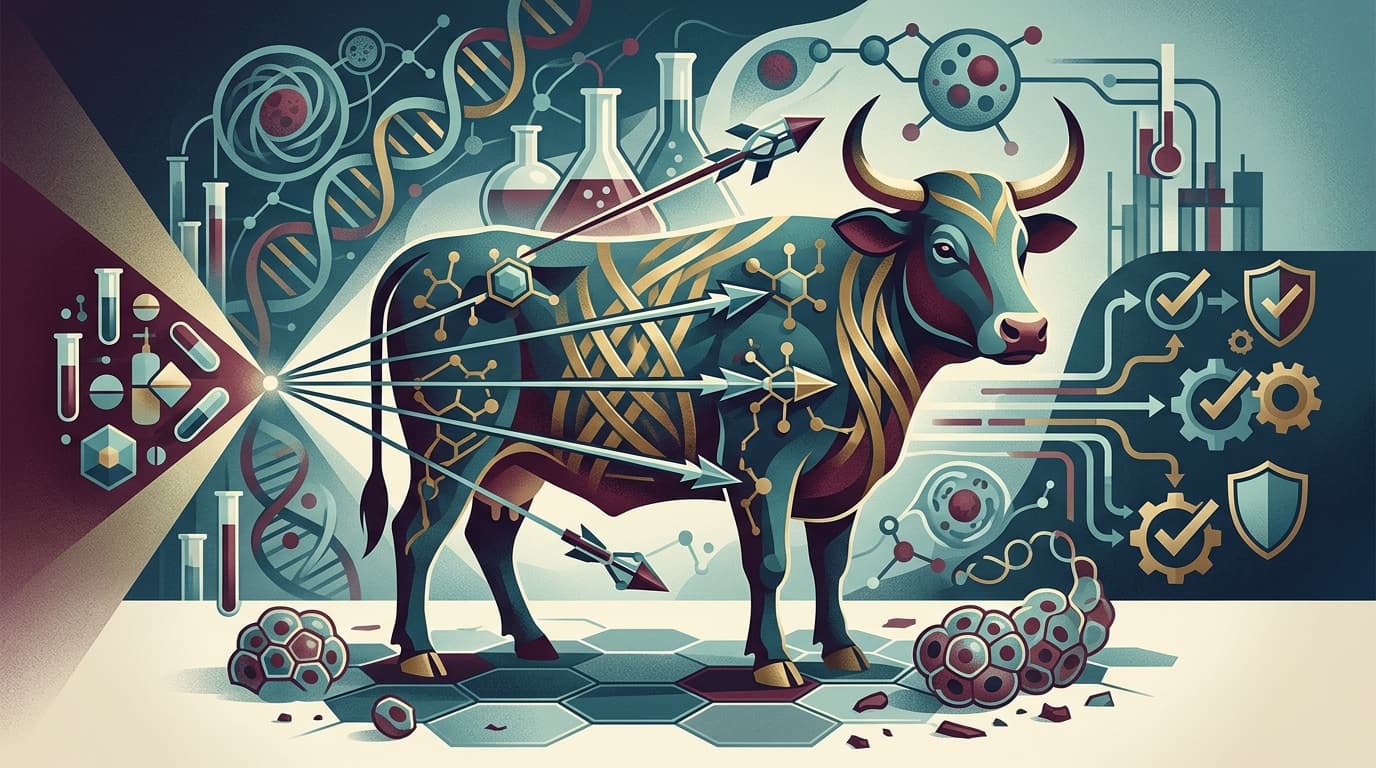
To understand why this matters, you need to know how Padcev works. It locks onto a protein called Nectin-4, which sits on the surface of bladder cancer cells like a welcome mat. Once attached, Padcev gets pulled inside the cell and releases a toxic payload that destroys it from within.
Lilly's LY4052031 knocks on the same door. It targets Nectin-4 too. But it carries a completely different weapon inside.
Padcev uses a payload called MMAE, which kills cancer cells by wrecking their internal scaffolding (microtubules). Lilly's ADC instead delivers a camptothecin payload, a topoisomerase I inhibitor that shreds the cell's DNA. Think of it this way: Padcev sabotages the building's support beams, while Lilly's drug goes after the blueprints.
There's another key difference. LY4052031 packs eight drug molecules per antibody, double the roughly four that Padcev carries. It also uses an Fc-silent antibody backbone, designed to reduce off-target immune activity. In preclinical testing, Lilly says the drug showed activity across a range of Nectin-4 expression levels, including (and this is the kicker) .

BMS's CELMoD drug mezigdomide just delivered a major Phase 3 win in multiple myeloma, providing the strongest clinical validation yet for the targeted protein degradation drug class. The implications stretch far beyond one company and one cancer.


Join thousands of biotech professionals who start their day with our free, daily briefing.
That last detail is the real headline.
Before anyone crowns a new king, let's be clear about what Lilly is up against. Padcev isn't just approved; it's the foundation of modern bladder cancer treatment.
The pivotal EV-302 trial tested Padcev plus Keytruda (pembrolizumab) against standard chemotherapy in first-line advanced urothelial cancer. The results were staggering. Patients on the combo lived a median of 31.5 months, nearly double the 16.1 months for chemo. The risk of death dropped by 53%.
Response rates told the same story: 68% of patients responded to the Padcev/Keytruda combo, with 29% achieving complete responses (meaning no detectable cancer). Chemo managed a 44% response rate and a 14.5% complete response rate. Those numbers essentially rewrote the standard of care overnight.
So Lilly isn't just competing with a drug. It's competing with a clinical dataset that changed how oncologists treat bladder cancer worldwide.
The data Lilly presented at ASCO came from NEXUS-01, a Phase 1 trial in advanced or metastatic urothelial carcinoma. That's the earliest stage of human testing, designed primarily to establish safe doses and look for early signs of activity.
Phase 1 is where you prove your drug doesn't hurt people and might actually work. Phase 3, where Padcev built its empire, is where you prove it works better than the alternative in a large, randomized trial. The distance between those two stages is measured in years, thousands of patients, and hundreds of millions of dollars.
Lilly has not yet disclosed specific response rates, survival figures, or detailed safety data from NEXUS-01 in public materials. The oral presentation at ASCO is where those numbers will land. What we know is that the data were strong enough to earn a prominent speaking slot at the biggest oncology meeting of the year. That's a signal, not a conclusion.
Lilly isn't the only company eyeing Padcev's throne. The urothelial cancer ADC pipeline is getting crowded.
Merck is developing sacituzumab tirumotecan, a TROP2-targeting ADC that attacks bladder cancer through a different protein altogether. RemeGen's disitamab vedotin targets HER2 and has drawn significant attention in HER2-positive bladder cancer. Even Gilead has filed patents exploring dual-ADC strategies that would combine TROP2 and Nectin-4 approaches.
A recent analysis of ADC trials in urothelial carcinoma counted 89 active studies, with 52 of them testing combinations (usually pairing an ADC with an immune checkpoint inhibitor). The field has clearly decided that ADCs are the future of bladder cancer treatment; the only question is which ones.
What makes Lilly's approach uniquely threatening is the Nectin-4 overlap. TROP2 and HER2 ADCs can coexist with Padcev because they target different patients or different lines of therapy. A better Nectin-4 ADC, one with improved tolerability or activity after Padcev failure, would compete head-to-head for the same patients.
The key questions that will determine whether LY4052031 is a real Padcev challenger or just an interesting science project:
Response rates and durability. Early-phase response rates above 40-50% in a pretreated population would be eye-catching. Duration of response matters even more.
The safety profile. Padcev's main toxicities include skin rash, peripheral neuropathy, and hyperglycemia. If Lilly's camptothecin payload avoids the neuropathy that limits some patients on Padcev, that could be a meaningful clinical advantage.
Activity in Padcev-resistant patients. The preclinical data hinting at activity in MMAE-resistant models is provocative. If that translates to the clinic, LY4052031 could carve out a clear role even without displacing Padcev from first-line treatment.
Lilly has a long road ahead. But walking into ASCO with a next-gen version of oncology's biggest ADC franchise, targeting the same protein with a different payload, a higher drug load, and preclinical data suggesting activity where Padcev fails? That's not a company taking a casual swing. That's a company aiming for the crown.
Curium Pharma just slid a $7 billion offer across the table to Lantheus Holdings, the company behind prostate cancer imaging blockbuster Pylarify. If the deal goes through, it would create a global radiopharmaceutical powerhouse and mark one of the biggest PE-backed moves into oncology infrastructure ever.