Lilly's $370M Bet on the Drug Targets Nobody Wanted
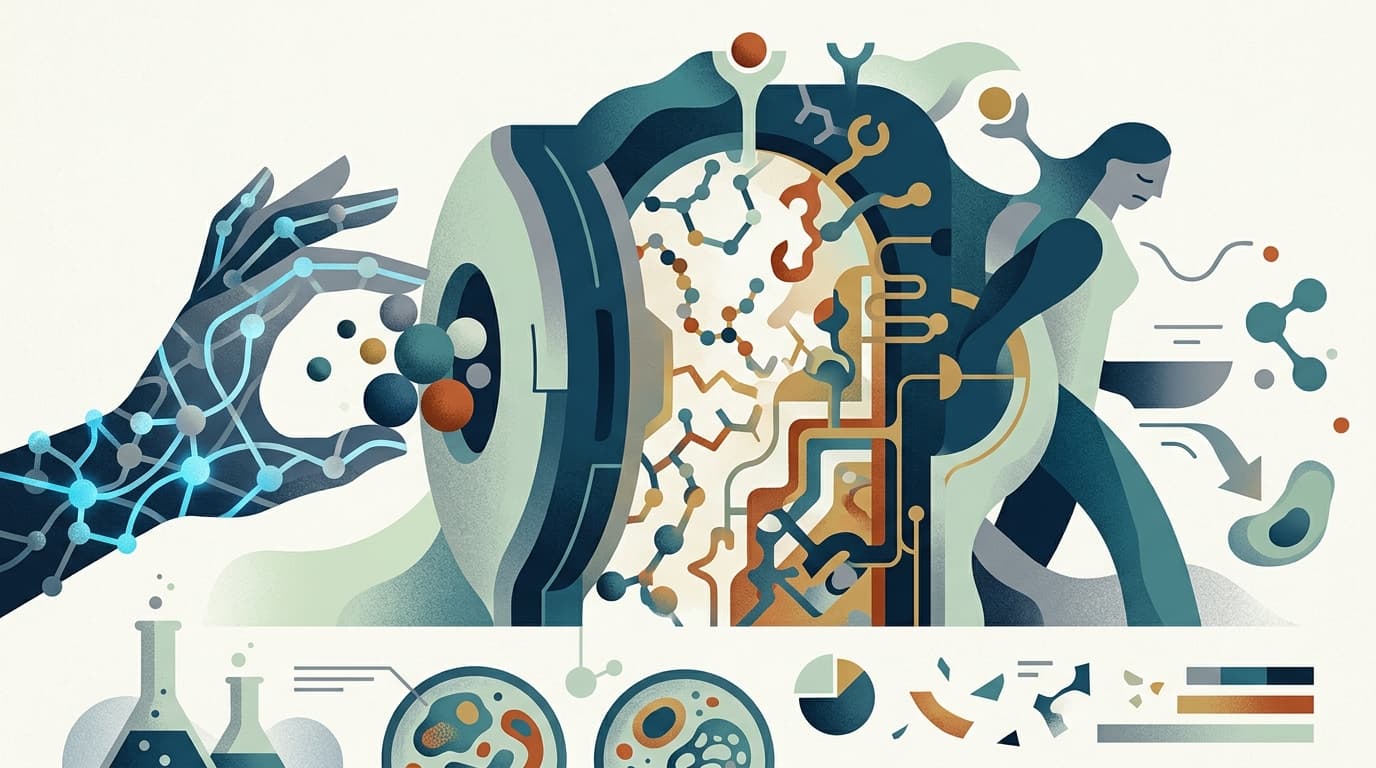
While the rest of pharma fights over GLP-1s and oncology biologics, Eli Lilly just dropped $370 million on one of the most notoriously difficult drug target classes in biology. The OmniAb collaboration is either a visionary contrarian bet or an expensive science experiment.
While Everyone Chases GLP-1s, Lilly Goes Digging for Buried Treasure
Every big pharma company in the world is fighting over the same shiny objects right now: obesity drugs, cancer biologics, and anything with "GLP-1" in the name. Eli Lilly just walked in the other direction.
The company signed a $370 million collaboration with OmniAb, a smaller antibody discovery company, to go after one of the most notoriously difficult drug target classes in biology: ion channels. That's the kind of move that makes you either a visionary or a contrarian who's about to learn a painful lesson. The market seems to think it's the former. OmniAb's stock jumped roughly 22% in premarket trading after the announcement.
So why is the world's most valuable pharma company spending big on targets that most of the industry has been quietly ignoring for decades?
The Targets That Drug Hunters Love to Hate
Ion channels are tiny protein gates embedded in cell membranes. They control the flow of charged particles (ions) in and out of cells, which is how your nerves fire, your heart beats, and your muscles contract. They're involved in everything from pain to epilepsy to cardiac arrhythmias.
On paper, they should be blockbuster drug targets. In practice, they've been a graveyard for drug programs.
The problems are stacked on top of each other like a pharma version of Jenga. The proteins sit in greasy cell membranes, making them hard to study and screen against. Many ion channel family members look almost identical, so a drug that hits one will often hit its cousins too, causing nasty side effects. The tests needed to evaluate drug candidates are technically demanding and expensive. And the binding sites where drugs need to attach are often buried deep in the protein structure, like trying to thread a needle inside a locked box.
This is why, despite ion channels being one of the largest families of druggable proteins in the human genome, most pharma companies have underinvested in them for years. The juice didn't seem worth the squeeze.
Get tomorrow's biotech intelligence before your competitors.
Join thousands of biotech professionals who start their day with our free, daily briefing.
Why OmniAb, and Why Now?
OmniAb has built its reputation on cracking hard targets. The company's discovery platform uses genetically engineered animals and specialized screening tools to generate antibodies against proteins that conventional approaches struggle with: things like GPCRs (another notoriously tricky membrane protein family) and, critically, ion channels.
What makes OmniAb's approach interesting is its toolkit. The company has developed smaller antibody formats called OmnidAb (single-domain antibodies) and OmniTaur (cow-inspired antibodies). Think of these as molecular lock picks, small enough to reach into the recessed, physically awkward binding sites on ion channels that full-sized antibodies can't access.
OmniAb also brings proprietary screening workflows built specifically for ion channels: high-throughput electrophysiology, cryo-EM structural analysis, and deep-learning models for optimization. Before Lilly came calling, OmniAb had already inked ion channel collaborations with GSK and Roche, and more than 30 biopharma companies had licensed its broader platform to generate antibodies against over 300 targets.
The deal with Lilly includes an undisclosed upfront payment, up to $370 million in research, development, and commercial milestones, and tiered royalties on global net sales. Neither company revealed the specific ion channel target or the modality they'll pursue, which only adds to the intrigue.
Lilly's Quiet Pivot Toward Pain
This deal doesn't exist in a vacuum. Lilly has been building a deliberate, if under-the-radar, strategy around ion channels and pain biology.
In May 2025, Lilly acquired SiteOne Therapeutics to get its hands on STC-004, a Phase 2-ready inhibitor of Nav1.8, a sodium channel involved in pain signaling. Nav1.8 is one of the hottest non-opioid pain targets in the industry. At the same time, Lilly cleaned house on earlier pain programs that weren't working (P2X7 and SSTR4 candidates got the axe) and doubled down on Nav1.8.
The OmniAb deal fits this pattern perfectly. Lilly is assembling a portfolio of ion channel bets across different modalities and discovery approaches. Small molecules through SiteOne; potentially antibodies through OmniAb. It's not putting all its chips on one number.
And this isn't just about diversification for its own sake. Lilly has been vocal that more than 75% of its new clinical medicines are outside of incretins and amylins (the drug classes behind its blockbuster obesity and diabetes franchises). The company is using its GLP-1 cash engine to fund a second wave of growth across neuroscience, pain, cardiovascular disease, immunology, and oncology.
What This Means for OmniAb
For OmniAb, this deal is transformative on a financial level. The company had a rough 2025, with its stock plunging nearly 55% over the course of the year. But 2026 has been a different story entirely. Even before the Lilly announcement, shares had climbed about 83% from $1.85 at the start of the year to around $3.38 in mid-August.
Revenue has been improving too. OmniAb posted $14.43 million in Q1 2026 revenue, a roughly 243% increase year over year, though the company is still unprofitable (net loss of $7.71 million that same quarter). Analysts have a buy consensus on the stock with an average price target of $7.33, suggesting they see plenty of room to run.
The Lilly deal validates OmniAb's core pitch: that its platform can tackle the targets other discovery engines can't. If the collaboration produces clinical candidates, the milestone payments and royalty stream could fundamentally change the company's financial trajectory.
The Bigger Picture: Contrarian Bets Win Big (When They Work)
Pharmaceutical history is littered with examples of targets everyone abandoned that later produced blockbusters. Antibodies themselves were once considered undruggable. Kinase inhibitors spent years in the wilderness before imatinib (Gleevec) rewrote the rules of cancer treatment.
Ion channels could be next. The technology has finally caught up to the biology. Cryo-EM can now resolve channel structures at near-atomic resolution. AI-driven screening can sift through millions of candidates faster than ever. And smaller antibody formats can physically reach binding sites that were previously off-limits.
Lilly is betting that the reason ion channels have been underexploited isn't because they're bad targets; it's because the tools weren't good enough yet. That's a very different thesis than "nobody's doing this because it doesn't work."
A $370 million collaboration won't change the world on its own. But if Lilly is right that ion channels are an untapped goldmine, and OmniAb's platform is the pickaxe, this deal could look like a steal in five years. And if they're wrong? Well, Lilly's GLP-1 franchise generates enough cash to absorb the loss without blinking.
Sometimes the smartest bet in the room is the one nobody else is making.
Deals & M&A
4 min read
Sandoz Is Buying Its Biosimilar Future From China
Sandoz just committed up to $322 million to license biosimilars from a Chinese company most people have never heard of. The deal with Shanghai Henlius signals something bigger: China's biologics ecosystem has gone from follower to supplier for the world's largest biosimilar company.