
Life Biosciences just raised $80 million to test whether a gene therapy can literally rejuvenate aging cells inside the human eye. It's the first epigenetic reprogramming therapy to reach human trials, and the implications go way beyond glaucoma.
Imagine your body keeps a copy of every instruction manual it ever wrote, from the day you were born. Over time, those manuals get coffee-stained, dog-eared, and unreadable. Your cells forget how to do their jobs. You age. You get sick. Your vision fades.
Now imagine someone figured out how to clean those manuals and make them legible again.
That's the pitch behind Life Biosciences, a Boston-based company that just pulled in $80 million to test whether it can actually reverse aging inside the human eye. The funding was announced on April 8, 2026.
The money is fueling something that, until very recently, sounded like science fiction: a gene therapy designed to reprogram your cells back to a younger state.
The therapy is called ER-100, and it's currently in a Phase 1 clinical trial, which means it's being tested in humans for the first time, primarily to see if it's safe. The targets are two forms of optic nerve damage: open-angle glaucoma (the most common type) and non-arteritic anterior ischemic optic neuropathy, or NAION, a condition where blood flow to the optic nerve gets cut off.
Glaucoma alone is one of the leading causes of irreversible blindness worldwide. Current treatments basically do one thing: reduce pressure inside the eye. That can slow the damage, but it can't stop it entirely, and it definitely can't undo it. Once vision is gone, it's gone.
ER-100 takes a completely different approach. Instead of managing pressure, it tries to rejuvenate the damaged cells themselves.
To understand how ER-100 works, you need a quick biology detour. Back in 2006, Japanese scientist Shinya Yamanaka discovered that four specific proteins could reprogram adult cells back into stem cells, basically resetting them to a blank slate. He won a Nobel Prize for it.
The problem? Fully resetting a cell is dangerous. A cell that forgets what it's supposed to be can become cancerous. It's like factory-resetting your phone and losing all your apps, contacts, and photos.

Novo Nordisk launched a higher-dose Wegovy at $399 per month, undercutting Eli Lilly's Zepbound by 40% and igniting an all-out pricing war in the obesity drug market. With subscription plans as low as $249/month and 20.7% weight loss in trials, the GLP-1 landscape is being rewritten in real time.


Join thousands of biotech professionals who start their day with our free, daily briefing.
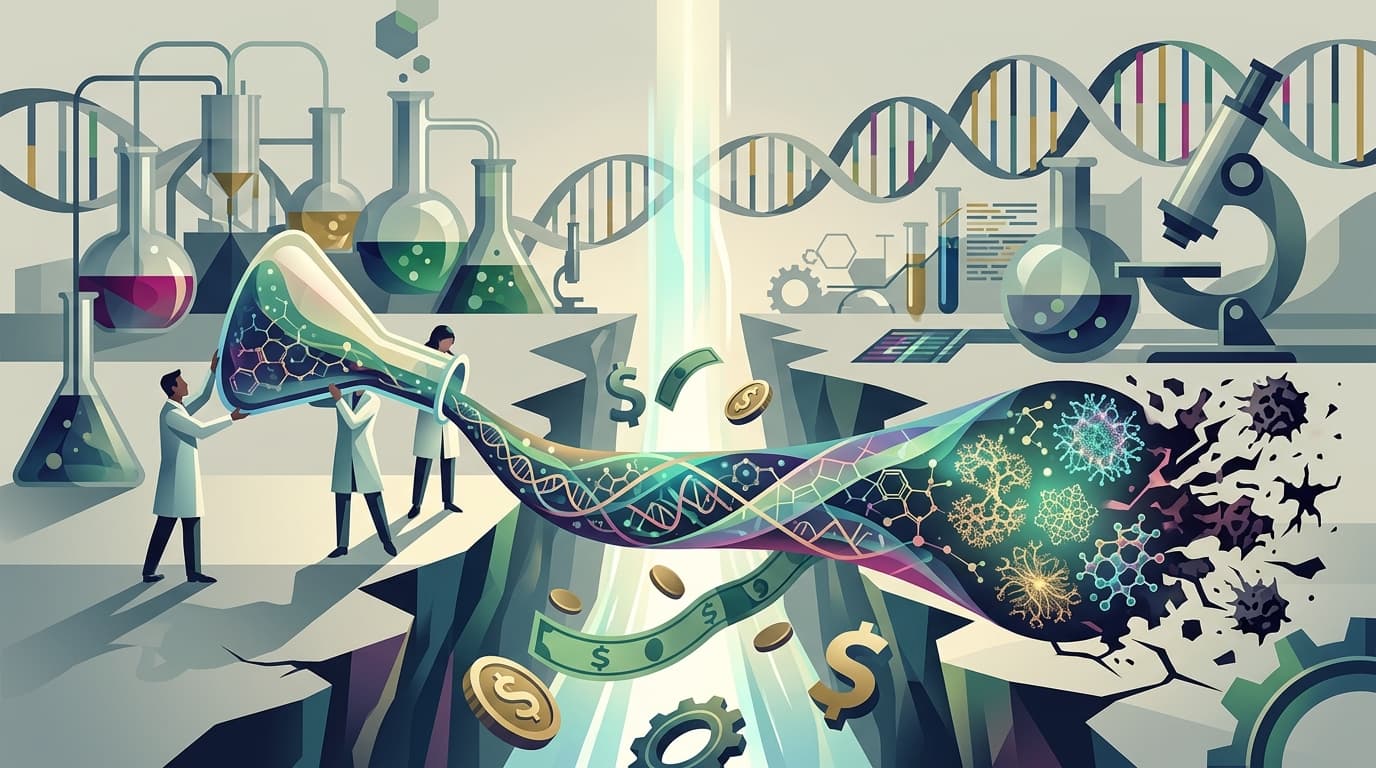
Life Biosciences uses only three of those four proteins (OCT4, SOX2, and KLF4, collectively called OSK) and activates them briefly. Think of it as a partial factory reset: you clean up the junk and restore performance, but the cell still remembers it's a retinal cell. The company calls this partial epigenetic reprogramming, or PER.
The delivery method? A modified, non-infectious virus (an AAV2 vector) injected directly into the eye. Patients then take an oral antibiotic called doxycycline for 56 days, which acts as an on-switch for the reprogramming factors. Once the doxycycline course ends, the reprogramming stops. It's a tightly controlled system, like giving your cells a spa day with a strict checkout time.
The Phase 1 trial (NCT07290244) received FDA clearance in January 2026 and kicked off in Q1 of this year. It's a dose-escalation study, meaning doctors start with a low dose in glaucoma patients and work their way up.
Multiple dose levels are being tested across cohorts. If the first cohort checks out with safety reviewers, the next cohort receives a higher dose. A third cohort will then test a selected dose in NAION patients. Each group goes through careful review by a Data Safety Monitoring Board before the next one begins.
The primary goal is straightforward: is this safe? Secondary measures include visual function assessments and immune responses. Patients will be monitored for up to five years after a single injection. No efficacy data is expected yet; this is all about proving the therapy doesn't cause harm.
Preclinical studies in nonhuman primates were encouraging. The animals showed restored DNA methylation patterns (the "coffee stains" getting cleaned off those instruction manuals) and improvements in visual function. That data was presented at major ophthalmology conferences in early 2026.
The $80 million gives Life Biosciences runway into the second half of 2027, enough time to generate initial safety data from the Phase 1 trial and start expanding the platform into other age-related diseases beyond the eye. The company has already hinted at preclinical work in liver and metabolic conditions.
The broader market context adds fuel to the thesis. The cellular reprogramming therapeutics space was valued at roughly $1.8 billion in 2025 and is projected to balloon to $12.4 billion by 2034. Life Biosciences appears to be the first company to get an epigenetic reprogramming therapy into human trials, which gives it a significant head start.
Competitors like Altos Labs, Retro Biosciences, and NewLimit are working in the same general territory. Altos Labs initiated a Phase I clinical trial for partial OSK reprogramming for age-related macular degeneration in February 2026. Life Biosciences' co-founder David Sinclair, a Harvard professor whose Information Theory of Aging underpins the science, has been a vocal evangelist for the idea that aging itself is a treatable condition. His research, published in Nature and Cell, forms the intellectual backbone of the company's platform.
Can you actually make old cells young again inside a living human being?
The mouse data says yes. The primate data looks promising. But we've all seen therapies that crushed it in animal models and then flopped in people. Gene therapy, in particular, has a complicated track record; early disasters in the late 1990s cast a long shadow over the entire field.
Life Biosciences' approach has some built-in safety features (the doxycycline on/off switch, the use of only three reprogramming factors instead of four, the local delivery to a single eye). But Phase 1 data won't arrive for months, and meaningful efficacy signals are likely years away.
The company's CSO, Sharon Rosenzweig-Lipson, has described the work as advancing "a new class of epigenetic therapies that can modify the biology of aging itself." That's an enormous claim. If ER-100 delivers even a fraction of its promise, it wouldn't just change how we treat glaucoma; it would validate an entirely new category of medicine.
For now, 80 million dollars and a handful of patients with failing eyesight are carrying the weight of that hypothesis. The eyes of the biotech world (pun very much intended) are watching.
Gilead just paid $45 million to license a cancer drug that doesn't block bad proteins; it destroys them entirely. The Kymera Therapeutics deal could be worth up to $750 million, and it's part of a much bigger bet on protein degradation reshaping oncology.