
Merck's islatravir was sidelined in 2021 after tanking patients' immune cells. Four years later, the FDA just approved it as part of a new two-drug HIV pill. The comeback story is wild.
In December 2021, the FDA slapped a clinical hold on thirteen trials involving islatravir, Merck's once-promising HIV drug. Patients' immune cells were mysteriously dropping. The compound that was supposed to simplify HIV treatment looked like it might actually be making things worse.
Fast forward to April 21, 2026: the FDA approved islatravir as half of a new two-drug HIV pill called Idvynso. Same molecule. Very different story.
This is a comeback worth paying attention to.
Islatravir's fall from grace was dramatic. Back in late 2021, Merck noticed something alarming in its clinical trials. Patients taking the drug were experiencing declines in CD4+ T-cells, the very immune cells that HIV destroys. For an HIV drug, that's like a fire extinguisher that also happens to be flammable.
The FDA shut things down hard. Thirteen trials were put on hold in December 2021, covering everything from treatment to prevention across oral pills, injectables, and even implants. Merck was essentially told to go back to the drawing board.
So they did. The company zeroed in on a key variable: dose. The problematic studies had tested islatravir at higher doses (0.75 mg and 2.25 mg). Merck went lower, pairing just 0.25 mg of islatravir with 100 mg of doravirine, an existing HIV drug already sold as Pifeltro. The hypothesis was simple; maybe the molecule works great if you just use less of it.
Merck ran two big Phase 3 trials to prove the combo worked. Both enrolled adults who were already virologically suppressed, meaning their existing HIV meds had already driven the virus to undetectable levels (below 50 copies per milliliter of blood). The question wasn't whether Idvynso could beat HIV from scratch. It was whether patients could safely swap their current regimen for this simpler one.
Trial 052 pitted Idvynso head-to-head against Gilead's Biktarvy, the reigning king of HIV treatment. At 48 weeks, only 1% of Idvynso patients had detectable virus compared to 1% on Biktarvy. That's a statistical tie, which is exactly what Merck needed. About 92-94% of patients in both groups maintained full viral suppression.

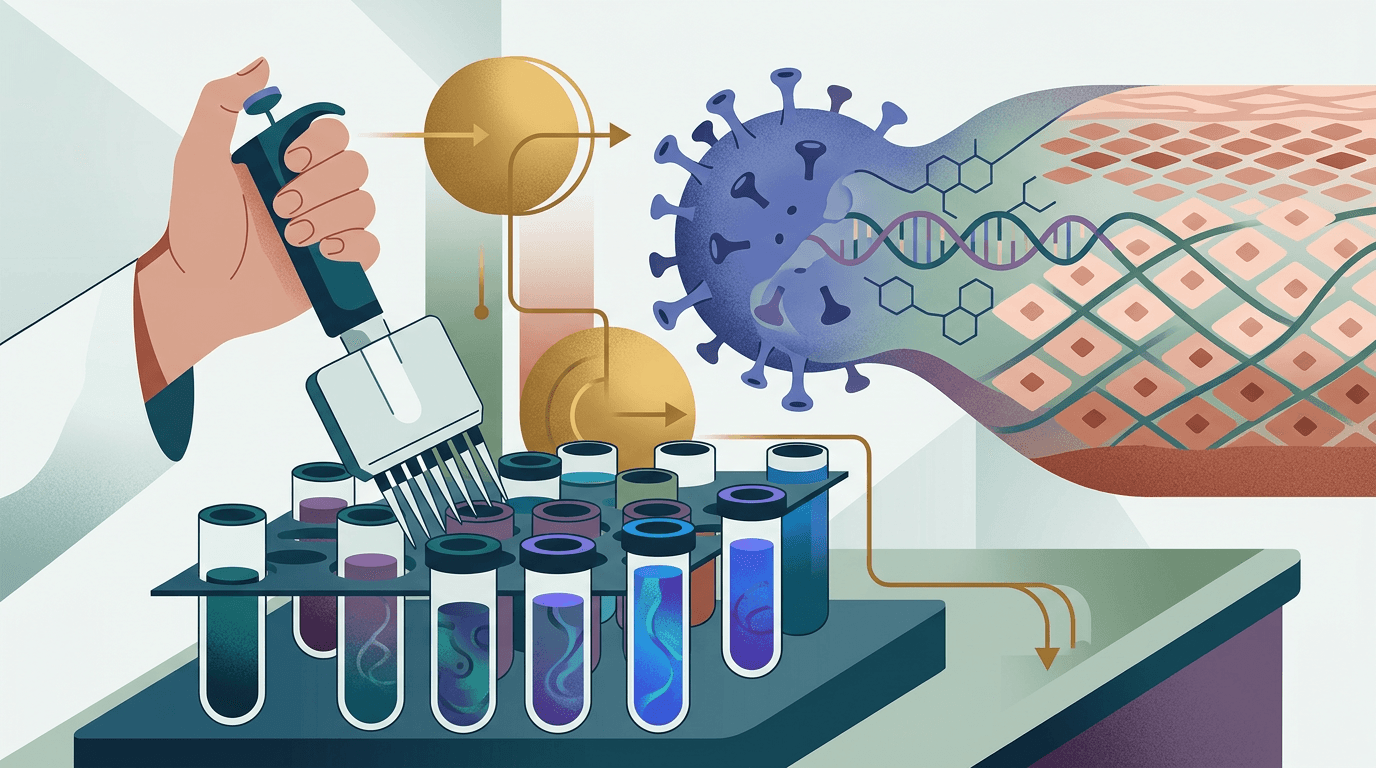
LEO Pharma just paid $50 million for a company that turns herpes simplex virus into a gene therapy delivery system for devastating skin diseases. It's preclinical, it's audacious, and it might be the future of dermatology.


Join thousands of biotech professionals who start their day with our free, daily briefing.
Trial 051 compared Idvynso against whatever patients were already taking. The results here were even more interesting: just 1% of Idvynso patients lost viral suppression versus 5% who stayed on their old regimen.
As for the CD4 scare? At the lower dose, no meaningful differences in immune cell counts showed up between Idvynso and the comparator groups. The fire extinguisher, it turns out, just needed a smaller nozzle.
For decades, the standard playbook for HIV treatment has been three drugs in one pill. Think of it like a three-lock security system: even if one lock fails, the other two keep the door shut. But three drugs also mean three sets of potential side effects, three chances for interactions with other medications, and sometimes real consequences for organs like the kidneys.
The trend in HIV care has been moving toward two-drug regimens for patients whose virus is already under control. ViiV Healthcare's Dovato (dolutegravir plus lamivudine) represented a significant shift as a daily oral two-drug pill. ViiV Healthcare's Cabenuva took it further with injectable shots every one to two months.
Idvynso carves out its own lane. It's the first two-drug oral regimen that avoids both integrase inhibitors (INSTIs) and tenofovir, two drug classes that dominate nearly every other HIV combo on the market. For patients who can't tolerate those classes, or whose doctors want to avoid the long-term metabolic effects of tenofovir, Idvynso offers something genuinely new.
One pill. Once a day. Two drugs instead of three. No tenofovir. No integrase inhibitor. That's a meaningful menu expansion for a disease where people take medication every single day for the rest of their lives.
Let's talk about the competitive reality. Gilead's HIV franchise generated $20.8 billion in sales in 2025, with Biktarvy alone pulling in $14.3 billion. That's not a competitor you dethrone overnight.
Analysts at BMO Capital Markets called Idvynso's approval enough to make Merck a "meaningful competitor" in HIV, but they also expect "limited impacts" on Gilead's dominance in the near term. Gilead isn't standing still either; its twice-yearly injectable Yeztugo is projected to hit $800 million in sales in 2026.
The more interesting angle is what Idvynso means for Merck's portfolio. The company's blockbuster cancer drug Keytruda faces patent expiration in 2028, and Merck desperately needs new revenue streams. Idvynso won't replace Keytruda's billions, but it plants a flag in a therapeutic area with predictable, long-term demand. People with HIV stay on treatment for life, and that kind of recurring revenue is pharmaceutical gold.
GlobalData analysts see potential for Idvynso to become a top seller in Merck's virology portfolio. Ongoing trials could eventually expand the label to treatment-naive patients (those starting therapy for the first time), which would significantly widen the addressable market.
Idvynso will be available in U.S. pharmacies after May 11, 2026. It's already approved in Japan.
The approval comes with the usual fine print: it's not for people with active hepatitis B, those taking certain enzyme-inducing drugs, or patients with a history of treatment failure. Warnings include the risk of severe skin reactions like Stevens-Johnson syndrome.
But the real story here isn't just another HIV drug approval. It's a reminder that drug development isn't always a straight line. Islatravir looked dead in the water four years ago. Merck's bet that a lower dose could rescue the molecule paid off in a way that genuinely expands options for people living with HIV.
In pharma, second acts are rare. This one delivered.
Indivior's experimental opioid addiction drug flopped in Phase 2, and now the company is gutting its research team. Wall Street didn't flinch, but the long-term implications of becoming a one-drug company are harder to ignore.