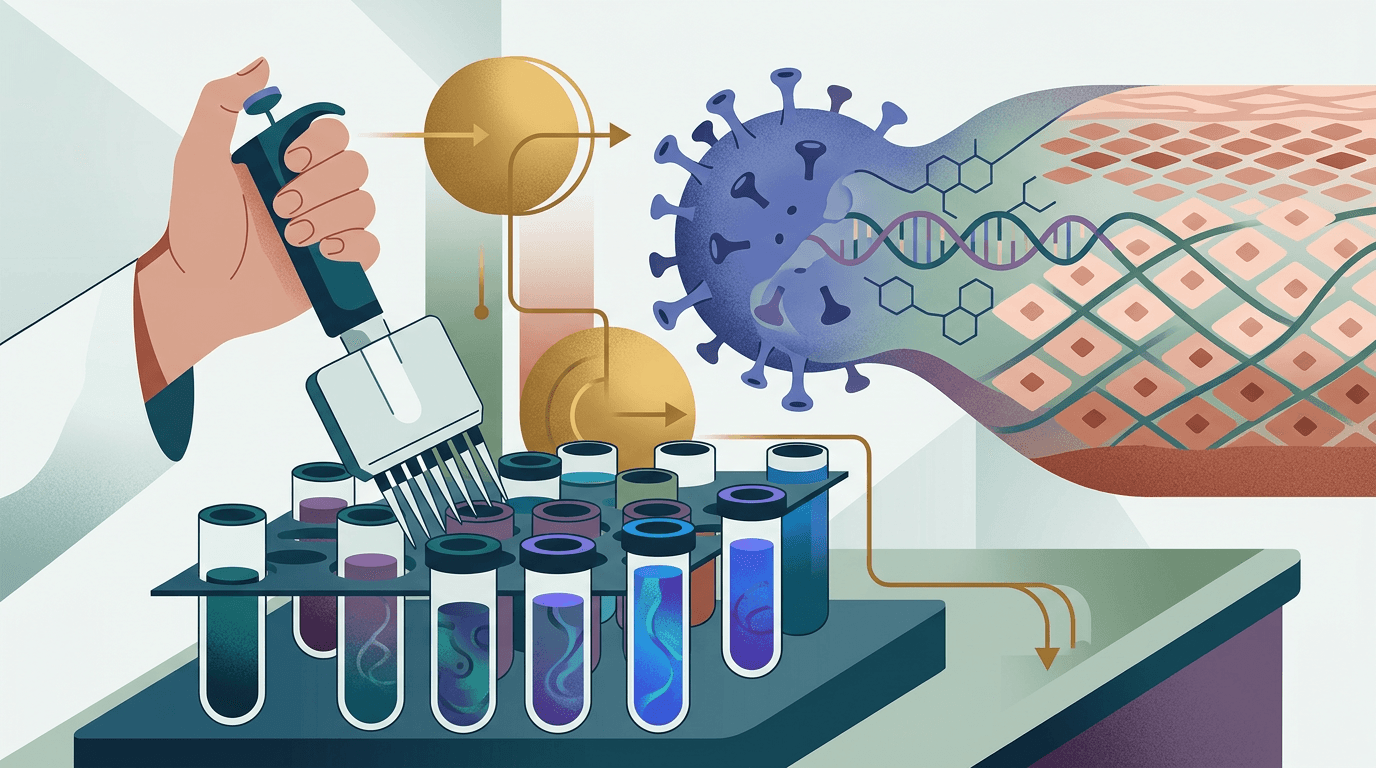
LEO Pharma just paid $50 million for a company that turns herpes simplex virus into a gene therapy delivery system for devastating skin diseases. It's preclinical, it's audacious, and it might be the future of dermatology.
The Virus Nobody Expected to Be a Hero
Herpes simplex virus has a terrible reputation. It's the uninvited guest that never leaves, the punchline of a thousand bad jokes. But it turns out that the very thing that makes herpes so persistent (it loves skin cells and knows exactly how to get inside them) also makes it a surprisingly elegant delivery vehicle for gene therapy.
Danish dermatology giant LEO Pharma just paid $50 million upfront to acquire Replay, a San Diego-based gene therapy company that figured out how to turn this biological nuisance into a potential cure for devastating skin diseases. The deal, announced April 30, also includes undisclosed milestone payments and single-digit royalties on future sales.
It's a small check by pharma standards. But the implications are enormous.
What Replay Actually Built
Replay's core innovation is a modified herpes simplex virus (HSV) vector they call synHSV™. Think of it like a biological FedEx truck: the virus has been gutted of everything harmful and repurposed to carry therapeutic genes directly into skin cells. The key advantages are almost unfairly good for dermatology.
First, HSV has natural skin tropism, which is a fancy way of saying it already knows how to infect skin cells. You don't have to trick it into going where you want. Second, HSV can carry enormous genetic payloads compared to other viral vectors like AAV, which is the industry workhorse for gene therapy. Third, and this is the kicker: patients can be redosed. Most gene therapies are one-shot deals because the immune system learns to attack the vector. HSV plays by different rules.
The delivery method? A topical gel. Not an injection. Not surgery. A gel you apply to the skin. That alone could change the economics and accessibility of gene therapy for skin diseases.
The Disease Nobody Talks About
Replay's lead program targets dystrophic epidermolysis bullosa (DEB), a rare genetic condition where the skin is so fragile that minor friction causes severe blistering, chronic wounds, and scarring. Patients with DEB are missing a functional copy of the COL7A1 gene, which provides instructions for making collagen VII, the protein that essentially glues skin layers together.
Get tomorrow's biotech intelligence before your competitors.
Join thousands of biotech professionals who start their day with our free, daily briefing.
Imagine your skin had no adhesive holding it in place. Every hug, every brush against fabric, every normal movement could tear it apart. That's DEB. It leads to painful wounds that don't heal, fused fingers, esophageal scarring, and dramatically elevated skin cancer risk. Children born with severe forms are sometimes called "butterfly children" because their skin is as delicate as a butterfly's wings.
Current treatment is mostly wound care: bandages, pain management, infection control. Until very recently, there was nothing that addressed the root genetic cause.
A Market That's Finally Waking Up
The gene therapy landscape for skin diseases barely existed five years ago. Now it's accelerating fast. The FDA approved Vyjuvek in 2023 as the first redosable gene therapy for DEB (also using an HSV vector to deliver COL7A1). Then came Zevaskyn (pz-cel) in April 2025, an autologous cell-based approach where doctors harvest patient skin cells, genetically correct them, culture them into sheets, and surgically graft them back onto wounds.
Zevaskyn's phase 3 data was striking: 81% of treated wounds achieved at least 50% healing at six months, versus just 16% for controls. But the process is complex, expensive, and invasive. Replay's topical gel approach could offer something simpler.
The dystrophic EB treatment market alone is projected to reach approximately $710 million by 2030, and the broader EB market could hit $2.5 billion by 2032. For a $50 million upfront payment, LEO Pharma is buying a lottery ticket with genuinely favorable odds.
Why LEO Pharma, and Why Now
LEO Pharma isn't a household name in the U.S., but in dermatology circles, it's a well-established veteran. The company has been on an acquisition tear recently: it picked up Timber Pharmaceuticals in 2024, signed a partnership with Gilead in 2025 focused on inflammatory skin diseases, and is projecting 8-11% revenue growth for 2026.
The Replay deal signals something bigger than one preclinical program, though. LEO is building a rare genetic dermatology franchise anchored on HSV-based gene delivery. The platform isn't limited to DEB; any monogenic skin disease (caused by a single gene defect) where you can identify the missing protein becomes a potential target.
It's the classic platform play: buy the delivery truck, then figure out all the packages you can send with it.
The Catch (There's Always a Catch)
Replay's program is still preclinical. No human has been dosed with this specific therapy yet. The path from topical gel in a lab to approved product on pharmacy shelves is long, expensive, and littered with failures. Biology that works beautifully in animal models has a nasty habit of humbling scientists once human complexity enters the picture.
LEO Pharma will need to fund IND-enabling studies, manufacture clinical-grade material, run safety and efficacy trials, and navigate regulatory pathways for a rare disease indication. That's years of work and hundreds of millions in additional investment beyond the $50 million acquisition price.
But the risk profile is manageable. They've seen Vyjuvek prove that HSV vectors can work for this exact disease. The biology is validated. The question isn't whether gene therapy can treat DEB; it's whether Replay's specific version is better, cheaper, or more practical than what already exists.
The Bigger Picture
Dermatology has long been the domain of creams, steroids, and (more recently) biologics for conditions like psoriasis and eczema. Gene therapy felt like science fiction for skin diseases. Not anymore.
With two approved gene therapies for EB, CRISPR-based approaches advancing toward clinical trials for conditions like congenital ichthyosis, and now LEO Pharma betting its strategic future on an HSV platform, we're watching a new therapeutic modality take root in dermatology. The skin, it turns out, is uniquely suited for gene therapy: it's accessible, you can see whether treatments are working, and topical delivery avoids many of the systemic safety concerns that plague other gene therapy applications.
For $50 million, LEO Pharma didn't just buy a preclinical program. It bought a front-row seat to the next era of dermatology. Whether that seat pays off depends on execution, but the thesis is compelling: take the virus everyone hates, teach it to heal instead of harm, and apply it with the simplicity of a skin cream.
Sometimes the best medicine comes from the most unlikely places.
4 min read
J&J Just Torched $5 Billion in CAR-T Progress. Nobody Saw It Coming.
J&J axed its CAR-T lymphoma program despite data that embarrassed the competition, complete response rates that made Yescarta look like last season's model. The real story isn't about science; it's about the brutal economics threatening the entire cell therapy space.