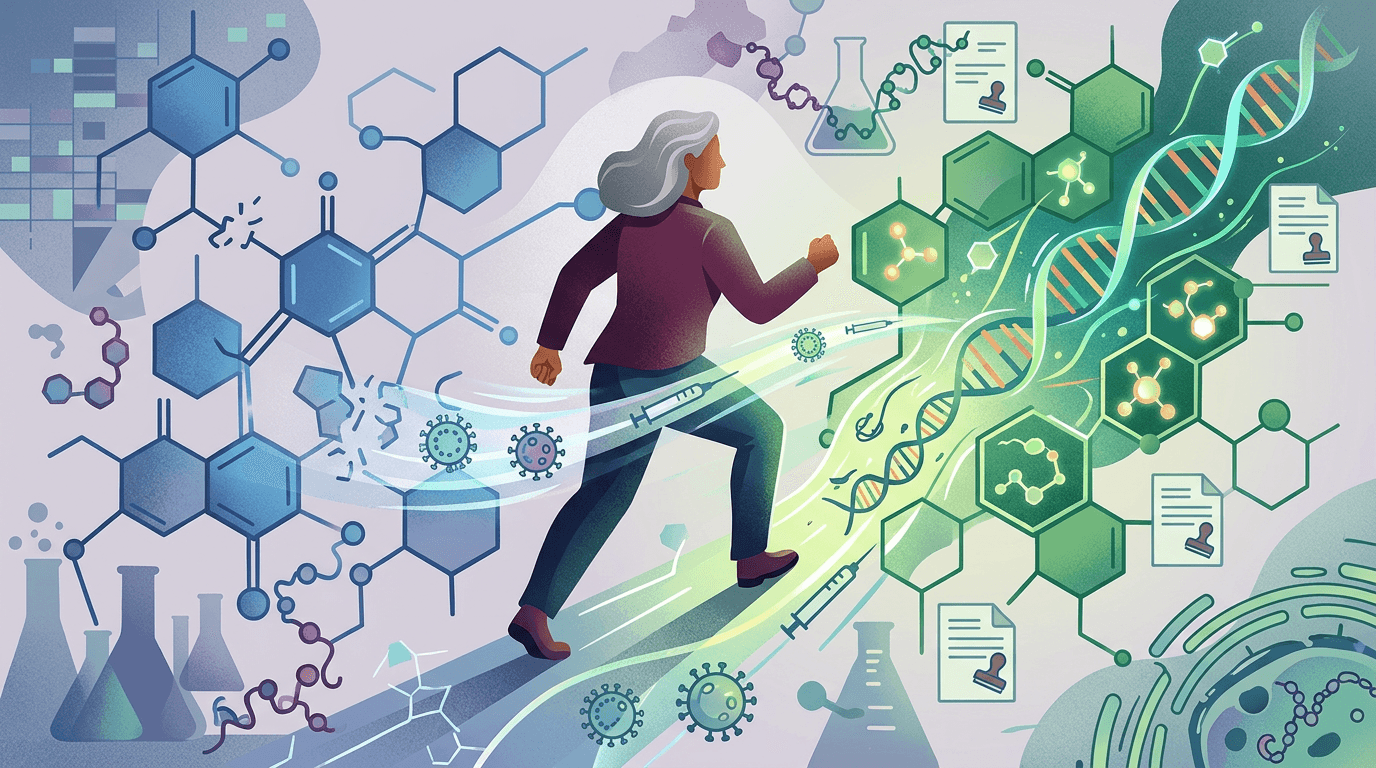

GSK raided Sanofi's bench to grab a 25-year vaccine veteran with 20-plus regulatory approvals under his belt. With mRNA rivals closing in fast, the timing tells you everything about how seriously GSK is taking the fight.
When Phil Dormitzer left GSK's vaccine R&D division at the end of 2024 to start a consulting firm, it created a leadership vacuum at one of the world's biggest vaccine makers. The timing couldn't have been worse. Moderna was scaling its mRNA empire. Pfizer and BioNTech were pushing combo vaccines through Phase 3 trials. And GSK needed someone who could fight back.
So they went shopping at their biggest rival's house.
GSK tapped Sanjay Gurunathan, MD, a 25-year Sanofi veteran, as Senior Vice President and Global Head of Vaccines and Infectious Disease R&D. He's now based in Boston, reporting to Chief Scientific Officer Tony Wood, and overseeing innovation across the entire vaccines and infectious diseases pipeline.
Gurunathan isn't some mid-level recruit. He spent nearly his entire career at Sanofi Vaccines, starting in 2000 as an associate director of clinical development and climbing all the way to global head of development and life cycle management portfolio strategy. Before that, he was a senior staff fellow at the NIH's National Institute of Allergy and Infectious Diseases from 1993 to 2000.
His resume reads like a greatest-hits album for vaccine development: contributions to more than 20 global regulatory approvals, leadership of eight multinational Phase 3 studies, and over 50 scientific publications. Wood called him a "perfect fit," and it's hard to argue.
Industry outlets described the move as GSK "snagging" or "poaching" a key Sanofi leader. And in a fun bit of corporate musical chairs, GSK executive Christopher Corsico recently moved in the opposite direction, from GSK to Sanofi. Pharma's talent wars are getting spicy.
To understand why this hire matters, you need to understand GSK's position on the battlefield. The company has been in full transformation mode since spinning off its consumer healthcare business (Haleon) in 2022. Under former CEO Emma Walmsley, GSK doubled down on becoming a "pure biopharma" company, with vaccines as a central pillar. R&D spending climbed to £6.4 billion in 2024.

MIT and Recursion just open-sourced an AI model that predicts drug binding as accurately as the gold standard, but 1,000 times faster. It could reshape how the entire industry screens for new medicines.


Join thousands of biotech professionals who start their day with our free, daily briefing.
New CEO Luke Miels, who took over on January 1, 2026, inherited a company with big ambitions: 15 major pipeline launches planned for 2025 through 2031, and a target of more than £40 billion in sales by 2031. The vaccine portfolio is a huge part of that plan.
GSK's pipeline includes 58 potential new vaccines and medicines across the board. On the vaccine side, the marquee assets include:
That's a deep bench. But having candidates is one thing; getting them across the finish line is another. That's where Gurunathan comes in.
GSK's traditional vaccine approach (protein-based, adjuvanted) has served it well for decades. Think of it like a master chef who's perfected classical French cooking. But a new restaurant just opened next door, and they're using molecular gastronomy to make dishes in a fraction of the time.
That restaurant is mRNA technology.
Moderna and Pfizer/BioNTech together control 73 combined mRNA programs spanning infectious diseases, oncology, and rare diseases. The mRNA vaccine market is projected to exceed $10 billion annually by 2030. Flu and COVID combo vaccines alone could be worth $5 to $10 billion by 2028.
Moderna already has an approved mRNA RSV vaccine (mRESVIA, approved in 2024), putting it in direct competition with GSK's Arexvy. Moderna's flu/COVID combo (mRNA-1083) has faced regulatory setbacks, including a withdrawn U.S. BLA in May 2025, though it received a positive EMA recommendation in Europe. Pfizer and BioNTech have their own single-dose flu/COVID candidate in Phase 3 with Fast Track designation.
The speed advantage is real. Traditional vaccines can take 5 to 10 years to develop. mRNA vaccines can be designed in days. It's like comparing handwritten letters to email; both deliver the message, but one moves a lot faster.
That said, mRNA isn't invincible. Moderna's CMV vaccine flopped in Phase 3 in October 2025. The company laid off 10% of its workforce. COVID vaccine sales have slumped. The mRNA giants are powerful, but they're not untouchable.
Gurunathan's job is essentially to be GSK's vaccine quarterback during the most competitive era in the industry's history. He's managing end-to-end development for high-burden diseases, leading international teams, and steering both scientific innovation and strategic partnerships.
His first big test will be the late-stage assets already in the pipeline. Bepirovirsen, the hepatitis B candidate, is one of the most closely watched programs; a first-in-class approval would be a significant win. And scaling Arexvy globally while defending against Moderna's mRNA RSV vaccine will require smart commercial and clinical strategy.
Beyond the existing pipeline, Gurunathan needs to help GSK figure out how to compete with mRNA's speed without abandoning what makes GSK's platform valuable. Adjuvanted protein vaccines have their own advantages: established manufacturing, proven safety profiles, and in some cases stronger immune responses in older adults.
This hire is about more than one executive changing business cards. It's a signal that GSK is treating the mRNA threat seriously and investing in leadership, not just molecules.
The vaccine industry is entering a new era. Traditional players like GSK and Sanofi built empires on protein-based vaccines over decades. Now mRNA companies are rewriting the playbook in real time. The winners won't be the companies with the best technology alone; they'll be the ones with the best people making the best decisions.
GSK just bet that one of those people spent 25 years learning the game at Sanofi. Given Gurunathan's track record (20-plus regulatory approvals, eight major Phase 3 trials), it's a well-informed bet.
Whether it pays off depends on execution. But in a world where Moderna and Pfizer are moving fast, GSK clearly decided that standing still wasn't an option. Hiring your rival's top vaccine scientist? That's not standing still. That's playing offense.
FDA Commissioner Marty Makary is rewriting the rules of drug approval: one trial instead of two, AI-powered reviews, and a new pathway for ultra-rare diseases. The biotech industry loves the vision, but Wall Street isn't sure the execution can keep up.