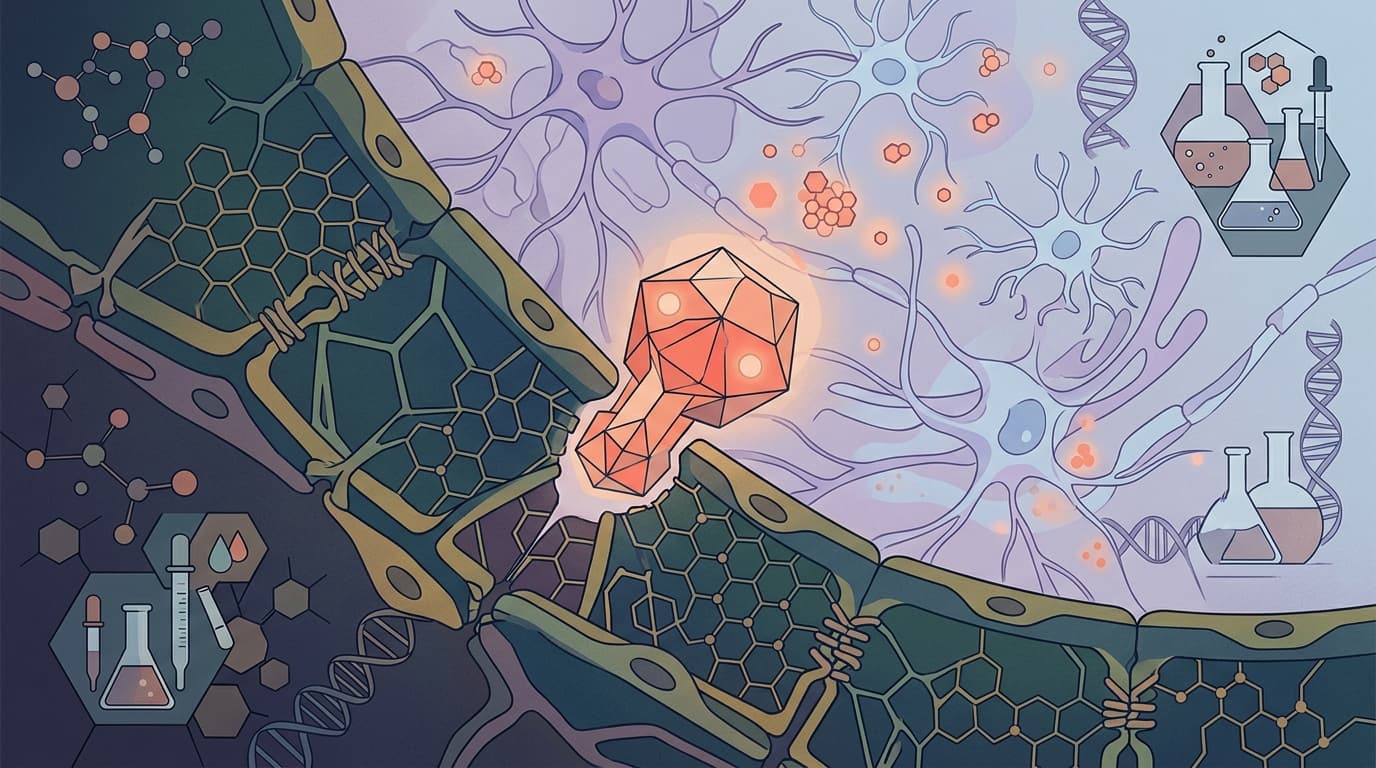

For 20 years, Hunter syndrome patients had a treatment that helped their bodies but couldn't reach their brains. Denali Therapeutics just changed that with the first enzyme replacement therapy engineered to cross the blood-brain barrier, and the FDA approved it early.
For nearly two decades, kids with Hunter syndrome had a treatment that could help their bodies but couldn't touch their brains. That just changed.
On March 25, 2026, the FDA granted accelerated approval to Avlayah (tividenofusp alfa) from Denali Therapeutics, making it the first enzyme replacement therapy designed to cross the blood-brain barrier for Hunter syndrome. The approval came eleven days ahead of the PDUFA target date of April 5, which is the FDA equivalent of your professor handing back your exam early. Usually a good sign.
Hunter syndrome (mucopolysaccharidosis type II, or MPS II) is a rare genetic disorder that predominantly affects boys. Their bodies can't produce enough of an enzyme called iduronate-2-sulfatase, which is responsible for breaking down certain sugars called glycosaminoglycans. Without it, those sugars pile up in cells like trash in a house where nobody takes out the garbage.
The damage is systemic: joints stiffen, livers enlarge, airways narrow, hearts strain. But for about two-thirds of patients, the most devastating effects hit the brain. Kids with the severe form experience developmental regression, cognitive decline, and behavioral changes, often diagnosed between ages 2 and 4.
Since 2006, patients have had access to idursulfase (brand name Elaprase, made by Takeda), an enzyme replacement therapy administered weekly via IV infusion. It works reasonably well for peripheral symptoms. The problem? It can't get into the brain. The blood-brain barrier, which protects your central nervous system from pathogens and toxins, also blocks therapeutic proteins from entering. Think of it as the world's most effective bouncer: great at keeping bad stuff out, terrible at letting helpful stuff in.
For families watching their children regress neurologically while receiving a treatment that only addresses half the disease, this has been an agonizing limitation.
Denali's solution is elegantly simple in concept, even if the engineering was anything but. Avlayah takes the same type of enzyme (IDS) and fuses it to what the company calls a "Transport Vehicle," a molecular tag that binds to the transferrin receptor on brain blood vessel cells.

MIT and Recursion just open-sourced an AI model that predicts drug binding as accurately as the gold standard, but 1,000 times faster. It could reshape how the entire industry screens for new medicines.


Join thousands of biotech professionals who start their day with our free, daily briefing.

Transferrin receptors are like delivery docks that brain cells use to import iron. Denali essentially disguised their enzyme as a delivery truck carrying iron, tricking those docks into shuttling the therapy across the blood-brain barrier through a natural process called receptor-mediated transcytosis. Once inside, the enzyme gets to work clearing out the sugar buildup that's been damaging neurons.
It's the biotech equivalent of putting on a FedEx uniform to get past building security. Except, you know, with rigorous FDA oversight.
The approval rests on a Phase 1/2 trial of 47 pediatric patients ranging from 3 months to 13 years old, including kids who'd never received treatment and those switching from Elaprase. The headline number: 93% of treated patients (41 out of 44) had their cerebrospinal fluid heparan sulfate levels drop to within the normal range by week 24.
To appreciate how dramatic that is, consider the average reduction across all participants: over 90% by week 24. Urine heparan sulfate dropped by about 88% in the same timeframe.
Beyond the biomarker data, researchers observed improvements or stabilization in adaptive behavior and cognitive scores, better hearing thresholds, and normalized liver volume.
On the safety side, the drug was generally well tolerated. The most common side effects were mild to moderate infusion-related reactions that decreased over time, along with anemia and vomiting.
If you noticed the word "accelerated" in front of approval, that's an important qualifier. The FDA approved Avlayah based on a surrogate endpoint (CSF heparan sulfate reduction) that's "reasonably likely to predict clinical benefit" rather than proven long-term outcomes.
Translation: the biomarker data looks convincing, but Denali still needs to prove the drug delivers meaningful real-world improvements. That proof is supposed to come from the Phase 2/3 COMPASS trial, a randomized study comparing Avlayah head-to-head against Elaprase. Cohort A enrollment is complete, and Cohort B is still enrolling.
Accelerated approvals have been under increasing scrutiny lately. The FDA has gotten more aggressive about pulling drugs that fail their confirmatory trials. So while this is a genuine milestone, the clock is ticking for Denali to deliver definitive clinical evidence.
The real story here isn't just one rare disease. It's the technology platform underneath it.
Denali's Transport Vehicle isn't a one-trick pony. The company is applying the same transferrin receptor approach to Sanfilippo syndrome (with a potential BLA filing in 2027) and Pompe disease. If the platform works broadly, Denali could become the go-to company for getting large molecules past the blood-brain barrier, a problem that has stumped drug developers for decades.
The approval also came with a Rare Pediatric Disease Priority Review Voucher, which Denali can sell to another company (these typically fetch $100 million or more) or use to fast-track one of its own future drugs through FDA review.
For a company whose stock has been a rollercoaster over the past few years, 2026 is shaping up to be a defining chapter. CEO Ryan Watts has called this a pivotal year, and the early approval suggests the FDA agreed that the evidence was strong enough not to wait.
For families in the U.S. dealing with Hunter syndrome, this approval represents something that didn't exist before: a treatment that can actually reach the brain. The commercial path won't be straightforward; Denali is essentially competing to switch patients from an established therapy, and reimbursement for ultra-rare disease drugs is always complicated.
But the science is real, the data is striking, and the platform behind it could reshape how we think about treating brain diseases. Sometimes the most important breakthroughs don't come from blockbuster markets. They come from solving problems everyone else said were impossible.
GSK raided Sanofi's bench to grab a 25-year vaccine veteran with 20-plus regulatory approvals under his belt. With mRNA rivals closing in fast, the timing tells you everything about how seriously GSK is taking the fight.