
GSK is launching five Phase 3 trials simultaneously for a gynecologic cancer ADC that posted a 62% response rate in heavily pretreated ovarian cancer patients. It's the company's boldest oncology bet in years, and it's targeting a space the biggest ADC players have mostly ignored.
Cancer drugs that actually hit their targets are the holy grail of oncology. But building one that delivers a toxic payload directly to tumor cells, like a guided missile with a warhead, is brutally difficult. Most companies play it safe, chasing the same well-trodden targets in the same tumor types.
GSK just chose the opposite approach.
At the Society of Gynecologic Oncology Annual Meeting on April 12, GSK's head of oncology R&D, Hesham Abdullah, called mocertatug rezetecan (nicknamed Mo-Rez) a "priority asset with blockbuster potential." The company is launching five global pivotal Phase 3 trials in 2026, targeting gynecologic cancers that carry some of the worst survival odds in oncology.
Those five trials span platinum-resistant ovarian cancer, second-line endometrial cancer, platinum-sensitive ovarian cancer, front-line HR-proficient ovarian cancer, and first-line endometrial cancer. Two are already underway, with three more coming in the next few months.
For a company historically known for respiratory drugs and vaccines, that's a seismic shift. CEO Luke Miels framed the move as an act of "scientific courage," which is corporate-speak for: we know this is risky, and we're doing it anyway.
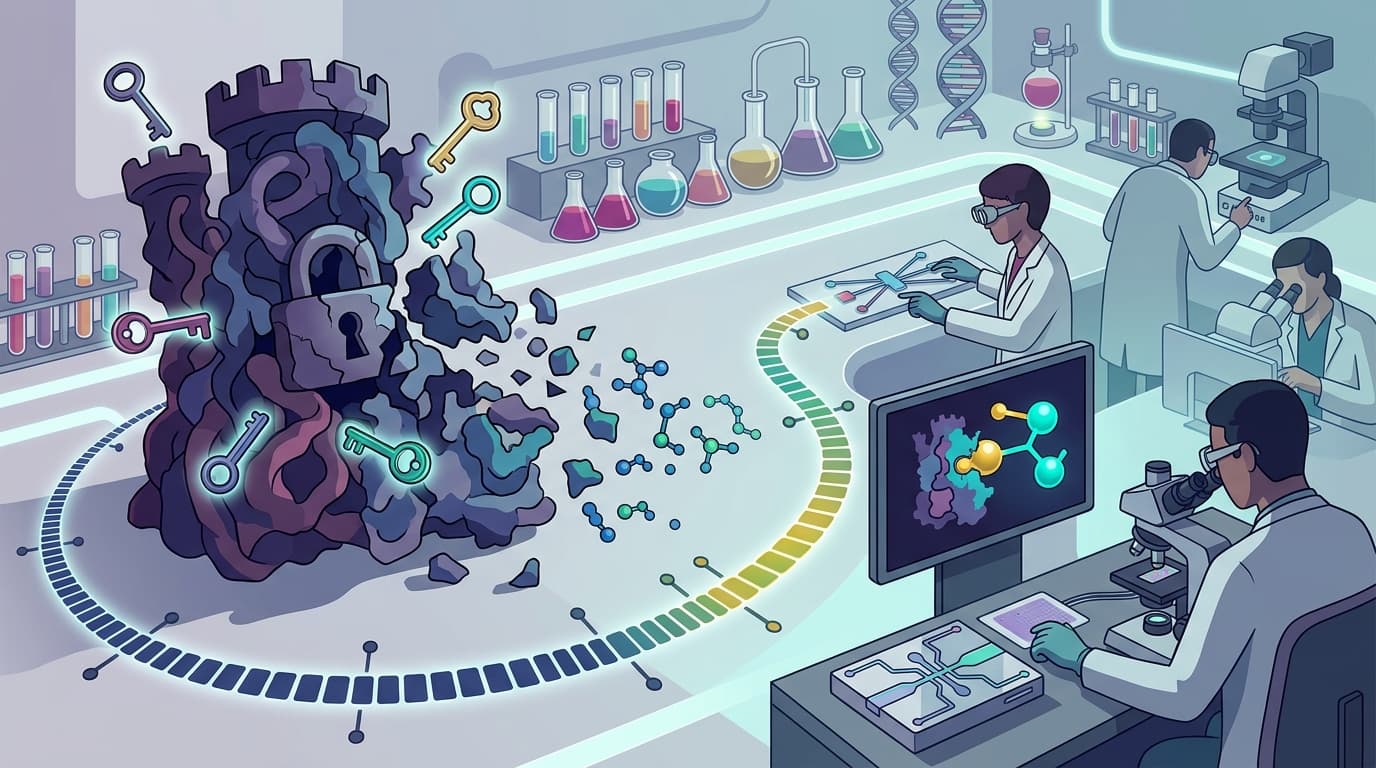
Mo-Rez is an antibody-drug conjugate, or ADC. Think of it like a biological smart bomb: an antibody finds the tumor cell, locks on, and delivers a cytotoxic (cell-killing) payload directly inside it. The target here is B7-H4, a protein that's overexpressed in ovarian and endometrial cancers.
The early results from the Phase 1b BEHOLD-1 trial are what gave GSK the confidence to go big. Among 34 patients with platinum-resistant ovarian cancer (a notoriously hard-to-treat population), 62% saw their tumors shrink by at least 30%. These weren't early-stage patients either; more than half had already failed two or more prior treatments.
In endometrial cancer, the numbers were even more eye-catching. Twelve patients at a slightly lower dose posted a . For context, five-year survival rates in these populations hover around 20-30%. Any response rate above 50% in that setting turns heads.

For 40 years, the RAS protein was cancer research's most infamous failure: too smooth, too stubborn, too "undruggable." Revolution Medicines just posted Phase 3 results that nearly doubled survival in pancreatic cancer patients, and the implications go far beyond one drug.


Join thousands of biotech professionals who start their day with our free, daily briefing.

Perhaps most importantly, the safety profile looked manageable. Interstitial lung disease (ILD), the toxicity boogeyman that haunts ADC development, showed up in only about 4% of patients.
If ADCs are the hottest modality in oncology right now, gynecologic cancers are one of the least crowded arenas to deploy them.
The biggest ADC players have been fighting over breast cancer, lung cancer, and blood cancers for years. Daiichi Sankyo and AstraZeneca's Enhertu is the top-selling ADC on the market, driven mostly by HER2-positive breast and lung cancers. Gilead's Trodelvy has carved out its own territory in breast cancer. Pfizer, Roche, and others are piling in.
But gynecologic cancers? That's relatively open field. By targeting B7-H4, GSK sidesteps the slugfest and goes after a patient population desperate for better options. It's the biotech equivalent of zigging when everyone else zags.
The global ADC market is projected to reach somewhere between $25 billion and $32 billion by the early 2030s, depending on which forecast you trust. GSK doesn't need to win the whole market. It just needs to own a meaningful corner of it.
Mo-Rez isn't GSK's only card in the ADC deck. The company has been quietly assembling an entire portfolio.
Blenrep (belantamab mafodotin) targets BCMA in multiple myeloma and is already on the market. Risvutatug rezetecan, a B7-H3-targeted ADC also licensed from Hansoh Pharma, is heading toward pivotal trials in small-cell lung cancer with clinical trials expected to start mid-2026. And in October 2025, GSK agreed to a deal worth up to $357 million (including milestones) to acquire a preclinical ADC from Syndivia targeting metastatic castration-resistant prostate cancer, a market set to double as prostate cancer cases are projected to reach 2.9 million annually by 2040.
The strategy is what GSK calls a "two-speed" approach: broad sourcing at the discovery level, selective bets on high-potential assets further along. It's less "throw everything at the wall" and more "pick your shots carefully, then swing hard."
The company has identified 14 scale innovation opportunities expected to launch before 2031, each with peak annual sales potential exceeding £2 billion.
ADC development is littered with expensive failures. The technology is elegant in theory but punishing in practice. Getting the right antibody, the right linker chemistry, the right payload, and the right drug-to-antibody ratio is like tuning a four-part harmony where one wrong note can be fatal (sometimes literally).
Aggregation issues can wreck manufacturing at scale. Toxicity profiles can shift dramatically between Phase 1 and Phase 3. And competitive intensity in the broader ADC space is ferocious; AstraZeneca committed $1.5 billion in late 2024 just to build a single commercial-scale ADC manufacturing facility in Singapore.
GSK's oncology business showed real momentum in Q4 2025, with 42% growth in oncology revenue and 17% growth across Specialty Medicines overall. But translating early-phase excitement into late-stage success is where most ADC stories fall apart.
GSK is making its boldest oncology bet in years, and it's doing it in cancers that most big pharma companies have overlooked. The Phase 1b data is genuinely impressive, particularly for populations with limited treatment options and grim survival statistics.
But five Phase 3 trials simultaneously? That's an enormous resource commitment and a signal that GSK believes Mo-Rez can be a franchise-defining asset, not just another pipeline entry. Abdullah described a "data-driven approach" with consistent efficacy and safety from two independent datasets justifying the rapid expansion.
Whether "scientific courage" translates into commercial success won't be clear for a couple of years. For now, though, GSK has made one thing unmistakable: it wants to be a major player in the ADC wars, and it's betting gynecologic oncology is the battlefield where it can win.
Seaport Therapeutics and Hemab Therapeutics both filed $100 million IPOs on the exact same day, targeting depression and rare bleeding disorders respectively. Their simultaneous filings say a lot about where the biotech IPO market stands in Q2 2026.