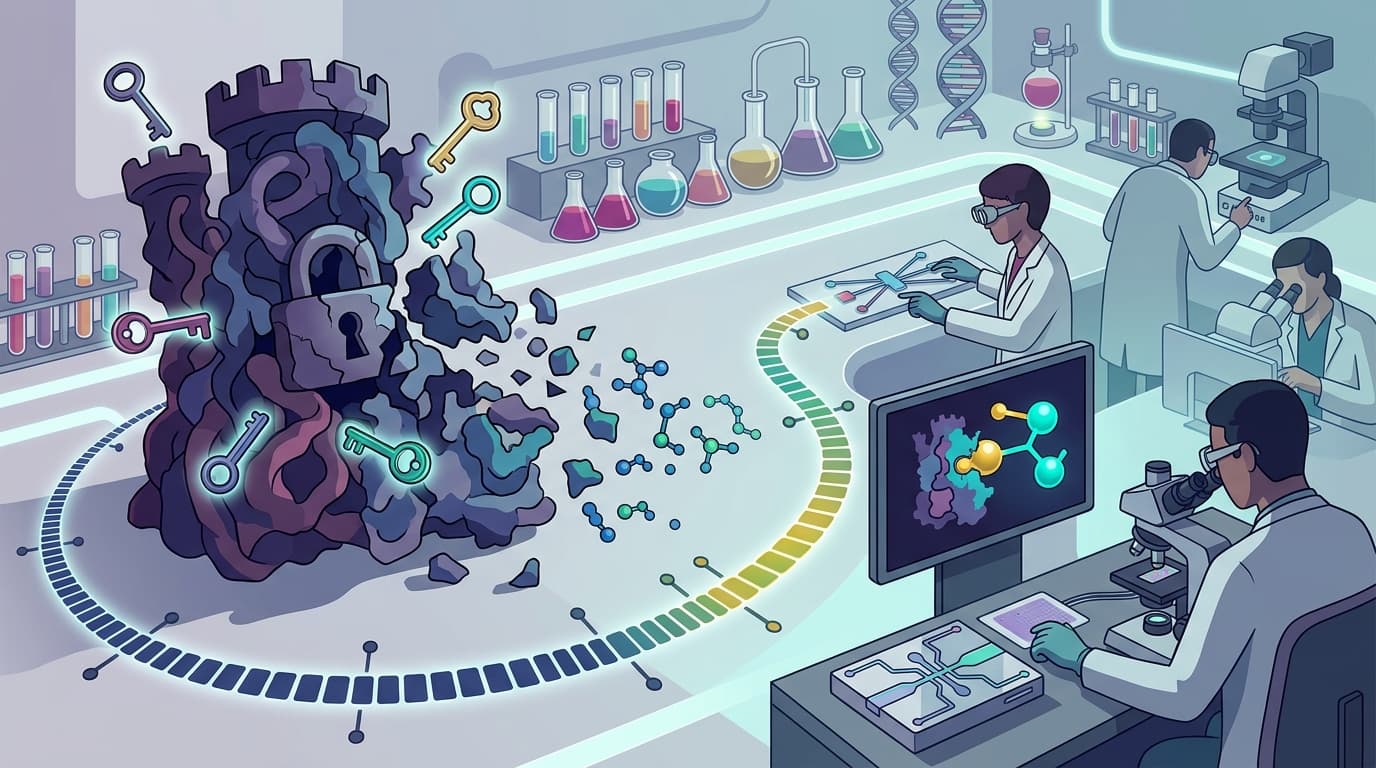

Seaport Therapeutics and Hemab Therapeutics both filed $100 million IPOs on the exact same day, targeting depression and rare bleeding disorders respectively. Their simultaneous filings say a lot about where the biotech IPO market stands in Q2 2026.
On April 10, 2026, two biotech companies filed their S-1 registration statements. Seaport Therapeutics wants to tackle depression. Hemab Therapeutics is going after rare bleeding disorders. They've never shared a conference panel, let alone a business strategy. But they both looked at the IPO window on the same Friday and thought: now or never.
That's not random. That's a signal.
Both companies are targeting $100 million raises on the Nasdaq, and both sit at that clinical sweet spot investors love: far enough along to show real data, early enough to offer massive upside. The simultaneous filings tell us something important about the biotech market right now, and it's mostly good news.
Biotech IPOs have been on a quiet comeback tour. In Q1 2026, biopharma companies raised $1.7 billion through IPOs, the highest quarterly total since 2021. The median raise per company hit $287.5 million, more than double what companies were pulling in early 2025.
But the market isn't handing out golden tickets to everyone. Nearly every successful Q1 offering had drugs in mid- or late-stage clinical development, significant venture backing, and a focus on hot therapeutic areas. No preclinical-stage company has gone public since 2024. Think of it like a nightclub with a very selective bouncer: you need the right outfit, the right connections, and ideally some proof you belong inside.
Analysts expect 30 to 35 biotech IPOs for the full year. As Milestone Advisors' Lane put it, "without a doubt, overall demand for services such as ours is representative of the idea that there's going to be a much stronger IPO market this year." The appetite is there. The question is whether Seaport and Hemab have enough on the menu.
Seaport Therapeutics has one of the more compelling origin stories in recent biotech. The company was founded in 2024 by Daphne Zohar and Steven M. Paul, M.D., the same duo behind Karuna Therapeutics. If that name rings a bell, it should: Bristol Myers Squibb bought Karuna for . These founders have done this before, and investors noticed. Seaport's Series A was oversubscribed at $100 million, co-led by ARCH Venture Partners and Sofinnova Investments. A $225 million Series B followed.

For 40 years, the RAS protein was cancer research's most infamous failure: too smooth, too stubborn, too "undruggable." Revolution Medicines just posted Phase 3 results that nearly doubled survival in pancreatic cancer patients, and the implications go far beyond one drug.


Join thousands of biotech professionals who start their day with our free, daily briefing.

The company's secret sauce is its Glyph platform, which works a bit like rerouting a package through a different shipping lane. Most oral drugs get broken down in the liver before they can do much good (that's called first-pass metabolism). Glyph sends drugs through the lymphatic system instead, like dietary fats do, boosting how much active drug actually reaches the brain while cutting side effects.
Seaport's lead candidate, GlyphAllo, is in Phase 2b testing for major depressive disorder. The depression market is enormous and crowded, with up to 50% of patients getting inadequate relief from standard antidepressants. Novel mechanisms are in high demand: NMDA antagonists as a class already hold over 40% of treatment-resistant depression revenue, and psychedelic-based therapies are advancing through Phase 3 trials. Seaport is betting that neurosteroids delivered through its Glyph platform can carve out meaningful share in a market projected to exceed $2 billion.
Goldman Sachs, J.P. Morgan, Leerink Partners, Citi, and Stifel are running the books. The proposed ticker? SPTX.
Hemab Therapeutics is solving a very different problem, but with equally sharp focus. The company develops antibody-based therapies for rare inherited bleeding disorders, the kind of conditions where patients can bleed severely from a minor bump because their blood simply can't clot properly.
Their lead drug, sutacimig, targets Glanzmann thrombasthenia, a rare condition caused by faulty platelet receptors. Imagine your blood cells are trying to form a clot, but the velcro that's supposed to hold them together is missing. That's Glanzmann. Sutacimig is designed to restore that sticking ability, and it's already completed Phase 2 with positive results. The IPO proceeds will fund a Phase 3 registration study, which is the final step before seeking approval.
Hemab also has a second program, HMB-002, in Phase 1/2 for Von Willebrand disease, another bleeding disorder with limited treatment options.
The company isn't exactly strapped for cash. Hemab has raised funding across seed, Series A, Series B, and a $157 million Series C in October 2025. Backers include Novo Holdings (which helped create the company in 2020), Sofinnova Partners, RA Capital, and a sovereign wealth fund. Goldman Sachs, Jefferies, Evercore ISI, and Wedbush PacGrow are managing the offering under the ticker COAG (as in coagulation; someone on the naming committee deserves a raise).
On paper, these companies couldn't be more different. Seaport is chasing a massive, competitive market in depression with a platform play. Hemab is pursuing ultra-rare diseases where the patient populations are small but the unmet need is enormous and competition is thin.
But they share a profile that Wall Street has been rewarding: clinical-stage programs with real human data, experienced leadership, strong venture syndicates, and clear paths to pivotal trials. That's the formula that's been working in 2026's selective IPO market.
The bigger picture matters too. Q1's $1.7 billion haul was impressive, but performance has been mixed once companies start trading. Platform-oriented biotechs that priced lucrative IPOs have, in some cases, slipped below their offering price. Product-focused companies with single validated programs have fared better. Hemab, with its rare disease focus and Phase 3-ready asset, fits the latter mold. Seaport, with its platform technology and broader pipeline ambitions, is testing whether the market will pay for bigger visions.
Neither company has set a price range or share count yet. Both filings note that completion depends on market conditions, which is standard legal language but also genuinely true in a market rattled by geopolitical concerns and FDA leadership turnover.
For Seaport, the key catalyst is the Phase 2b readout for GlyphAllo. Positive results would validate the entire Glyph platform and potentially unlock the value of their anxiety and CNS pipeline behind it. For Hemab, the Phase 3 trial for sutacimig in Glanzmann thrombasthenia is the main event, with registration data that could put them on a path to approval in a space with very few competitors.
Two companies, two diseases, one shared bet: that public investors are ready to fund the next generation of biotech innovation. The IPO window is open. The question is how long it stays that way.
IDEAYA Biosciences just dropped uveal melanoma trial data that more than doubled progression-free survival in patients who had almost no treatment options. Wall Street loved it, an FDA filing is coming, and a half-billion-dollar partnership is fueling what comes next.