
Gilead just agreed to pay $3.15 billion (and up to $5 billion total) for a Munich startup most people have never heard of. Tubulis' "guided missile" cancer drugs caught Gilead's eye with a 59% response rate in hard-to-treat ovarian cancer, and the deal says everything about where oncology is headed.
Back in late 2024, Gilead Sciences took Tubulis out for coffee. The two companies signed a modest partnership: $20 million upfront, $415 million in milestones, a chance to kick the tires on Tubulis' antibody-drug conjugate (ADC) technology. It was a low-key first date.
Eighteen months later, Gilead just proposed. And it brought a $3.15 billion engagement ring.
The Foster City pharma giant announced Monday that it will acquire Tubulis, a Munich-based ADC developer, for $3.15 billion in upfront cash. Tack on up to $1.85 billion in milestone payments, and the total deal could reach $5 billion. For a company that most people outside oncology circles have never heard of, that's a staggering price tag.
So what exactly is Gilead buying, and why is it willing to pay this much?
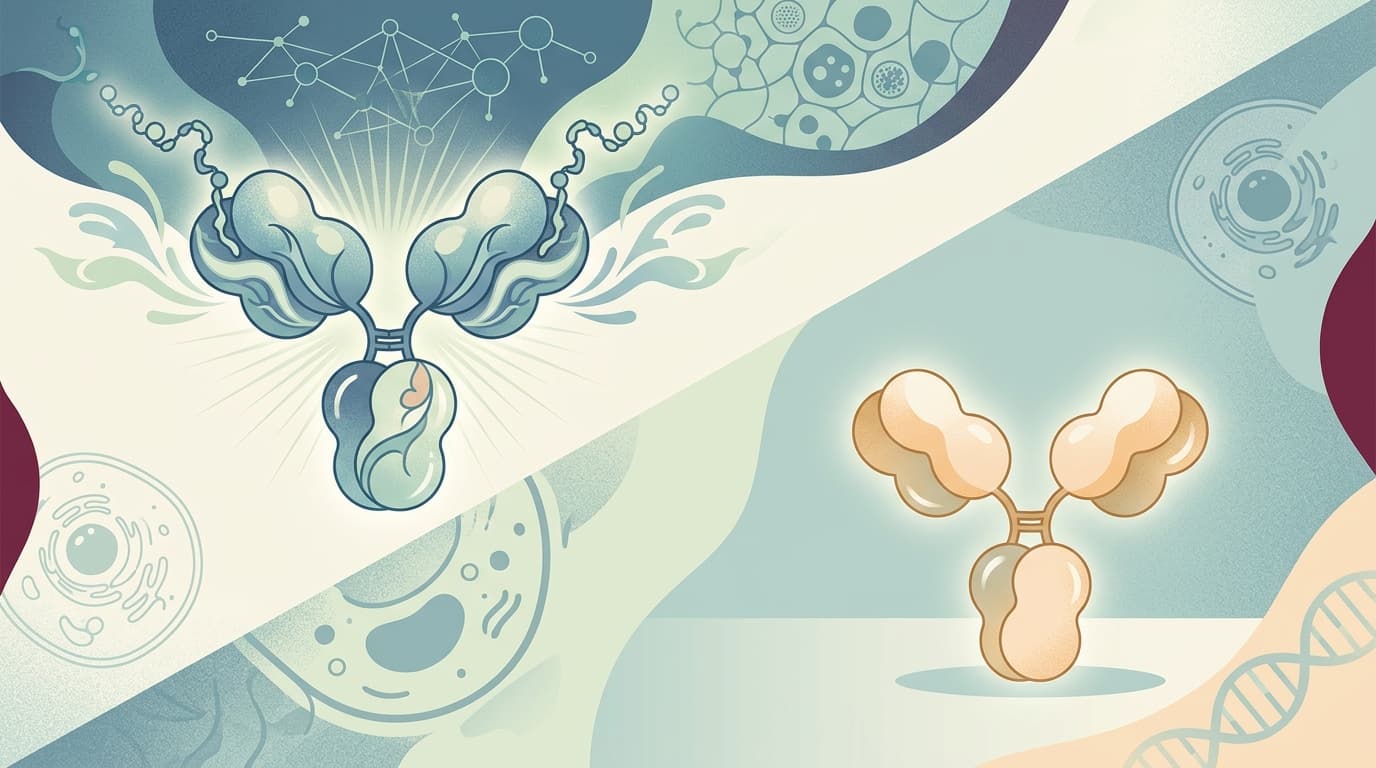
To understand the hype, you need to understand ADCs. Think of them as guided missiles for tumors. A regular chemotherapy drug is like carpet-bombing a city to take out one building: it kills cancer cells, but it also destroys a lot of healthy tissue along the way. An ADC, by contrast, is a smart bomb. It attaches a toxic payload to an antibody that only locks onto cancer cells, delivering the poison directly where it's needed.
The concept has been around for decades, but the engineering was always tricky. The linker connecting the antibody to its payload would sometimes break apart too early, releasing the drug in the wrong place. Or the payload wasn't potent enough. Or the antibody couldn't find its target reliably.
Tubulis claims to have solved several of these problems. Its proprietary platform technology (called Tubutecan/P5) creates ADCs with better stability and precision. The company's lead candidate, TUB-040, targets a protein called NaPi2b that's found on the surface of ovarian cancer and non-small cell lung cancer cells.
And the early clinical data? Pretty compelling.

Sanofi's bispecific antibody lunsekimig crushed its respiratory trials in asthma and nasal polyps, then face-planted in eczema. The split verdict reveals why building one drug to rule multiple diseases is biotech's hardest trick.

Join thousands of biotech professionals who start their day with our free, daily briefing.
In a Phase I/IIa trial, TUB-040 showed a 59% overall response rate in patients with platinum-resistant ovarian cancer. That's the kind of cancer that has already stopped responding to standard treatment, which makes a 59% response rate genuinely remarkable. The FDA agreed: it granted TUB-040 Fast Track designation, a signal that regulators see enough promise to expedite the review process.
Tubulis also has a second candidate in the clinic, TUB-030, which targets a different protein (5T4) in solid tumors. Details on that program are thinner, but the pipeline gives Gilead more than just a one-trick pony.
Perhaps most importantly, Gilead isn't just buying molecules. It's buying a research engine. After the deal closes (expected in Q2 2026), Tubulis will continue operating in Munich as Gilead's dedicated ADC research hub. The entire team stays, the labs stay, and the innovation factory keeps running.
Tubulis' origin story reads like a biotech fairy tale. The company was spun out of academic labs in Berlin and Munich in 2019 by a group of scientists, including CEO Dominik Schumacher, a PhD who won MIT's Innovators Under 35 award in 2018. He was under 40 and running a startup with a novel idea about making ADCs more stable.
The funding escalated quickly. A €10.7 million Series A. A €60 million Series B in 2022. A massive €308 million Series C in October 2025. In just five years, Tubulis went from a handful of academic founders to one of Europe's most valuable private biotech companies.
Gilead is paying for the whole thing with cash on hand and senior unsecured notes. No equity dilution for shareholders. When you have Gilead's balance sheet, $3.15 billion is a rounding error disguised as a strategy shift.
Gilead isn't making this bet in a vacuum. The ADC market is on fire. Six different ADC products crossed the $1 billion in annual sales threshold in 2025. Market analysts project the space could nearly triple in size over the next decade, with estimates ranging from $17 billion to $39 billion by the early 2030s.
The deal-making frenzy reflects this momentum. Glenmark scooped up global rights to a HER2-targeting ADC from China's Hengrui. Gilead itself spent $21 billion acquiring Immunomedics back in 2020 to get Trodelvy, its first major ADC. Then came the $7.8 billion Arcellx acquisition and the $2 billion-plus Ouro Medicines deal, both in recent years.
But the Tubulis purchase tells a more nuanced story. Gilead's first ADC bet, Trodelvy, hit some turbulence: the company had to pull it from bladder cancer and watched it fail in non-small cell lung cancer. Those setbacks made it clear that first-generation ADC technology had limits. Tubulis represents the next generation, with better linker chemistry and more precise targeting.
Zoom out and a clear strategy takes shape. Gilead, long known as an antiviral powerhouse (think Sovaldi for hepatitis C, Veklury for COVID), has been methodically reinventing itself as an oncology company. The playbook is acquisitions: buy proven technology, integrate the teams, scale it with Gilead's commercial muscle.
The Tubulis deal follows that script perfectly. A young European biotech with genuinely differentiated science. Clinical data strong enough to justify Fast Track status. A platform that can generate multiple candidates, not just one drug. And a price that, while eye-popping in absolute terms, is standard fare in a market where validated ADC assets command enormous premiums.
The big question now is execution. Can Gilead push TUB-040 through pivotal trials and across the finish line? The 59% response rate in platinum-resistant ovarian cancer is promising, but Phase 1/2 data and registration-quality Phase 3 data are very different animals. Plenty of drugs look great in small trials and stumble when tested in larger, more diverse populations.
Then there's the integration challenge. Keeping Tubulis' Munich operations intact as an innovation hub sounds great in a press release. Actually preserving the scrappy startup culture inside a $100 billion-plus pharma company? That's harder than it looks. Just ask anyone who's watched a Big Pharma acquisition slowly smother the company it bought.
But if Gilead can thread that needle, it will have something most of its competitors would kill for: a next-generation ADC platform with clinical proof of concept, a built-in research team, and the financial muscle to run multiple programs simultaneously.
For Tubulis' founders, the journey from a 2019 academic spinout to a $5 billion exit in seven years is the kind of outcome that makes every grad student with a good idea start drafting a business plan. For Gilead, it's a calculated bet that the future of cancer treatment looks a lot like a guided missile.
A computer just designed a new opioid addiction drug that doesn't touch opioid receptors at all. GATC Health's AI-generated candidate is heading into human trials, and it could signal a turning point for a field that's been stuck for decades.