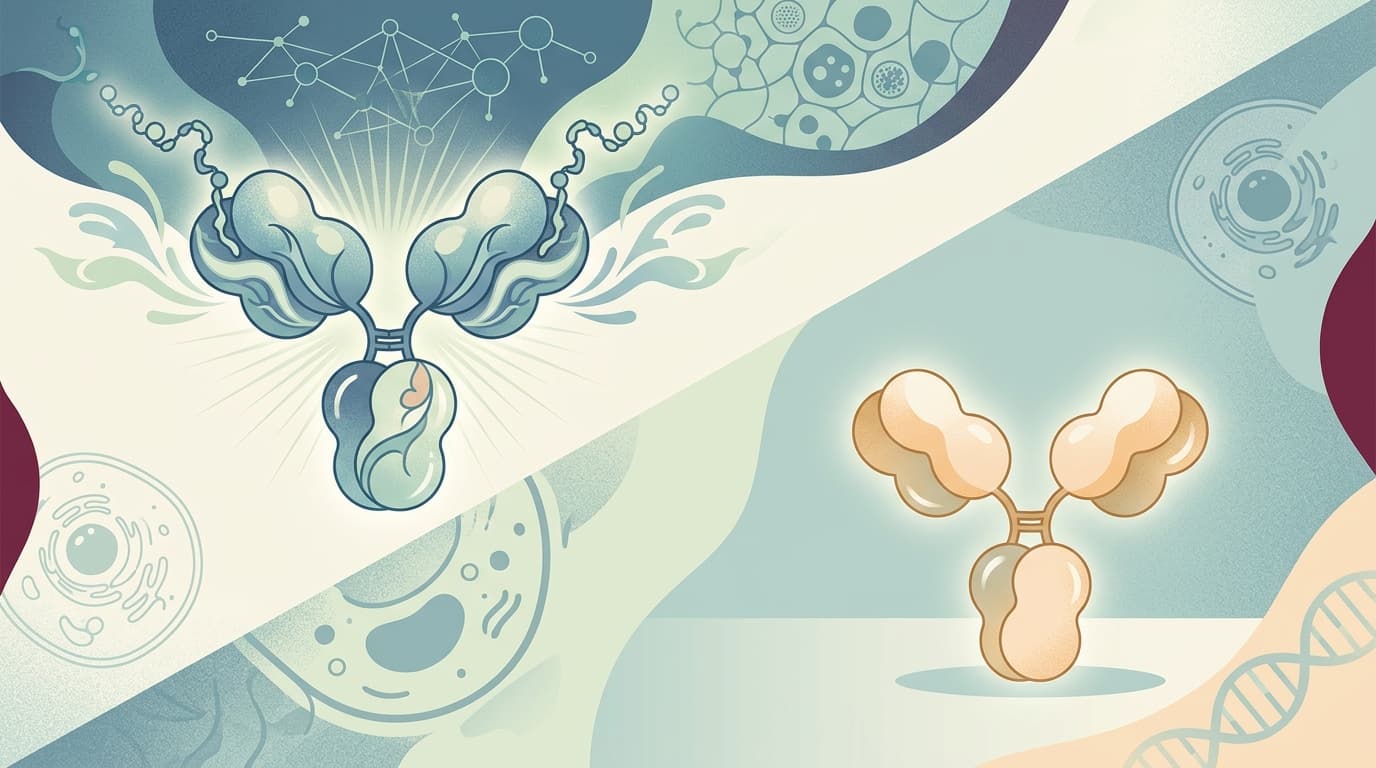

Biogen's newest deal isn't about a single drug; it's about fixing the delivery problem that's been holding back an entire class of genetic medicines. Alloy Therapeutics' shape-shifting ASO platform claims 50x better potency, and Sanofi already placed a $427M bet on it.
Imagine ordering a life-saving package, but the postal service loses it inside your own house. That's essentially what happens with antisense oligonucleotides (ASOs), short strands of synthetic genetic material designed to silence disease-causing genes. Scientists can build them. They just can't reliably get them where they need to go inside cells.
ASOs work by latching onto faulty RNA messages and shutting them down before they make harmful proteins. Think of them as molecular interceptors. The concept is elegant. The execution? That's where the whole field has been stuck for years. Most ASOs get swallowed by cells, trapped in tiny compartments called endosomes, and then chewed up before they ever reach their target. It's like mailing a letter that keeps getting rerouted to the shredder.
Biogen knows this problem intimately. The company helped bring Spinraza to market for spinal muscular atrophy and tofersen for ALS, both ASO therapies developed with Ionis Pharmaceuticals. Those drugs work, but delivering them beyond the liver and spinal fluid remains brutally difficult. Biogen bet that a company called Alloy Therapeutics might have cracked the code.
The deal centers on Alloy's AntiClastic™ platform, a technology that reshapes how ASOs are physically structured. Traditional ASOs are straight, linear molecules. Alloy's approach twists them into temporary cyclic (ring-like) shapes with modifications at one end.
Why does shape matter? Because biology is obsessed with shape. A circular ASO resists the enzymes that chew up linear ones. It slips into cells more easily. It avoids triggering the immune system's alarm bells. And in lab tests, Alloy's platform has shown up to 50-fold improved potency compared to conventional designs.
That's not a marginal improvement; it's the difference between whispering and shouting. If those numbers hold up in animals and eventually humans, this technology could make ASO drugs dramatically more effective at lower doses, which means fewer side effects and broader tissue reach.

Sanofi's bispecific antibody lunsekimig crushed its respiratory trials in asthma and nasal polyps, then face-planted in eczema. The split verdict reveals why building one drug to rule multiple diseases is biotech's hardest trick.

Join thousands of biotech professionals who start their day with our free, daily briefing.
Alloy didn't build this overnight. The platform launched in 2023 after licensing intellectual property from Arnay Sciences, developed in collaboration with Dr. Sudhir Agrawal. Since then, the company has been quietly racking up partnerships. Sanofi signed a deal worth up to $427.5 million in potential payments to use the AntiClastic™ platform for central nervous system targets, including crossing the blood-brain barrier. That's the kind of validation that turns heads in Cambridge boardrooms.
Under the multi-target collaboration and license agreement, Biogen gets to apply Alloy's platform across multiple undisclosed targets. Alloy receives an upfront payment, plus milestone payments and tiered royalties on any commercialized products. Neither company disclosed specific dollar figures.
The lack of financial transparency is frustrating but not unusual for early-stage platform deals. What matters more is the structure: Biogen isn't licensing one drug candidate. It's licensing a toolbox. That signals the company sees broad, pipeline-wide potential in Alloy's cyclic ASO approach.
Biogen's ASO ambitions extend well beyond its existing marketed drugs. The company is running a Phase II trial (called CELIA) for BIIB080, a tau-targeting ASO for Alzheimer's disease. Early data showed roughly 60% reduction in tau biomarkers across all dose groups, and Dr. Jeffrey Cummings has called its upcoming readout one of the most significant Alzheimer's clinical developments expected in 2026.
Meanwhile, Biogen has been investing heavily in manufacturing infrastructure. The company is pouring $2 billion into its Research Triangle Park facility in North Carolina, specifically to support ASO production, AI-driven automation, and sterile filling capabilities. Over 90% of Biogen's advanced medicines undergo U.S. manufacturing and testing across its domestic sites.
In May 2025, Biogen also signed a $46 million deal with City Therapeutics for RNA interference (RNAi) therapies, another flavor of nucleic acid medicine. Add the Alloy partnership to the mix, and a clear pattern emerges: Biogen is assembling an arsenal of next-generation genetic medicine tools. It's not just making ASO drugs; it's trying to own the delivery layer that makes them all work better.
The ASO market sits at roughly $2.18 billion in 2025 and is projected to reach $5.35 billion by 2032, growing at 13.4% annually. That growth depends almost entirely on solving the delivery problem. Personalized medicine accounted for 42% of ASO clinical trials in 2024, and rare diseases remain the primary beachhead, but oncology and neurology applications could blow the market wide open if drugs can reach tissues beyond the liver.
Right now, the field's biggest successes all share a limitation: they either target the liver (where bioconjugate delivery works well) or require direct injection into the spinal fluid (like Spinraza). Getting ASOs into the brain through a simple injection, or targeting muscle, kidney, or tumor tissue with precision, remains the holy grail.
Alloy's platform claims to address this with better intracellular access and demonstrated ability to cross the blood-brain barrier. If Biogen can validate those claims across multiple disease targets, the partnership could reshape how the company builds its entire pipeline for the next decade.
Analysts haven't weighed in specifically on the Alloy deal yet. The stock has been a complicated story, caught between aging franchises and pipeline bets that haven't fully matured.
A platform deal like this won't move the stock tomorrow. But if Alloy's technology delivers on its promise (and that Sanofi deal suggests someone with deep pockets thinks it will), it could quietly become one of the most important bets Biogen has made in years. The drugs of the future are only as good as the delivery systems that carry them. Biogen just bought itself a better mailman.
A computer just designed a new opioid addiction drug that doesn't touch opioid receptors at all. GATC Health's AI-generated candidate is heading into human trials, and it could signal a turning point for a field that's been stuck for decades.