Gilead paid $45 million for a cancer drug that hasn't been tested in a single patient. The preclinical molecular glue degrader deal with Kymera is small potatoes compared to Gilead's $13B+ oncology shopping spree, but the strategic signal about where pharma is headed is anything but small.
Most drugs that cost $45 million are at least, you know, drugs. They've been tested in animals. They've been filed with regulators. They've touched a patient somewhere.
KT-200 has done none of those things. It's a preclinical molecule, a chemical concept with promising lab data and a PowerPoint deck. And Gilead just wrote a check for it anyway.
That tells you something important about where Big Pharma thinks the future is headed.
This story actually starts a year ago. In June 2025, Gilead and Kymera Therapeutics signed an exclusive option-and-license agreement for a new type of cancer drug: an oral molecular glue degrader targeting a protein called CDK2. Gilead paid $40 million upfront just for the option to look under the hood.
Fast forward to April 2026. Gilead liked what it saw and exercised that option, triggering another $45 million payment to Kymera. Total cash received so far: $85 million. And the deal could be worth up to $750 million in milestones plus tiered royalties if everything goes right.
What did Gilead get? Exclusive global rights to develop, manufacture, and sell KT-200 and any related products. Kymera did the early discovery work; now Gilead takes the wheel for everything from IND-enabling studies (the final preclinical hurdles before human testing) to commercialization. The target: an IND filing in 2027, with a first-in-human trial to follow.
Kymera, meanwhile, becomes a passenger collecting milestone checks. Not a bad seat.
Imagine you want to get rid of a broken appliance in your house. A traditional drug is like unplugging it: the appliance stays there, it just stops working. A molecular glue degrader is more like calling the junk removal service. It doesn't just turn the protein off; it tags it for destruction and lets your cell's recycling machinery haul it away.
Here's how it works. The glue molecule lands on the surface of either the target protein or an E3 ubiquitin ligase (your cell's built-in trash-tagging system). Once it's there, it reshapes that surface to create a new connection between the target and the ligase. The ligase slaps a "destroy me" label on the target, and the cell's proteasome chews it up. The glue molecule then floats away and does it again, like a catalytic bounty hunter.

For the first time ever, a drug has been approved specifically to slow disability in progressive MS patients who don't have relapses. Sanofi's Cenrifki just rewrote the treatment playbook for hundreds of thousands of patients who had zero options, but a liver safety signal already killed its chances in the US.


Join thousands of biotech professionals who start their day with our free, daily briefing.
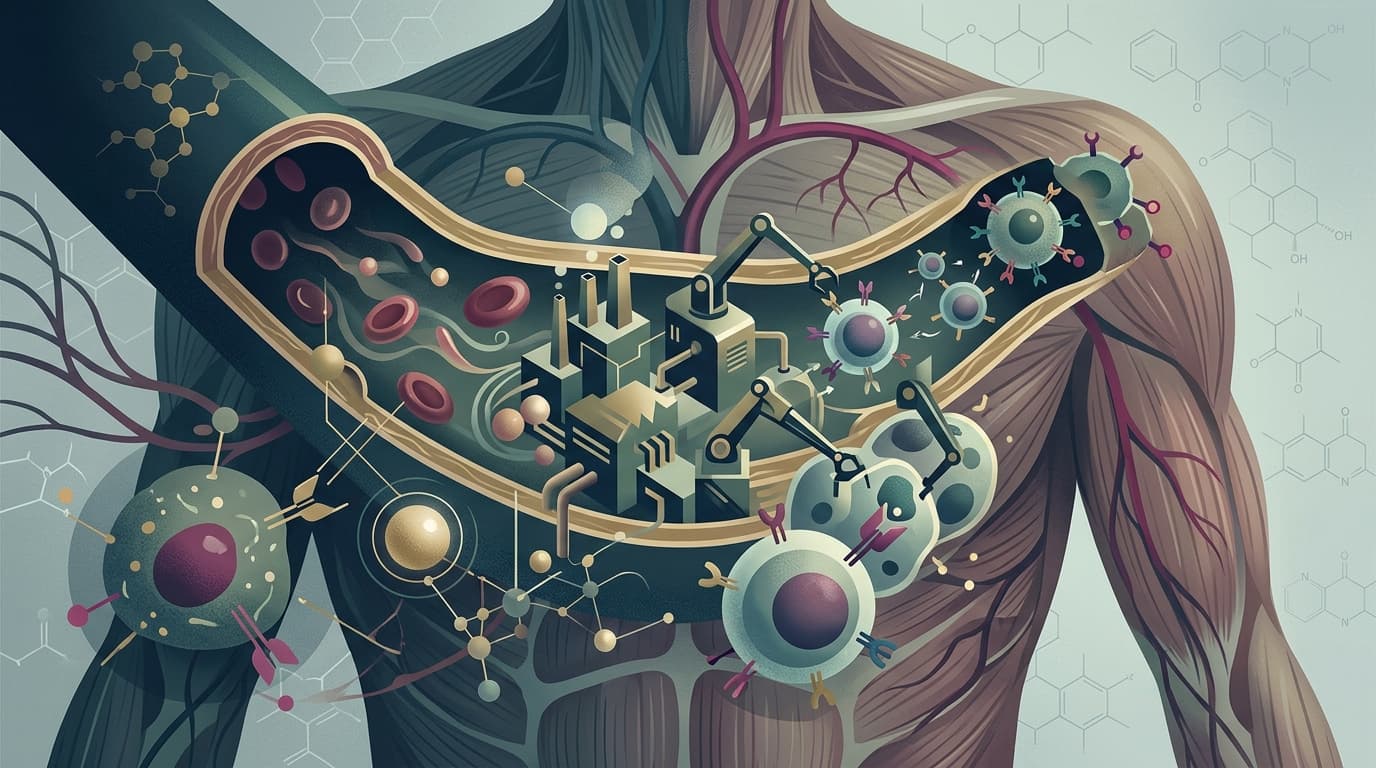
The beauty of this approach is size. Traditional protein degraders called PROTACs are big, clunky molecules (often over 800 daltons) that can be hard to turn into pills. Molecular glues are small, typically under 500 daltons, making them much easier to deliver orally. That matters enormously for cancer patients who'd rather swallow a pill than sit in an infusion chair.
CDK2 is a protein that helps cancer cells divide. It's especially active in breast cancer and other solid tumors driven by a genetic amplification called CCNE1. Pharma has tried to block CDK2 with traditional inhibitors before, but those drugs tend to also hit CDK1, a closely related protein your healthy cells need. The result: dose-limiting toxicity that forces doctors to back off before the drug can really work.
KT-200 takes a different approach. Instead of blocking CDK2's activity, it removes CDK2 entirely from the cell, while leaving CDK1 alone. Kymera's preclinical data showed low-nanomolar degradation of CDK2 (meaning it works at very low concentrations), activity in CCNE1-amplified cancer models, brain-penetrant potential, and a favorable safety profile. That selectivity is the whole pitch.
It's early days, no question. But the science is compelling enough that Gilead committed $85 million before a single patient has been dosed.
This deal doesn't exist in a vacuum. Gilead has been on an absolute acquisition tear in 2026, spending roughly $13 to $15 billion in headline deal value across multiple major transactions: Arcellx ($7.8 billion, for a next-gen CAR-T cell therapy in multiple myeloma), Tubulis (up to $5 billion, for a clinical-stage antibody-drug conjugate platform), and Ouro Medicines ($1.675 billion upfront plus up to $500 million in milestones, for a BCMA×CD3 T-cell engager in autoimmune diseases).
A clear pattern is emerging. Gilead partners first, then buys. Arcellx was a Kite collaborator before Gilead acquired it. Tubulis had a 2024 research deal before the 2026 buyout. Even the Kymera deal followed an option structure: pay a little to peek, pay more to commit.
Management has described the current pipeline as "the most robust and differentiated in the company's history." The message is unmistakable: Gilead is no longer just an HIV company. It's building a powerhouse across multiple technology pillars: cell therapy, antibody-drug conjugates, T-cell engagers, and now targeted protein degradation.
Gilead isn't the only one writing checks. The molecular glue space has exploded with partnering activity over the past 18 months.
Bristol Myers Squibb extended a major multi-program deal with Evotec in the molecular glue space. Novartis struck a collaboration with Monte Rosa valued at up to $5.7 billion. AbbVie partnered with Neomorph in a deal worth up to $1.64 billion, while Biogen signed its own Neomorph alliance at up to $1.45 billion. Merck KGaA, J&J, Eli Lilly: the list keeps growing.
This isn't a niche anymore. It's a mainstream modality.
Analysts are treating the Kymera deal as good news, not game-changing news. Leerink Partners analyst Thomas Smith called it further validation of Kymera's early-stage development capabilities. The consensus rating across 23 analysts sits at Strong Buy, with a mean price target around $119.
But that bullishness is driven more by Kymera's lead in-house program, KT-621 (an oral STAT6 degrader for atopic dermatitis and asthma heading into Phase 2), than by KT-200. The stock barely moved on the Gilead news, gaining about 0.25% on the day.
The market's message: the $45 million is nice validation and non-dilutive cash, but Kymera's real test is whether its own clinical programs can deliver the goods.
Forty-five million dollars for a preclinical molecule sounds like a lot. In the context of Gilead's $13+ billion spending spree, it's a rounding error. But the strategic signal is loud: Gilead believes molecular glue degraders are a real technology platform, not a science experiment.
If KT-200 works, it could offer breast cancer patients an oral pill that selectively eliminates a key tumor driver with fewer side effects than existing options. If it doesn't, Gilead is out less than the cost of a middling Super Bowl ad campaign.
For Kymera, the calculus is simple. They've banked $85 million from Gilead without spending a dime on late-stage development. They've got a partner with deep pockets running the expensive part. And they still have up to $665 million in milestones waiting down the road.
Not a bad return on a molecule that doesn't exist yet.
UCB is spending up to $1.15 billion on Neurona Therapeutics and its lab-grown brain cell therapy for drug-resistant epilepsy. The early clinical data is stunning, but the real test is just getting started.