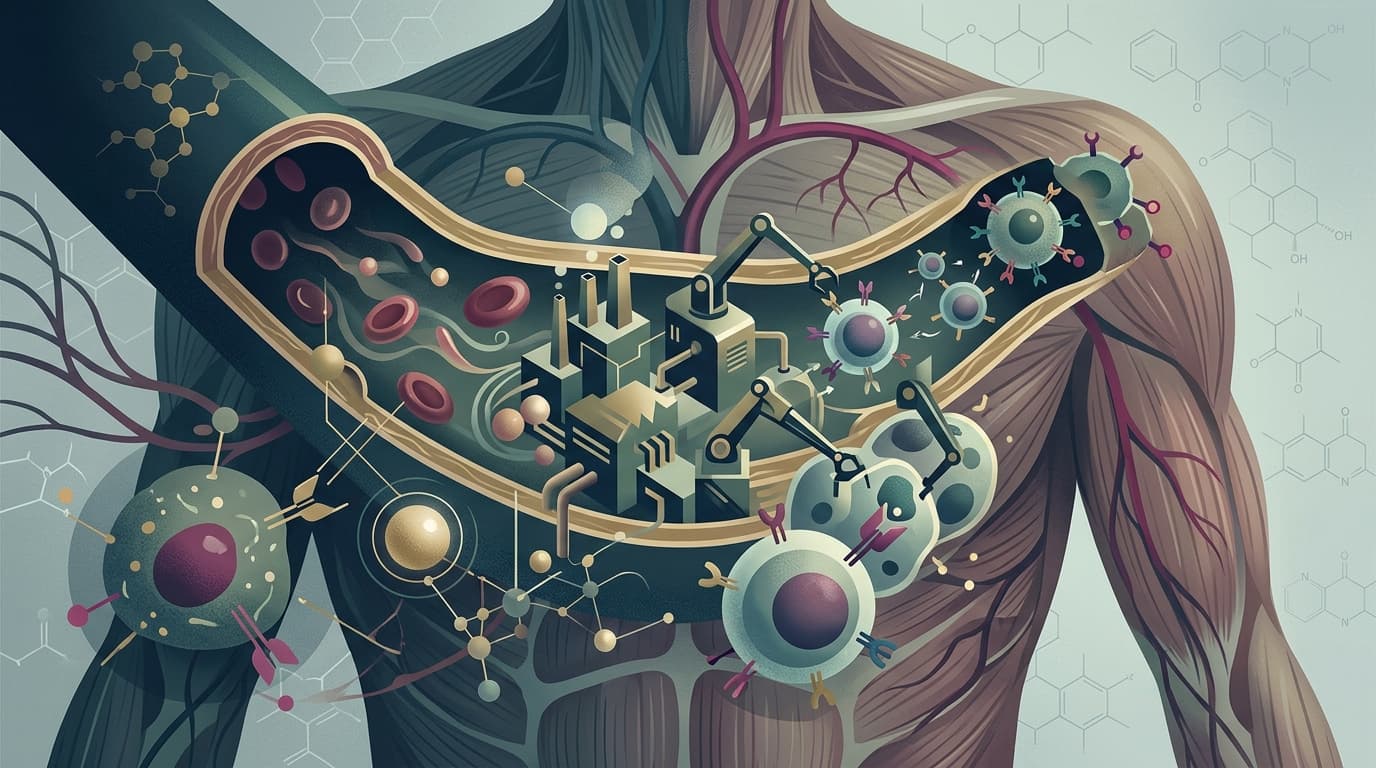

Moderna just entered the in vivo CAR-T race with a plan to reprogram your immune cells using a simple injection. If it works, it could turn autoimmune disease treatment from a million-dollar ordeal into something your local clinic could offer.
Right now, getting CAR-T therapy is a bit like ordering a custom suit from a tailor on another continent. Doctors pull your immune cells out, ship them to a factory, spend weeks engineering them to fight disease, then ship them back and infuse them. The whole process takes three to four weeks. It costs north of $500,000, sometimes over $1 million. And it can only happen at a handful of elite medical centers.
Moderna thinks there's a better way. What if, instead of all that, you could just get an injection?
Moderna just unveiled mRNA-6007, its first in vivo CAR-T program for autoimmune disease. The initial target: systemic lupus erythematosus (SLE), a chronic autoimmune condition where the immune system attacks the body's own tissues.
The concept is beautifully simple in theory, fiendishly hard in practice. Instead of extracting a patient's T cells and engineering them in a lab, Moderna wants to use its mRNA platform to reprogram immune cells while they're still inside the patient. The delivery vehicle: targeted lipid nanoparticles (tiny fat bubbles, basically) that carry mRNA instructions directly to immune cells. Those cells then temporarily produce a chimeric antigen receptor, or CAR, which is a protein that directs immune cells to hunt down and destroy specific targets.
In this case, the target is B cells gone rogue. In lupus and other autoimmune diseases, certain B cells produce antibodies that attack healthy tissue. Moderna's approach would wipe out those B cells, triggering what scientists call an "immune reset." New, healthy B cells would then repopulate the immune system.
Think of it like rebooting a glitchy computer instead of replacing the motherboard.
Moderna isn't chasing this idea on a whim. CAR-T therapy for autoimmune disease has been generating jaw-dropping early results.
In a landmark pilot trial, five patients with severe, treatment-resistant lupus received CD19 CAR-T therapy (the traditional, ex vivo kind). lasting 12 to 18 months. A larger multicenter series of 15 patients across lupus, myositis, and systemic sclerosis showed by standard rheumatology criteria. Some lupus patients have now stayed in remission for roughly three years.

For the first time ever, a drug has been approved specifically to slow disability in progressive MS patients who don't have relapses. Sanofi's Cenrifki just rewrote the treatment playbook for hundreds of thousands of patients who had zero options, but a liver safety signal already killed its chances in the US.


Join thousands of biotech professionals who start their day with our free, daily briefing.

Those results sent shockwaves through rheumatology. For diseases that often require lifelong immunosuppression, the idea of a one-time treatment inducing lasting remission feels almost too good to be true.
But there's a catch. Those early successes all used traditional ex vivo CAR-T: the expensive, logistically brutal version. Scaling that approach to millions of autoimmune patients is essentially impossible. The math simply doesn't work when each treatment costs seven figures and requires a specialized academic center.
That's the gap Moderna is trying to fill. If you could achieve the same immune reset with a single injection of mRNA-loaded nanoparticles, manufactured in bulk like any other biologic, the economics change completely. Community hospitals could deliver it. Patients in rural areas or developing countries could access it. The cost per patient could drop by orders of magnitude.
Moderna isn't alone in this race, though. AbbVie paid up to $2.1 billion to acquire Capstan Therapeutics, which uses a similar mRNA-plus-targeted-nanoparticle approach. Capstan's lead program, CPTX2309, is already in a Phase 1 trial in Australia, with primary completion expected around February 2026.
Meanwhile, China-based Immorna entered Phase 1 with its own in vivo mRNA CAR-T for B-cell lymphoma in December 2024. Myeloid Therapeutics has been running a Phase 1 since July 2024 for liver cancer. AstraZeneca dropped $425 million upfront to acquire EsoBiotech, another in vivo cell therapy company.
Big pharma is placing big bets. The question isn't whether in vivo CAR-T will work; it's which version, from which company, will work first.
Let's be honest about the risks. mRNA-6007 is still in early development. No human has received it yet. And the technical challenges are substantial.
First, targeting precision. When you engineer cells in a lab, you control exactly which cells get modified. When you inject nanoparticles into the bloodstream, you're trusting them to find the right cells and only the right cells. Off-target delivery could mean modifying the wrong immune cells, with unpredictable consequences.
Second, durability. Moderna's approach produces transient CAR expression; the engineered protein fades over time. That's actually a feature for autoimmune disease (you don't want permanent B-cell depletion), but it means patients might need repeat doses. Nobody knows the optimal dosing schedule yet.
Third, the body's own defenses. The immune system can mount responses against nanoparticles themselves, potentially limiting how many times you can re-dose. It's a known challenge in the gene therapy world that hasn't been fully solved.
Analysts at ODDO BHF captured the mood well, noting the approach "could overcome several limitations of conventional CAR-T therapies" while cautioning that it remains very early stage. Wall Street's verdict: cautiously optimistic, emphasis on the cautious.
Zoom out, and mRNA-6007 is just one piece of a much larger transformation. Moderna is methodically reinventing itself from "the COVID vaccine company" into a broad mRNA therapeutics platform.
The company is running eight Phase 2/3 trials for its personalized cancer vaccine. It has T-cell engagers (mRNA-encoded proteins that direct immune cells to attack tumors) in clinical testing for multiple myeloma. It's developing mRNA therapies for rare metabolic diseases like propionic acidemia, with registrational trials underway.
The financial engine behind all this: seasonal vaccines. Moderna plans to expand from three to six approved vaccines by 2028, using that cash flow to fund its therapeutic pipeline. The company maintains a substantial cash position, plus a $1.5 billion credit facility, specifically to avoid diluting shareholders while it builds the next chapter.
In vivo CAR-T for autoimmune disease fits neatly into this strategy. It leverages Moderna's core expertise (mRNA design and lipid nanoparticle delivery) while opening a massive new market. Lupus alone affects roughly 1.5 million Americans. Add in other B-cell-driven autoimmune diseases, and you're looking at tens of millions of potential patients worldwide.
Moderna is essentially asking: what if the most expensive, most complex therapy in medicine could become as simple as an infusion?
That's a bold question, and the honest answer is that nobody knows yet. The early results with traditional CAR-T in autoimmune disease are legitimately stunning. The in vivo delivery technology is promising but unproven in humans. And the competition is fierce, well-funded, and in some cases further along.
But if Moderna (or anyone) cracks this, the implications go far beyond one company's stock price. We're talking about potentially turning autoimmune disease treatment from a lifelong burden into a periodic reset. From a $1 million ordeal reserved for the sickest patients at the best hospitals, into something your local clinic could offer.
That's worth watching closely.
UCB is spending up to $1.15 billion on Neurona Therapeutics and its lab-grown brain cell therapy for drug-resistant epilepsy. The early clinical data is stunning, but the real test is just getting started.