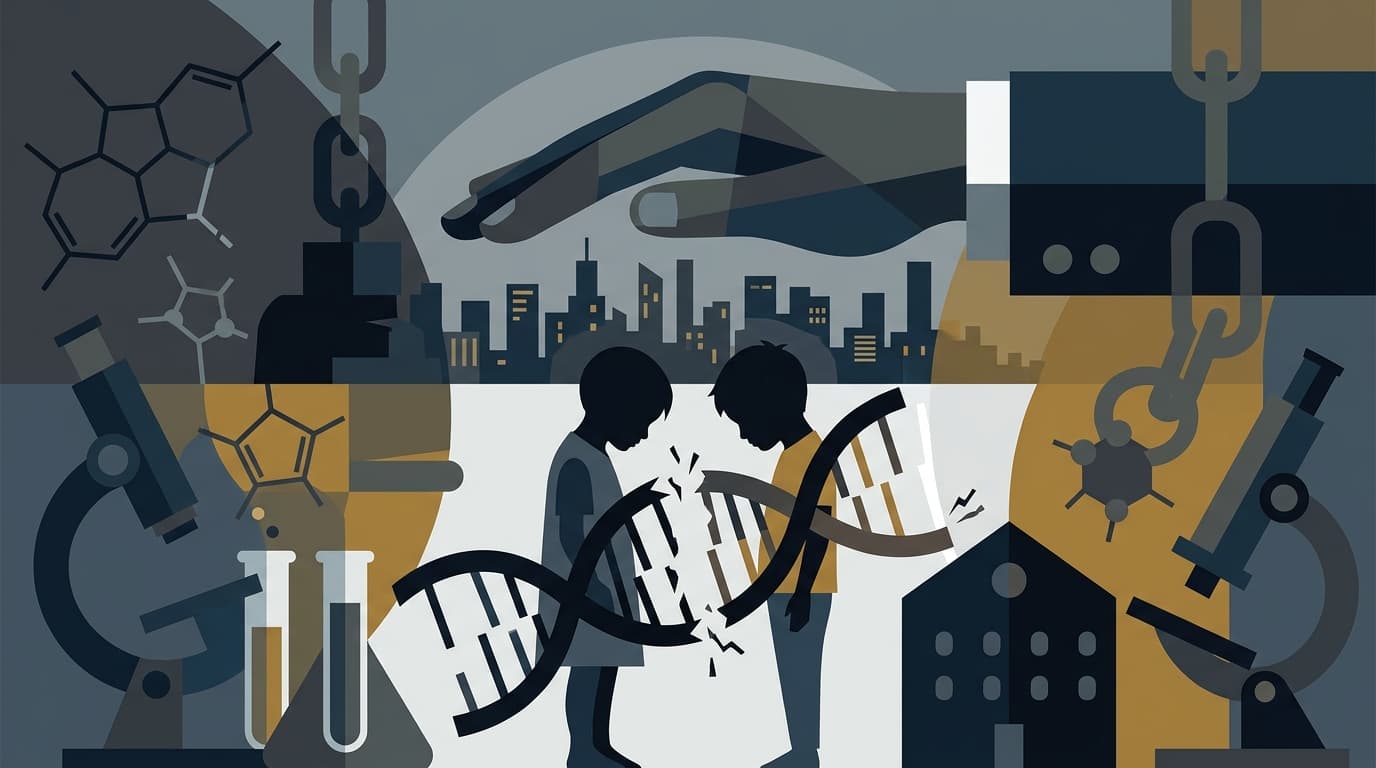
Gene Editing's Darkest Day: Two Children Dead, and China Stayed Quiet
Two children died in separate gene-editing trials in China, and neither death was promptly disclosed to the public. The fallout is forcing a global reckoning with how experimental therapies reach the most vulnerable patients.
Imagine signing your child up for a medical trial that promises to fix an incurable disease. You trust the doctors. You trust the science. And then nobody tells you that death is listed as a possible outcome.
That's not a hypothetical. It's what reportedly happened in China, where two children died in separate gene-editing clinical trials, and the world only found out because journalists started asking questions.
What We Know (and What Was Hidden)
The first case involved a 6-year-old girl treated at Xinhua Hospital in Shanghai in March 2025. She had a rare neurodevelopmental disorder, and the experimental therapy used base editing, a precise form of gene editing delivered directly to the brain. About seven days after treatment, she died from what reports describe as a severe immune reaction and organ injury.
Her death was not publicly disclosed. It was reportedly omitted from a related scientific paper. Shanghai Jiao Tong University, whose researchers led the trial, later launched an investigation.
The second case came months later. A young boy enrolled in a trial run by HuidaGene Therapeutics died in August 2025 during a study for Duchenne muscular dystrophy, a progressive muscle-wasting disease. Reports describe a severe immune response and organ failure after high-dose viral-vector delivery (the method used to shuttle gene-editing tools into cells). HuidaGene said it completed an internal investigation and submitted results for peer review.
Neither death was promptly reported to the public. Both are now fueling an international firestorm.
"This Shouldn't Have Gone to Trial"
The expert reactions have been blistering. Steven Gray of UT Southwestern reviewed the case and said plainly: "This shouldn't have gone to trial." Stanford bioethicist Hank Greely pointed out something chilling: "Death should always be mentioned in a first-in-human trial," noting that the consent form reportedly did not list death as a potential risk.
Get tomorrow's biotech intelligence before your competitors.
Join thousands of biotech professionals who start their day with our free, daily briefing.
Let that sink in. A family enrolled their child in a first-ever-in-humans experiment, and the paperwork didn't mention the possibility of dying.
Experts aren't treating these as isolated accidents. They're framing them as warnings about what happens when fast-track clinical pathways outpace safety review, especially when the condition being treated isn't immediately life-threatening. Duchenne muscular dystrophy is devastating, but it's not a disease where patients face death in days without treatment. That changes the risk calculus dramatically.
The Chinese Society of Gene & Cell Therapy acknowledged the problem, calling for "robust preclinical evidence, rigorous ethical governance, transparency, and timely reporting of serious adverse events." That's the polite version of saying the system failed.
The He Jiankui Shadow
If this story feels familiar, it should. In 2018, Chinese scientist He Jiankui shocked the world by editing the genes of human embryos, creating the first "CRISPR babies." He was convicted, imprisoned, and became the global symbol of what happens when ethical guardrails collapse.
China responded with stronger regulations. Germline editing (changes passed to future generations) is now explicitly banned. On paper, oversight tightened. Then in May 2026, Beijing rolled out Order 818, a new national framework for investigator-initiated trials in cell and gene therapies. It restricts these studies to top-tier hospitals. It requires institutional filing with health authorities. It mandates reporting of serious adverse events.
But there's a critical gap: the regulation requires reporting results to the National Health Commission, yet it does not require public publication of findings, including negative ones. Think of it like requiring a restaurant to report a health violation to the city, but never telling diners. The information exists somewhere in a filing cabinet; it just never reaches the people who need it most.
A Global Problem Wearing a Chinese Flag
Before anyone frames this as uniquely Chinese, consider the broader picture. Pediatric gene therapy deaths have occurred in trials worldwide. In 2024, Neurogene's Rett syndrome trial saw a young girl die after a severe hyperinflammatory syndrome. Pfizer's Duchenne muscular dystrophy program reported a fatal serious adverse event described as cardiac arrest. Studies for X-linked myotubular myopathy saw deaths linked to liver failure at higher doses.
The pattern is disturbingly consistent: high-dose AAV-based therapies (AAV is adeno-associated virus, the tiny delivery vehicle used to carry genetic instructions into cells) keep showing up in the worst outcomes. The problem appears to be vector-, dose-, and disease-specific rather than a blanket indictment of all gene therapy.
But public reporting likely understates the full picture, because not all trials disclose adverse events promptly or with the same level of detail. There's no single global registry tracking every pediatric gene therapy death.
Where the Guardrails Should Be
The WHO's 2021 framework for genome-editing governance remains the international reference point, and no updated replacement has been issued through 2026. It calls for ethics review before trials enter registries, internationally reviewed standards, and assessment mechanisms for studies raising ethical red flags.
For children specifically, the rules are supposed to be stricter. Pediatric enrollment should happen only after adult or animal data justify the risk. Ethics boards should confirm a favorable risk-benefit ratio. Older children are generally preferred over infants when the disease context allows. More-than-minimal risk requires the prospect of direct benefit.
These aren't obscure guidelines buried in footnotes. They're foundational principles of pediatric research ethics. And based on what's been reported, at least some of them were bypassed.
The Question Nobody Wants to Answer
Gene editing holds extraordinary promise. Diseases that were death sentences a decade ago could become curable within our lifetimes. Nobody serious about medicine wants to stop that progress.
But the race to be first, to publish the breakthrough paper, to treat the untreatable, creates enormous pressure to cut corners. When the patients are children who can't advocate for themselves, the stakes couldn't be higher.
Two families trusted the system. Two children are dead. And the world almost didn't find out. That's not a regulatory gap. That's a moral one.
Clinical & Regulatory4 min read
The Cancer Therapy That's Curing Lupus
Adicet Bio's off-the-shelf CAR-T therapy, originally built for cancer, just produced durable lupus remissions in a Phase 1 trial. The results could validate the "immune reset" approach and upend decades of chronic immunosuppression.