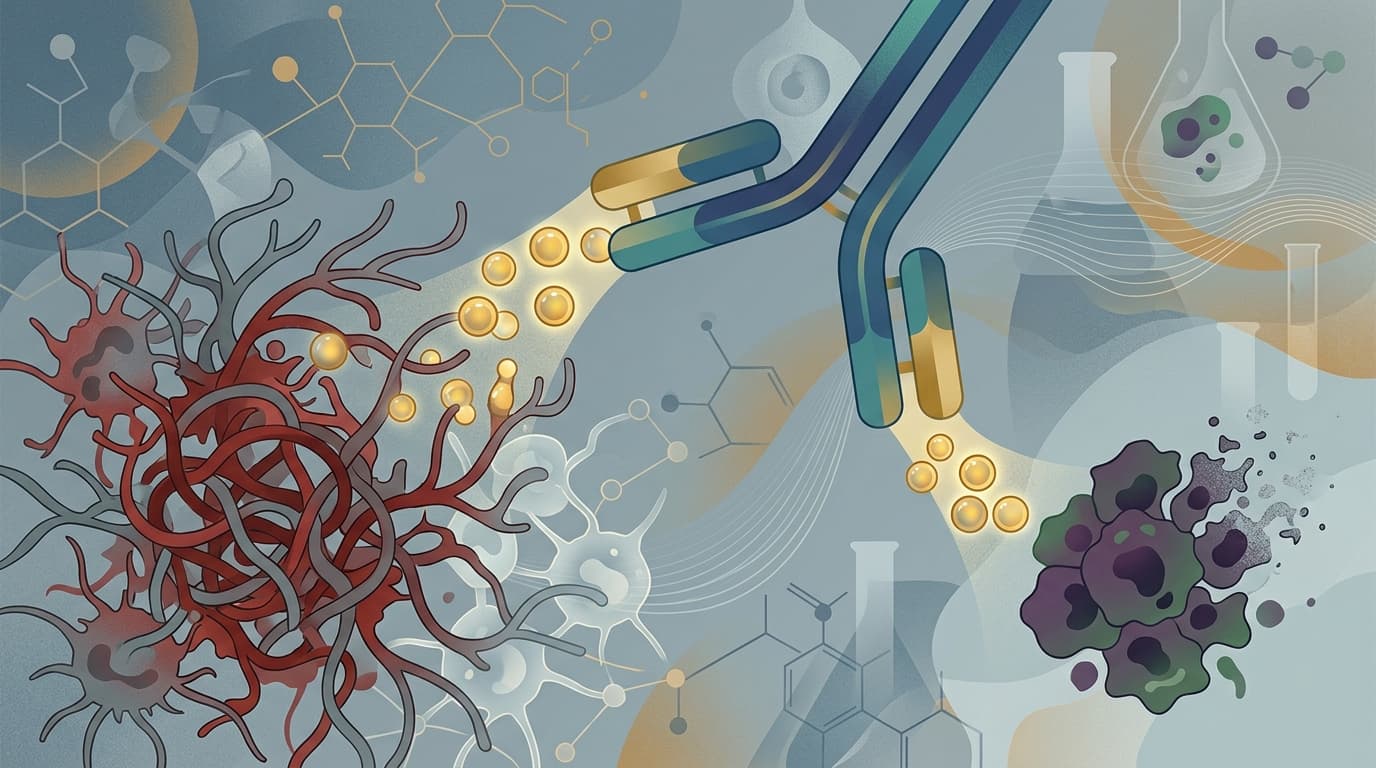

Adicet Bio's off-the-shelf CAR-T therapy, originally built for cancer, just produced durable lupus remissions in a Phase 1 trial. The results could validate the "immune reset" approach and upend decades of chronic immunosuppression.
Five years ago, a young woman in Erlangen, Germany, was running out of options. Her lupus had resisted every drug her doctors threw at it. So they tried something radical: they gave her a cancer treatment. A single infusion of CAR-T therapy, originally designed to hunt down tumor cells, wiped out the rogue immune cells driving her disease. She went into complete remission. She stayed there for over three years, taking zero medications.
That was one patient. Now, Adicet Bio just showed it might work at scale.
Adicet Bio released Phase 1 data for prula-cel, its allogeneic CAR-T therapy for systemic lupus erythematosus (SLE). The results across 22 evaluable patients were striking: 54% of lupus nephritis patients hit DORIS remission (the gold-standard measure of lupus remission) at 12 months, and 50% achieved complete renal response, meaning their kidney inflammation essentially resolved.
But the number that matters most? Nearly all of those responses were still going at 12 to 21 months of follow-up. This isn't a temporary flare suppression. It looks like something more durable.
The word Adicet keeps using is "immune reset," and for once, the marketing might actually match the biology. After treatment, patients' B cells (the immune cells that go haywire in lupus) were wiped out completely, then grew back in a healthier pattern. Anti-dsDNA antibodies, the hallmark of lupus, dropped in 91% of patients who started with elevated levels. Complement proteins, which lupus chews through, recovered in 90% of those who started low.
That's not just symptom management. That's the immune system rebooting.
To understand why this matters, you need to know the difference between autologous and allogeneic CAR-T. Traditional CAR-T (the autologous kind) works like a bespoke suit: doctors extract a patient's own T cells, engineer them in a lab to target specific cells, and infuse them back. It works, but it takes weeks of manufacturing, costs a fortune, and every batch is unique to one patient.

AstraZeneca's gene-silencing drug Wainua just failed its biggest cardiac trial at ESC 2026, despite crushing it in nerve disease. The surprise flop reshapes the ATTR-CM competitive landscape and raises uncomfortable questions about whether "more suppression" actually means better outcomes.


Join thousands of biotech professionals who start their day with our free, daily briefing.
Prula-cel flips that model. It's allogeneic, meaning it's made from donor cells ahead of time and stored, ready to go. Think of it as the difference between a custom tailor and buying off the rack at Nordstrom. Same quality shirt; you just don't have to wait six weeks for it.
Adicet's secret weapon is the type of T cell it uses. Instead of conventional alpha-beta T cells, prula-cel is built on gamma delta T cells, a less common variety that doesn't trigger the immune rejection problems you'd normally expect from donor cells. That's why the safety data looks so clean: no graft-versus-host disease, no serious neurotoxicity (ICANS), and no cytokine release syndrome above Grade 2. For a therapy originally associated with ICU-level side effects in cancer patients, that's remarkable.
Lupus affects millions of people worldwide, and it's one of the cruelest autoimmune diseases. Your immune system, which is supposed to protect you, starts attacking your own organs: kidneys, skin, joints, brain. It disproportionately hits young women, and it disproportionately hits women of color.
The current standard of care is essentially a lifetime subscription to immunosuppression. Patients cycle through hydroxychloroquine, steroids, mycophenolate, cyclophosphamide, and biologics like belimumab or anifrolumab. The 2026 British guidelines now say long-term steroids shouldn't even be routine, aiming for doses under 5 mg per day when possible. But the reality is that many patients still can't get off these drugs.
And the drugs themselves cause problems. Chronic immunosuppression means higher infection risk, cumulative organ damage, bone loss, and metabolic side effects. It's like putting out a house fire by flooding the whole neighborhood; sure, the flames go out, but you've created a different disaster.
The promise of CAR-T in lupus is that you could replace years of daily medications with a single infusion that resets the immune system. One and done.
Adicet isn't alone in this space, and the competition is fierce. A 2026 review counted 68 actively recruiting lupus studies involving cell therapies. The vast majority still use autologous CAR-T, with CD19 as the dominant target. Companies like Kyverna, Novartis, and multiple academic groups are running their own lupus CAR-T programs.
The competitive question is shifting from "Can CAR-T induce lupus remission?" (the answer is clearly yes) to "Which platform wins on speed, durability, safety, and cost?" That's where allogeneic products like prula-cel have a structural advantage. If you can manufacture thousands of doses in advance rather than one at a time, you can treat more patients, faster, and cheaper.
There's also a target diversity play emerging. While most programs go after CD19, Adicet's prula-cel targets CD20, a different B-cell surface protein. Some newer programs are even combining two targets (CD19 plus BCMA, or CD19 plus CD70) to cast a wider net. The field is experimenting with everything from CRISPR-edited cells to CAR-NK therapies to in vivo approaches that skip the manufacturing step entirely.
If the "immune reset" concept holds up in larger trials, the implications go way beyond lupus. The same logic could apply to any autoimmune disease driven by misbehaving B cells: systemic sclerosis, myositis, certain types of vasculitis. Adicet is already testing prula-cel in systemic sclerosis, and the Erlangen group's original case series showed responses across multiple autoimmune conditions.
The September data is Phase 1 (22 patients, no control group), so we're still in early innings. Durability beyond two years hasn't been established yet in this cohort. And scaling allogeneic manufacturing from clinical batches to commercial supply is its own mountain to climb.
But consider what we're watching: a therapy invented to fight blood cancer is producing deep, durable, drug-free remissions in a disease that has resisted everything else. Patients who were on cocktails of immunosuppressants are now off all of them.
Adicet says the data supports moving toward a pivotal study, which would be the trial designed to get FDA approval. If that reads out well, we could be looking at one of the most meaningful shifts in autoimmune treatment in decades.
Not bad for a cancer drug that decided to moonlight.
Roche just inked a deal worth up to $1.53 billion for a trispecific antibody that hasn't even entered human trials yet. The drug grabs three targets at once, the partner is a Chinese biotech with a growing reputation, and the implications for both oncology and autoimmune disease are massive.