
The FDA just announced it can watch clinical trial data roll in live, like streaming a game instead of reading the box score. Two proof-of-concept trials with AstraZeneca and Amgen are already underway, and a broader pilot launches this summer.
Imagine running a marathon, but you can't check your time until you cross the finish line. No split times. No mile markers. No idea if you're on pace or about to collapse.
That's basically how clinical trials have worked for decades. Companies spend years running studies, and the FDA doesn't get a real look at the data until everything wraps up. By then, years have passed, billions have been spent, and promising drugs may have been sitting in limbo while paperwork collected dust.
On April 28, the FDA said: enough. The agency unveiled a new framework for real-time clinical trial monitoring, and it's already live with two proof-of-concept studies. Think of it as going from reading the box score the next morning to watching the game unfold, play by play.
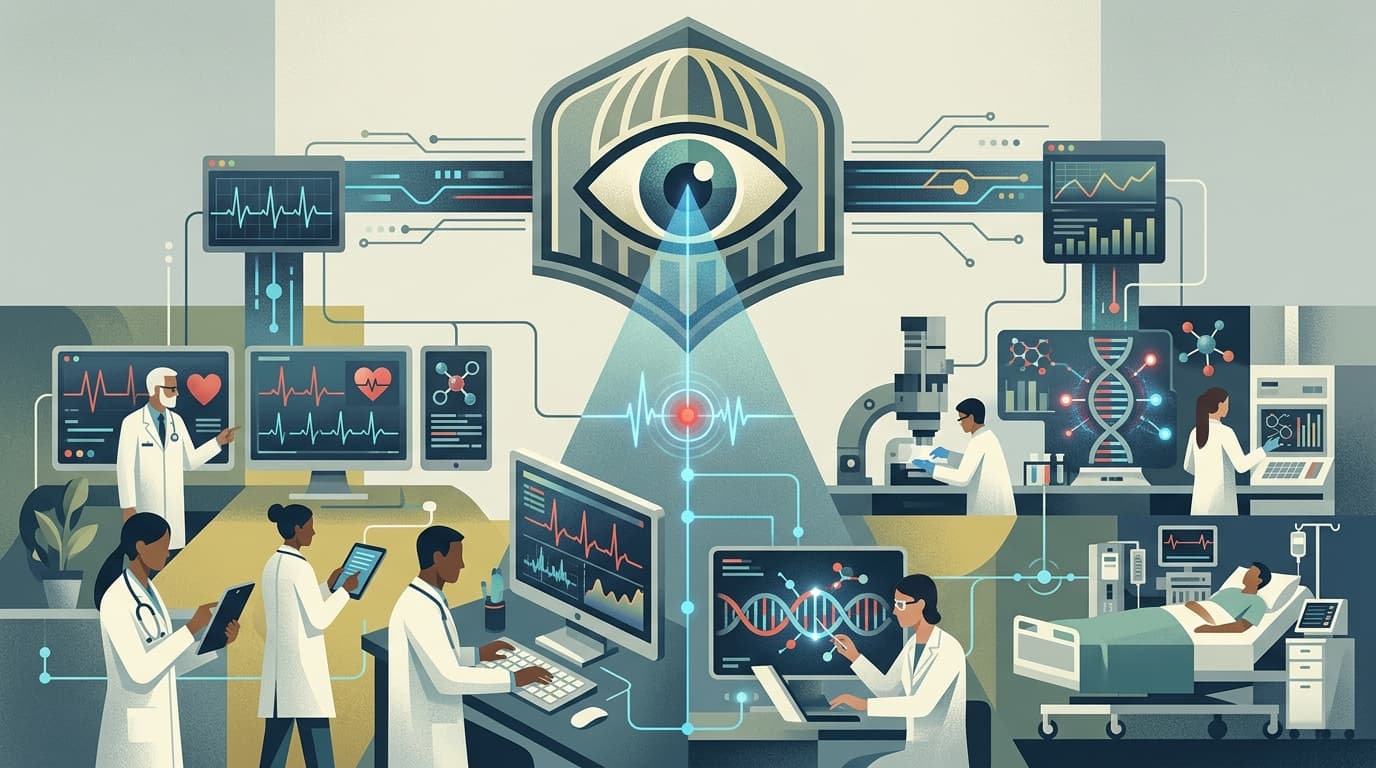
The concept is surprisingly straightforward. Instead of waiting for sponsors to compile, clean, and submit trial data at the end of a study, FDA regulators can now view safety signals and clinical endpoints in real time via secure cloud-based streaming. Powered by AI and modern data science tools, the system lets reviewers see what's happening in a trial as it happens.
FDA Commissioner Marty Makary painted a vivid picture of what this looks like in practice. When a patient develops a fever, regulators see it. When a radiologist reads a CAT scan showing tumor shrinkage, regulators see that too. No waiting months for a data package. No guessing.
Makary pointed to a staggering inefficiency in traditional drug development: much of the time between Phase 1 and approval involves no active trialing at all. It's dead time, filled with data compilation, submission prep, and bureaucratic lag. Real-time access could compress those gaps dramatically.
This isn't theoretical. The FDA has already kicked off two proof-of-concept trials with major pharma sponsors.
AstraZeneca is running a Phase 2 study in patients with untreated mantle cell lymphoma, a rare type of non-Hodgkin lymphoma. The trial is a collaboration with the University of Texas MD Anderson Cancer Center and the University of Pennsylvania. And here's the kicker: the FDA has already successfully received and validated real-time data from this study. It's working.

The FDA flagged serious concerns about two of AstraZeneca's biggest cancer drugs in the same advisory committee briefing. With prediction markets pricing Truqap approval at just 17.6% and camizestrant's trial design under fire, billions in future revenue hang on a single April 30 meeting.

Join thousands of biotech professionals who start their day with our free, daily briefing.

Amgen is setting up a Phase 1b trial called STREAM-SCLC for patients with limited-stage small cell lung carcinoma. That one is still in the early setup phase, but it represents the second pillar of this experiment.
Both trials focus on cancer, which makes sense. Oncology has long been the FDA's sandbox for regulatory innovation, from accelerated approvals to the Real-Time Oncology Review program. If real-time monitoring works anywhere first, it'll be here.
The two proof-of-concept trials are just the appetizer. The FDA simultaneously published a Request for Information (RFI) seeking public input on a broader pilot program launching this summer. The agency wants feedback on how to design the program, what metrics to use, and how to evaluate AI's impact on regulatory decision-making.
Comments are open until May 29, 2026. Final selection criteria will be published in July, with pilot participants chosen by August. The goal is to expand real-time data streaming beyond AstraZeneca and Amgen to a wider set of sponsors and therapeutic areas.
FDA Chief AI Officer Jeremy Walsh described the initiative as "rewinding and rethinking" how the agency processes trial information. Rather than drowning in comprehensive patient-level data dumps, the FDA will focus on high-level safety and efficacy signals agreed upon in advance with sponsors. It's targeted, not invasive.
Let's zoom out for a second. This announcement lands in the middle of an aggressive FDA modernization push. In February 2026, the agency formally declared that one well-designed pivotal trial could serve as the default basis for drug approval, replacing the old standard of two independent Phase 3 studies. The agency also adopted the finalized ICH E6(R3) framework, which encourages digital health technologies and adaptive trial designs.
Real-time monitoring is the logical next step in this progression. If you're going to approve drugs based on one pivotal trial, you'd better have a crystal-clear view of the data as it rolls in.
For sponsors, the implications are significant. Companies that can plug into real-time streaming infrastructure could see faster phase transitions, quicker regulatory feedback, and shorter overall development timelines. Early adopters like AstraZeneca are essentially building the technical playbook that others will follow.
For CROs (contract research organizations, the companies that actually run most clinical trials), this signals a seismic shift toward decentralized, data-rich trial models. Think remote monitoring, wearable devices, digital endpoints, and AI-powered patient matching. The old model of collecting data on paper forms and shipping binders to the FDA is heading for extinction.
Before anyone pops champagne, some caveats. The FDA was careful to note that real-time review is limited to pre-agreed safety and efficacy endpoints. Regulators won't be scrolling through individual patient records like a social media feed. This is focused, structured surveillance.
There's also the question of scale. Two proof-of-concept trials in oncology is a long way from real-time monitoring across thousands of studies in dozens of therapeutic areas. The summer pilot will be the real test of whether this framework can handle broader adoption without compromising data quality or patient privacy.
And let's be honest: the FDA announcing a pilot program and the FDA actually changing how drugs get approved are two very different things. Regulatory culture moves slowly, even when the technology doesn't.
The FDA just went from reading the newspaper to watching live television. Real-time clinical trial monitoring won't transform drug development overnight, but the proof-of-concept data from AstraZeneca's trial shows the plumbing works. If the summer pilot goes well, we could be looking at a future where the gap between "trial complete" and "drug approved" shrinks from years to months.
For an industry that loses roughly $840,000 per day for every drug stuck in development limbo, that's not just a regulatory reform. It's a revolution in slow motion.
Erasca's pan-RAS inhibitor posted jaw-dropping early cancer data that analysts called a "home run." Then the stock fell 42% in a single day. A patient death, a patent fight, and transparency questions collided with the best data in Erasca's history.